Public health, explained: Sign up to receive Healthbeat’s free Atlanta newsletter here.
Public health workers spent about 200 extra work hours to track down 268 people who might’ve been exposed to measles in recent weeks in an outbreak that began with an unvaccinated Georgia State University student, Fulton County health officials said Tuesday.
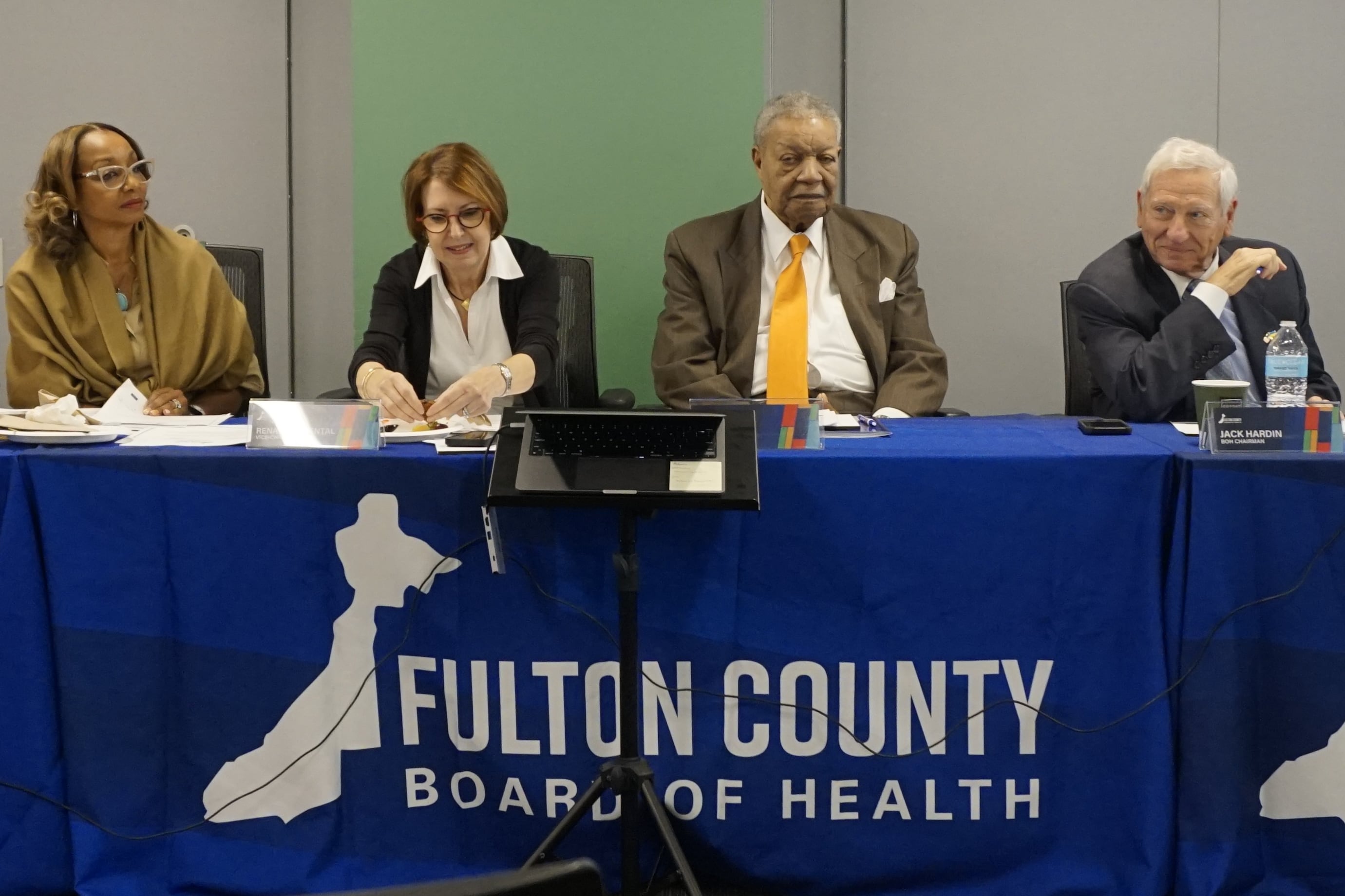
The county health agency identified the first measles case Sept. 10 in the student, who had spent time on campus, at a Sweetgreen eatery at Ponce City Market, and local soccer practices and games, Director of Epidemiology Sasha Smith said during the Fulton Board of Health meeting.
“These measles investigations are lengthy, and they’re very resource intensive,” Smith said. “We have to do rigorous contact tracing.”
For the outbreak to be considered over, two incubation periods (42 days) must pass without additional cases. That would put the end of this outbreak over about Oct. 22. “We’re on the tail end of” it, Smith said.
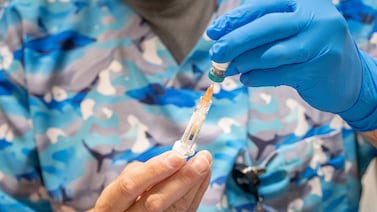
Of 268 identified as “close contacts” of the first case, seven either had not been vaccinated or had an unknown vaccination status. Those seven entered home quarantine to avoid spreading the highly contagious respiratory virus, Smith said.
Of those seven, three contracted measles. Smith said some of those quarantined agreed to get the measles, mumps, rubella vaccine but would not specify how many.
Smith said the GSU student first infected had no history of international travel, and it’s uncertain where they contracted measles, which she called a “bit concerning.”
The Board of Health sent an environmental health team to Sweetgreen, where the student had spent hours over three days while contagious, and alerted the restaurant’s employees about the potential exposure.
Since many of the close contacts were exposed at GSU’s downtown Atlanta campus, it was easy to track down students’ vaccination records, Smith said. The university requires students to be vaccinated but allows exemptions for religious reasons. Students must sign an affidavit to obtain the exemption, a GSU spokesperson said.
Smith said containing the outbreak had been a “huge public health win” and credited the hard work of public health employees and the cooperation of other organizations, including other county health departments and the state Department of Public Health, and those who were asked to quarantine.
Georgia has reported a total of 10 measles cases this year. Nationally, 1,563 cases had been reported as of Oct. 8, according to the Centers for Disease Control and Prevention. Most of the cases are connected to a large outbreak in west Texas and New Mexico. Two Texas children and a New Mexico adult – all unvaccinated – have died.
Measles has been reported in Alabama, Florida, Tennessee, and South Carolina, where 16 cases have been reported and more than 150 unvaccinated children in Spartanburg County are quarantined due to the ongoing outbreak.
Meanwhile, Smith said Fulton is also hearing from parents and child care facilities about cases of hand, foot, and mouth disease.
It is highly contagious and causes a fever, mouth sores, and a skin rash, though it typically is not serious, according to the CDC.
Smith urged parents to keep their children at home until they have been free of fever for 24 hours without fever-reducing medicine and no longer have open blisters.
HIV update, West Nile season, tuberculosis cases
The agency is starting a do over of $2 million in grants awarded last month to 12 community organizations for work on HIV prevention and care, interim district health director Chris Rustin said.
The awards, funded by the CDC, had not been consistently evaluated, so the board canceled them on Thursday and will start the bidding process over.
Affected groups include AID Atlanta, SisterLove, the AIDS Healthcare Foundation, Empowerment Resource Center, and the Georgia Harm Reduction Council.
Meanwhile, Fulton is close to filling nine jobs in HIV prevention and sexual health after 17 of those workers were laid off in May. Fourteen of the jobs were restored. Nine employees are set to start on Thursday, as recruiting continues for the remaining vacancies.
A few other Fulton health updates:
- West Nile virus: The season is almost over, said Brandon Leftwich, environmental health director. Fulton County had one case in a human this year, and there were a total of 15 human cases in Georgia this year as of Oct. 7, according to the CDC.
- Tuberculosis: Fulton County health workers have identified an apartment complex where there are eight cases of tuberculosis. Many of the patients came from West Africa, and workers are screening 20 of their contacts for the disease, according to a board document.
Rebecca Grapevine is a reporter covering public health in Atlanta for Healthbeat. Contact Rebecca at rgrapevine@healthbeat.org.