Public health, explained: Sign up to receive Healthbeat’s free national newsletter here.
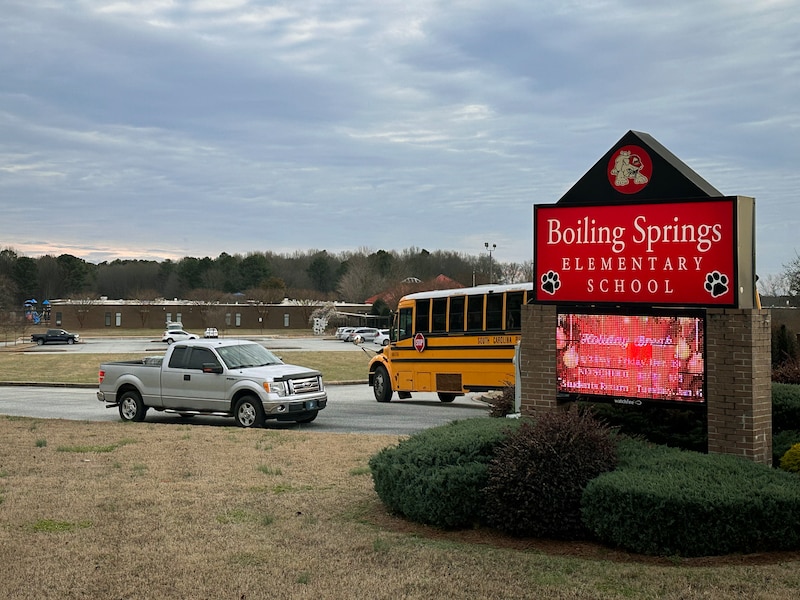
Consider this year’s measles outbreaks in Pennsylvania and South Carolina — some of the largest in the U.S. in decades.
South Carolina’s outbreak ended with 997 documented cases. Pennsylvania’s outbreak recently surpassed that total and continues to grow, reaching 1,286 cases as of Monday.
Both have spread through close-knit communities with many unvaccinated people.
Yet in Pennsylvania, the outbreak has resulted in five measles-associated deaths being identified, plus a sixth death reported recently by a local coroner. In South Carolina there were none.
Similarly, in last year’s West Texas outbreak, two children died, plus an adult who lived in an adjoining county in New Mexico. Meanwhile, Utah’s outbreak has had no reported deaths.
Why?
The explanation might be as simple as chance.
But public health experts also told me we’re in “uncharted territory,” with measles hitting populations in ways not seen decades ago when the virus was routinely circulating in the United States. And Healthbeat’s own analysis of state measles data shows how the demographics of those infected is not the same in every state.
There’s also a question about how deaths are counted — something that’s sparked controversy between the state of Pennsylvania and federal health officials, who have not included most of the state’s reported measles deaths in national totals.
The Takeaways
Matthew Ferrari, a professor of biology and director of Penn State’s Center for Infectious Disease Dynamics, said having zero deaths in some of these outbreaks and a handful of deaths in the others isn’t surprising.
Based on historical data, the Centers for Disease Control and Prevention has long estimated that there will be one to three deaths per 1,000 measles cases.
“The outcomes that we’ve seen there are entirely within the level of variation that we would expect,” Ferrari said.
Scott Thorpe, executive director of the Southern Alliance for Public Health Leadership and a former South Carolina public health official, agrees that chance may explain much of the variation.
“At an individual level, who happens to get it — and what other underlying health issues they may have — play a huge role,” Thorpe said.
But statistics may not be the only factor at play, Thorpe and Ferrari said.
The Bigger Picture
In the real world, measles infects people who face different risks from the virus depending on their age and underlying health conditions.
The South Carolina Department of Public Health notes most of the state’s measles cases were among school-age children, who are generally at lower risks of severe complications than infants and older adults.
State data show that nearly two-thirds of South Carolina’s 997 measles cases involved children and teens ages 5-17.
“This may be one reason there were fewer hospitalizations and no deaths in the SC outbreak,” the department said in emailed responses to Healthbeat’s questions.
In Pennsylvania, however, only about one-fifth of the state’s 1,286 cases as of Monday have been among this lower-risk group of school-age children and teens. Roughly two-thirds of cases involved adults 18 and older, with most of those cases being between 25-49 years old, according to a Healthbeat analysis of the state’s measles dashboard.
The ages and medical backgrounds of those who have died in Pennsylvania illustrate how risks can vary.
Among four of the state’s measles-associated deaths were two infants, an 18-year-old who died of “a rare and severe neurological complication of measles,” and a 40-year-old woman who reportedly had serious underlying respiratory conditions. State health officials didn’t release details about a fifth person who died. A sixth measles-associated death, according to the Franklin County Coroner, was a 39-year-old woman who had “several” underlying medical conditions.
Officials at the Pennsylvania Department of Health said they cannot speculate about why their state’s outbreak has resulted in more deaths. In addition to age and health status, delays in identifying measles symptoms and promptly seeking medical care also have the potential to contribute to hospitalizations and deaths, the department said.
The resurgence of measles across the United States is exposing unexpected vulnerabilities as the demographics of those infected change.
“It’s been a long time since we’ve had measles outbreaks of this scale in the United States,” Ferrari said. Past outbreaks were concentrated in children. “So it was very rare to see cases in adults, and very few people made it to adulthood still being susceptible.”
Now, some adults who grew up during decades when measles was largely eliminated have reached their 30s and 40s without being vaccinated or infected. As a result, when measles enters a community with low vaccination rates, it can infect multiple generations simultaneously.
“We’re just in uncharted territory,” Ferrari said.
Another important demographic change, Ferrari said, are the new populations of adults of reproductive age who lack measles immunity that past generations acquired during childhood through illness or immunization.
That can leave their babies vulnerable. Without protective antibodies passed from their mothers, infants may be more susceptible to measles shortly after birth, he said.
There also are risks during pregnancy. Measles infection in pregnant women can lead to miscarriages, premature births, and significant immune system and neurological issues. The American Academy of Pediatrics recently released a FAQ for healthcare providers on responding to an increase in congenital measles cases — where babies are infected with the virus from their mothers before birth — as a result of U.S. outbreaks.
“The clinical and epidemiologic reality of measles today looks significantly different than it did 50 years ago,” officials at the Council of State and Territorial Epidemiologists (CSTE) told Healthbeat by email. The group’s members are the public health workers on the front lines of the nation’s outbreaks.
“Today we are encountering dynamic clinical presentations — including adult fatalities and complex congenital considerations — that were rarely seen in the past,” the group said.
The Fine Print
Defining who has died from measles in Pennsylvania has become a flashpoint this year.
Health and Human Services Secretary Robert F. Kennedy Jr., a longtime critic of vaccines, has questioned whether some of the state’s deaths were really a result of the virus. Kennedy has accused the state’s governor, a Democrat, of political “weaponization of infectious disease.”
The CDC, which is overseen by Kennedy, has not included most of the state’s deaths in its national death tallies. The CDC did not respond to interview requests.
Amid the politics and heated rhetoric is a technical gap in national measles surveillance guidance.
The United States doesn’t have a formal case definition for deaths associated with measles — only for what qualifies as a measles infection case, according to the Council of State and Territorial Epidemiologists. Even so, states have historically reported measles deaths to the CDC.
The group, whose members work in state health departments where they investigate diseases, has long been the U.S. organization that convenes experts to establish consensus-based standards. CSTE launched a workgroup this summer to develop a standardized definition for deaths following measles infections. The work, which is being done with the CDC, is expected to be completed by the end of the year.
Pennsylvania health officials said they modeled their definition of a measles-associated death on existing council definitions for flu- and RSV-associated deaths. Their definition requires clinical evidence and a positive lab test for measles, a death within 30 days of symptom onset, and the exclusion of unrelated causes, such as a motor vehicle accident.
Ferrari said there hasn’t been controversy or confusion about measles-associated deaths until recently. He notes that the World Health Organization has long had a definition for measles-related deaths that is essentially any death within 30 days that isn’t attributable to acute trauma, which takes into account that measles infections can contribute to pneumonia and other complications
It’s a definition similar to the one used by Pennsylvania.
“I’ve been doing this for almost 20 years, and there has never in the past been any confusion about the definition of measles-associated death. It’s been defined,” Ferrari said.
The bottom line: Knowing who has died after a measles infection is a critical indicator of the severity of infections within a community and helps determine whether a subset of individuals is at higher risk for death, the council said.
What To Watch
All of this is playing out as the U.S. is facing a determination of whether the country has lost measles elimination status. The Pan American Health Organization will meet Nov. 10-13 to determine whether endemic transmission of the virus has been reestablished in this country.
So far this year, more than 4,400 confirmed measles cases have been reported by 47 states and jurisdictions across the country, according to the CDC’s Oct. 16 update. There were 2,289 confirmed measles cases in all of last year.
Alison Young is Healthbeat’s senior national reporter. You can reach her at ayoung@healthbeat.org or through the messaging app Signal at alisonyoungreports.48