Public health, explained: Sign up to receive Healthbeat’s free national newsletter here.
The World Health Organization is seeking answers from Russia about conflicting information surrounding the death of a 28-year-old anti-plague institute researcher, the rationale for initially monitoring nearly 200 of her contacts, and new reports of a possible second employee with pneumonia.
Russian authorities said earlier Tuesday that all contact monitoring has now ended and no dangerous infections were detected.
This follows reports of quarantines and restrictions at several hospitals. One local news organization reported that agents from the FSB, Russia’s security and intelligence agency, escorted ambulances transporting some of the dead researcher’s contacts for medical exams.
Russian health officials have contradicted reports that Daria Shipilova, identified by local news outlets as the researcher who died, had a lab accident and died from pneumonic plague — which is often lethal and can spread from person to person. Instead they say the lab worker died of pneumonia of an unknown cause and that testing didn’t identify microorganisms associated with her work.
While the Irkutsk Anti-Plague Research Institute of Siberia and the Far East is located in a region where plague bacteria are naturally occurring, scientific records reviewed by Healthbeat show that a D.N. Shipilova from the institute was a co-author of research earlier this year involving Yersinia pestis, the bacteria that cause plague.
On Tuesday night, WHO Director-General Tedros Adhanom Ghebreyesus posted on social media that the WHO is now also asking about media reports of a second employee with pneumonia of undetermined cause.
“Timely, complete and transparent information sharing under the International Health Regulations is essential to clarify conflicting reports and enable an accurate assessment of potential public health risks,” he said on X.
Too little verified information has been released to know what has really happened. But in a country with a history of biological weapons programs and secretive lab accidents, the extent of the Russian response to Shipilova’s death — and the information vacuum about the situation — have raised concerns and questions among international public health and biodefense experts.
“It’s definitely concerning, if the reports are accurate, about the quarantine steps they’ve been taking,” Andrew Weber, a global health security and biodefense expert, told Healthbeat.
“I’m not quite reassured yet by official Russian statements given the history of lying and covering up,” Weber said Tuesday. “Fingers crossed that it is true and only the young scientist was infected.”
Weber wonders about the nature of the organism that caused the lab worker’s pneumonia. He said the actions of Russian health authorities could represent an extremely cautious response to a single fatal illness.
“That’s what I don’t know: Are we seeing just an overreaction, not taking any chances, or have there been more cases than the index case?” said Weber, who served as assistant secretary of defense for nuclear, chemical and biological defense programs during the Obama administration. “And I don’t think we yet know the answer to that.”
Dr. Ashish Jha, who served as White House COVID-19 response coordinator under former President Joe Biden, has also expressed concerns about the scope of the Russian response, noting the reported FSB escorts for people who were exposed.
“If accurate, that’s not the posture of a routine natural outbreak, even a normal lab accident,” said Jha, who is CEO of BioRadar, a biological intelligence company, in a post on the social media site X earlier this week. On Tuesday he also expressed skepticism that there was only one case of disease associated with the event. Assuming so “would be unwise,” he wrote.
The U.S. government is closely monitoring the situation in Siberia. Secretary of State Marco Rubio on Tuesday told reporters in Iceland: “I think it’s incumbent upon Russia to obviously share more information with the world.”
WHO officials are in contact with Russian health authorities and are seeking to verify what has occurred, WHO spokesperson Christian Lindmeier said in an email to Healthbeat.
“WHO is aware of reports that a laboratory worker in Irkutsk oblast, in the Russian Federation, died of severe pneumonia on 2 October 2026,” Lindmeier said.
After seeing media reports that attributed the lab worker’s death to pneumonic plague, the WHO on Saturday asked Russian officials about the circumstances of the event. Their questions sought information about the laboratory tests that were underway and their results, the rationale for contact-tracing, and the health status of people who had contact with the dead researcher.
Russian officials replied on Tuesday, telling the WHO the woman’s illness, before she died, seemed like a typical acute respiratory viral infection and that no case of plague has been recorded in Irkutsk — not in the woman or in anyone else. The Russian health officials told the WHO that their investigation found no high-threat pathogen in the lab worker or any of her contacts, a WHO spokesperson told Healthbeat.
The WHO has since asked Russian health officials if they know what pathogen caused the pneumonia that resulted in the lab worker’s death. “We’re waiting to hear back,” the spokesperson said by email.
And in a separate international health alert Tuesday, Russian health officials said that medical monitoring has ended for all of the dead lab worker’s contacts, the AP reported.
A shattered test tube reportedly preceded researcher’s death
News of Shipilova’s death began to draw international attention over the weekend.
An independent regional media outlet, People of Baikal, reported that Shipilova had died on the evening of Oct. 2. According to one version of events, the outlet reported, she had allegedly broken a test tube containing the pneumonic plague pathogen on Sept. 25, soon became ill, and was taken to Shelekhov hospital where she was treated for three days before dying.
Citing a source close to the security forces, the outlet reported that starting on Thursday, FSB patrols began escorting ambulances transporting people who had been in contact with Shipilova for testing. As of Friday, about 200 of her contacts had been quarantined, the outlet reported.
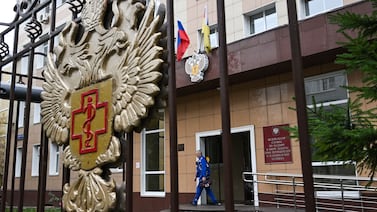
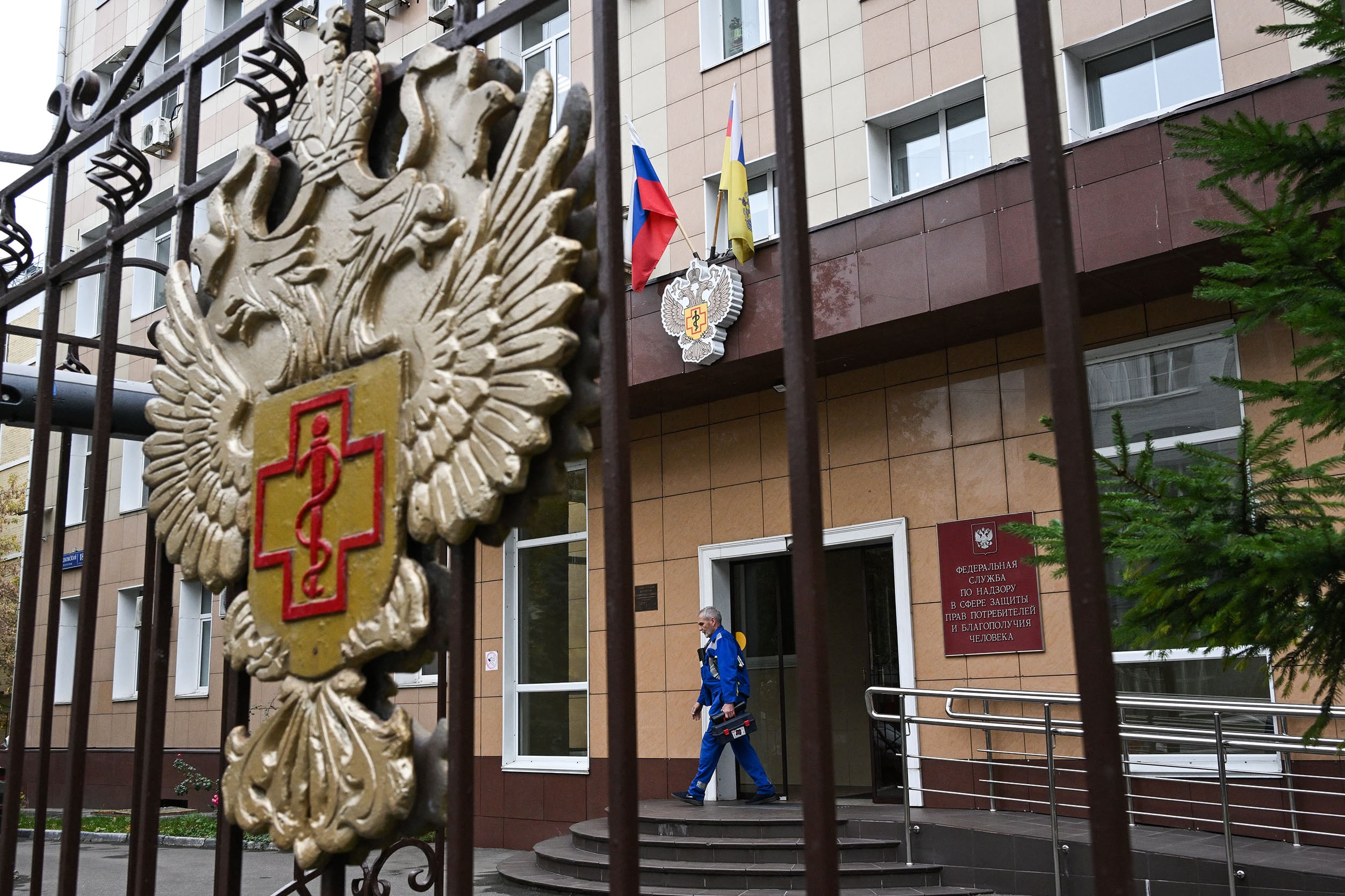
Also on Friday, Dr. Anna Popova, who heads Russia’s public health watchdog agency, the Rospotrebnadzor, flew to Irkutsk to meet with regional health officials there. Siberian television coverage said the reason for the meeting was a suspected case of what was described in general terms as a particularly dangerous infection.

Russian health authorities at the Rospotrebnadzor said Sunday that the health situation in the Irkutsk region was stable, and that because of the anti-plague institute employee’s work, a comprehensive set of anti-epidemic measures was put in place, according to the Russian news agency Interfax.
These measures included inpatient medical observation and daily lab testing of a wide circle of the employee’s contacts. The testing identified nothing more than two cases of COVID-19 and two of rhinovirus infection, according to the Rospotrebnadzor.
Lab worker co-authored plague research on effective antibiotics
The Russian health watchdog agency said extensive testing of a sample from the employee found no microorganisms associated with the employee’s work activities. It also said that the anti-plague institute’s biosafety monitoring committee had found no emergency situations involving pathogens, a finding it said was confirmed by experts sent to the institute by Popova.
The exact nature of Shipilova’s work at the anti-plague institute remains unclear.
Although it is called an anti-plague institute, the organization works with a wide range of dangerous pathogens, including those that cause anthrax, cholera, tularemia, and brucellosis, according to the institute’s website.
Healthbeat found a D.N. Shipilova listed as a co-author of plague bacteria research by scientists from the Irkutsk institute that was presented earlier this year as part of the proceedings of the annual All-Russian Congress on Infectious Diseases. The study examined the susceptibility of Yersinia pestis strains to various antibiotic drugs and found they were highly susceptible.
The research abstract appears to indicate that Shipilova has done at least some work related to plague bacteria as well as testing for antibiotic susceptibility, though it is unclear whether she was working with the bacteria at the time of her death. Institute officials didn’t respond to Healthbeat’s questions about her work and the actions taken following her illness and death.
The regional Russian media outlet People of Baikal has described Shipilova as a laboratory technician, reporting that she graduated with honors two years ago from a residency at the Irkutsk State Medical University with a speciality in clinical laboratory diagnostics.
Russia has a history of secrecy around biological accidents
The questions surrounding Shipilova’s death come against a history of secrecy around biological accidents and bioweapons in the former Soviet Union.
A prominent example occurred in 1979. That’s when Soviet authorities blamed contaminated meat for a deadly anthrax outbreak in Sverdlovsk that was quickly suspected to have involved an accident at a bioweapons lab facility.
Nearly a decade after the outbreak, Soviet health officials persisted in telling their bad meat story. They even traveled to the United States in 1988 to make an elaborate presentation to the National Academy of Sciences that convinced several top U.S. scientists that the outbreak really was from food, according to news reports at the time.
It wasn’t until 1992 that Russian president Boris Yeltsin acknowledged the Sverdlovsk anthrax outbreak had been caused by military bioweapons research.
The Sverdlovsk incident is an example of why Jha says the current lack of Russian transparency about Shipilova’s death is concerning.
“We’ve been here before,” Jha said on X, referencing Sverdlovsk. “It took years to become public. This was all in the old era — before AI and biological engineering capabilities became widespread.” Jha did not grant an interview.
Plague is among the pathogens that Soviet labs have weaponized in the past.
During the 1970s and 1980s, the Soviet Union manufactured large quantities of antibiotic-resistant Yersinia pestis that could be released into the air as a bioweapon, according to 2021 guidance for treating plague infections from natural and bioterrorism sources from the Centers for Disease Control and Prevention.
U.S. intelligence agencies continue to have concerns about the potential for Russia to use biological weapons, according to their 2026 threat assessment.
Weber worked extensively with former Soviet biological facilities through U.S. threat reduction programs after the dissolution of the U.S.S.R. He told Healthbeat that the Soviet anti-plague institutes have served an important public health role, collecting plague bacteria that are naturally occurring in their regions, then testing specimens for antibiotic susceptibility and assessing various strains’ ability to cause severe disease.
But Weber, a senior fellow at the Council on Strategic Risks, said that while the anti-plague institute system played a legitimate role in preventing outbreaks, it also supported the Soviet biological weapons program.
“The strains that they found to be most resistant to antibiotics and most virulent would then be fed into the hardcore biological weapons facilities,” said Weber, who has visited the anti-plague facilities in the past.
Healthbeat has not seen any evidence that Shipilova’s death involved a bioweapons program.
Pneumonic plague poses particular risks because it can spread from person to person through respiratory particles, according to the WHO’s plague fact sheet, which was updated Sept. 29. The WHO recommends identifying and monitoring the close contacts of pneumonic plague patients and having them take a seven-day course of preventative antibiotics.
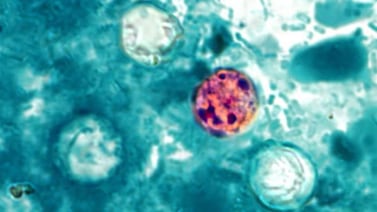
Yersinia pestis bacteria, which cause plague, are found in small mammals and the fleas that feed on them. Pneumonic plague, which involves the bacteria infecting the lungs, is the only form that can spread from person to person through respiratory droplets.
It can take as little as one day after exposure for the person to start showing symptoms, which include fever, headache, weakness, and the development of pneumonia.
Plague can be treated with antibiotics — but treatment needs to happen quickly. Pneumonic plague can be fatal if not treated within 18 to 24 hours of the first symptoms, according to the WHO.
Editor’s note: This story was updated to include that the WHO is seeking information about a possible second infected worker.
Alison Young is Healthbeat’s senior national reporter. You can reach her at ayoung@healthbeat.org or through the messaging app Signal at alisonyoungreports.48