Public health, explained: Sign up to receive Healthbeat’s free New York City newsletter here.
Data analysis by Thomas Wilburn
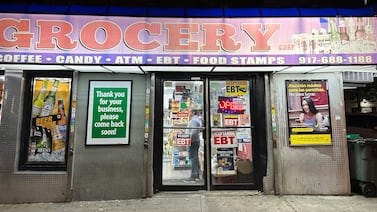
New York City’s bodegas have long been hailed as good neighbors, small mom-and-pop institutions that provide basic food items like milk and eggs in a pinch. They’re often vital community resources in neighborhoods ignored by traditional supermarket chains.
Now, as thousands of New Yorkers who shop at these stores lose food benefits due to federal rule changes, some bodega owners are worried about their stores’ survival.
About 26,500 New Yorkers recently lost access to the Supplemental Nutrition Assistance Program, or SNAP, under new federal work requirements tied to President Donald Trump’s sweeping tax and spending package, H.R. 1. For many, that means about $200 less a month to spend on food, a loss that could have an outsized effect on the city’s small grocery stores. SNAP purchases generally make up 15% to 20% of a bodega’s revenue, depending on the number of recipients in the neighborhood, said Francisco Marte, president and founder of the Bodega and Small Business Group.
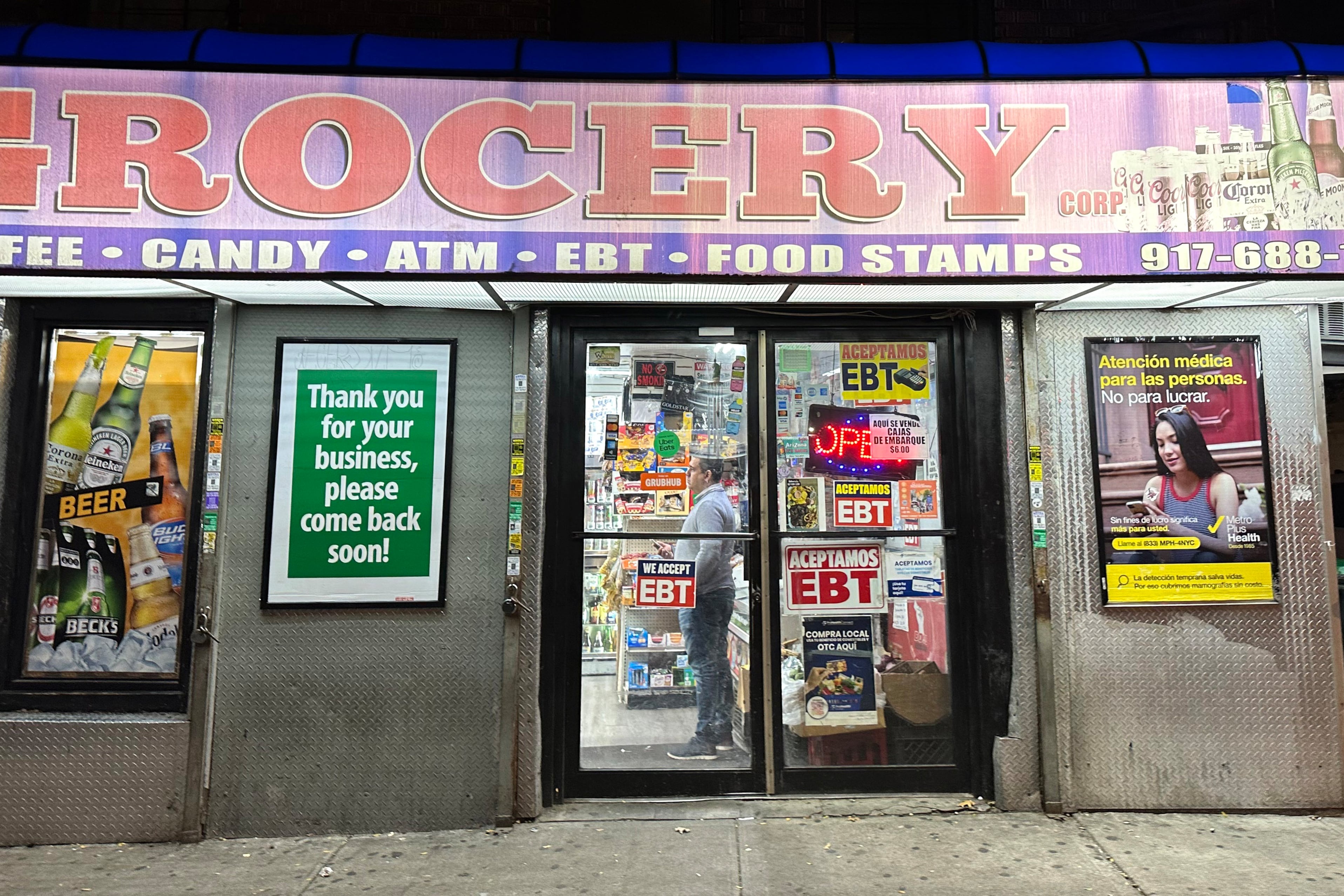
At a corner bodega on the Grand Concourse, a thoroughfare that cuts through the heart of the Bronx, Yomary Pichardo said SNAP benefits make up as much as 30% of her revenue. Her store sits on the ground floor of an apartment building in the Tremont neighborhood, where bodegas outnumber supermarkets. About 44% of residents in the area rely on SNAP benefits, according to city data.
Pichardo said it’s too soon to see the full impact on her store, but she expects the fallout to be significant as fewer shoppers pay with Electronic Benefits Transfer cards, or EBT.
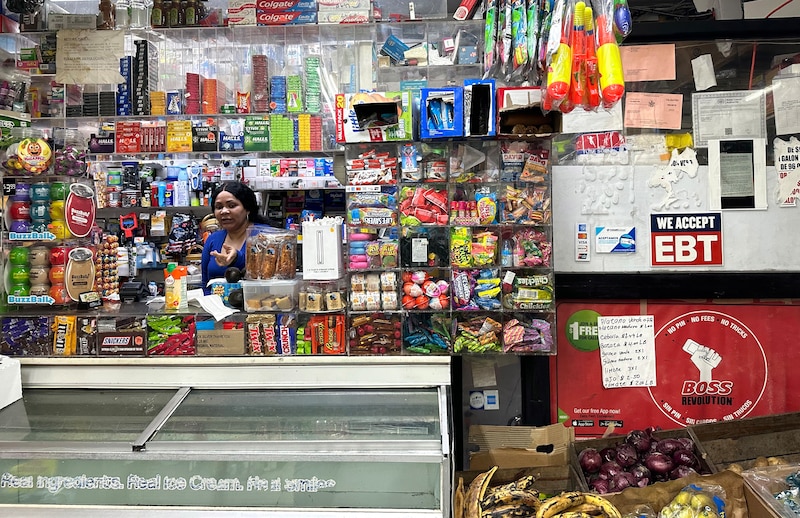
“If I didn’t accept EBT, I’d be forced to close the store,” Pichardo said from behind the counter, her face framed by a clear partition stocked with candy bars, gum, cough drops, and toothpaste. Cardboard boxes holding plantains, red onions, and potatoes sat nearby at the entrance.
Federal rules push thousands off SNAP
The new work requirements took effect March 1 and gave certain SNAP recipients ages 18 to 64 three months to comply before losing assistance. Some recipients began losing benefits in June after failing to meet the requirements. As of Oct. 1, they can reapply for SNAP benefits.
Of the 26,500 people who lost SNAP benefits, 40% involved Brooklyn residents and 26% involved Bronx residents, according to the Department of Social Services. Slightly more than half involved single adults between the ages of 18 and 35, with men accounting for nearly 6 in 10 case closings.
The Bronx has the city’s highest share of residents relying on SNAP, at 33%, followed by Brooklyn at 22%, according to city data. About 14% of residents in Queens and Staten Island rely on the benefits, along with 13% in Manhattan.
Although the Bronx qualifies for an exemption from Medicaid work requirements because of its high unemployment rate, that exemption does not apply to SNAP, which has separate rules, a spokesperson for the New York State Department of Health told Healthbeat.
The law is also shifting more of the cost of administering SNAP to state and local governments. New York City — where 1.8 million residents rely on the benefits — expects to absorb nearly $111 million in additional costs.
City officials are urging people who lost their benefits to reapply for three more months by visiting a Human Resources Administration office.
“These federal rules are having an impact well beyond the people who were receiving SNAP,” Erin Dalton, commissioner of the Department of Social Services, said in an interview with Healthbeat.
SNAP losses squeeze bodegas and families
Marte estimates there are between 10,000 and 12,000 bodegas in New York City. Many are owned and operated by immigrants, including many Latinos.
The stores have become community institutions where residents can run a tab, leave keys for their children, or find a sympathetic ear at the counter. Many stayed open during the height of the pandemic, when major supermarkets closed, and even managed to sell toilet paper as shelves elsewhere were empty.
For many families receiving SNAP, bodegas and other convenience stores are also places to buy groceries. Nationwide, convenience stores made up 44% of SNAP-authorized retailers and account for 5% of SNAP benefit redemptions in 2021, according to the U.S. Department of Agriculture’s Food and Nutrition Service.
“We play real big roles in the community, and that’s why we are so iconic,” Marte said.
But that role in their neighborhoods could become harder to sustain as more New Yorkers lose their SNAP benefits, advocates say.
“Stores will start losing more revenue, and it will become more like a chronic issue, and maybe stores will start closing in communities that need them the most,” said Angela Trude, a professor in the Department of Nutrition and Food Studies at New York University who studies SNAP benefits and bodegas.
Families who have lost SNAP benefits are already confronting those financial pressures in their own grocery budgets.
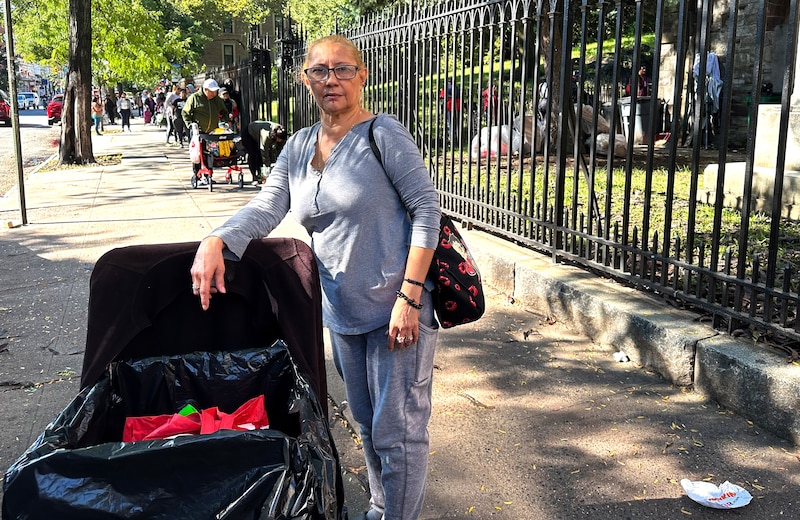
Outside St. Ann’s Church in the South Bronx, Mency Tejesus lined up on a recent Wednesday morning with dozens of others seeking food at a weekly food bank. Pushing a metal cart, the 62-year-old mother from Puerto Rico had collected tomatoes, cans of black beans, a bag of oatmeal, and several cans of tuna.
The food has become especially critical after her adult son, who relies on SNAP benefits, received a notice saying he needed to meet the new work requirements. His loss of benefits cut the family’s food budget in half, to $298, Tejesus said.
Tejesus said she relies on bodegas for some of the family’s groceries, comparing prices with supermarkets as she tries to stretch the reduced food budget.
“Believe me, I was so mad,” Tejesus said. “I said, ‘Why are they doing this?’”
New Yorkers who have lost their SNAP benefits or believe they may qualify for an exemption can call 718-SNAP-NOW (718-762-7669) for assistance. More information is available through the ACCESS HRA app or at nyc.gov/ACCESSHRA.
Trenton Daniel is a reporter covering public health in New York for Healthbeat. Contact Trenton at tdaniel@healthbeat.org or on the messaging app Signal at trentondaniel.88.