Public health, explained: Sign up to receive Healthbeat’s free New York City newsletter here.
As new Medicaid work requirements are set to take effect in January, approximately 200,000 Bronx residents could get a reprieve.
Because of the borough’s high unemployment rate, Bronx residents qualify for a federal hardship exemption from the new requirements, state officials said. New York plans to implement the exemption, which would apply automatically to eligible Medicaid recipients without requiring them to take additional steps.
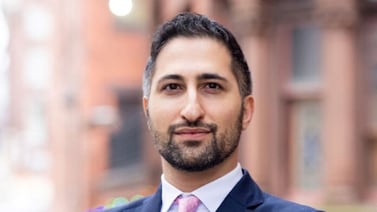
Amir Bassiri, Medicaid director for the New York State Department of Health, confirmed at a meeting with health officials earlier this month that the Bronx is eligible for the exemption.
Under federal guidelines, counties qualify for a short-term hardship exemption if their unemployment rate is at least 8% or 1.5 times the national average, whichever is lower. The Bronx has an unemployment rate of 7.1%, according to the most recent available state Labor Department data.
Without an exemption, many Bronx residents would have to show they are working at least 80 hours a month, attending school at least part time, or volunteering to maintain their health coverage. Health advocates have warned that the additional paperwork and reporting requirements could cause eligible people to lose their coverage.
The Bronx also has the city’s highest share of Medicaid recipients. New York’s 15th Congressional District, which includes parts of the Bronx, has 510,000 Medicaid enrollees, the most of any congressional district in the country.
Urban Health Plan, a community health center in New York, described the Bronx as “ground zero for what H.R.1 means in practice,” referring to President Donald Trump’s sweeping budget package passed last year. The law made significant changes to Medicaid, including the new work requirements.
Almost 66 million Americans rely on Medicaid, the government health insurance program for low-income Americans that is jointly funded by the federal government and states. Some 3.5 million enrollees live in New York City. But H.R.1 threatens to shrink that population by cutting nearly $1 trillion in federal Medicaid spending over the next decade. The New York City Department of Health and Mental Hygiene estimates that up to 900,000 New Yorkers are at risk of losing Medicaid coverage because of the new work requirements.
New York has drafted a letter seeking the exemption but has not formally submitted it to the federal government, Bassiri said. He said the exemption does not require federal approval and would take effect once the state submits the letter.
A spokesperson for the U.S. Centers for Medicare & Medicaid Services confirmed Friday that the agency had not received New York’s letter. Asked whether the agency expected to grant the exemption, the spokesperson said CMS “does not speculate on potential future actions.”
Bassiri spoke with Healthbeat last week about how the exemption would work, how long it could last, and the challenges facing the state as it prepares to implement the new requirements. He described the exemption as a “slight relief.”
This interview has been edited for clarity and length.
Can you give us an overview of where things stand with the new work requirements exemption for the Bronx?
The law says this: If you are pursuing that hardship exemption, you need to provide something in electronic format that describes why you believe that exemption criteria is met, and you have to submit that to the CMS (Centers for Medicare & Medicaid Services). That we have drafted. It’s going through the approval process (within the state). We have not yet sent it to CMS formally, but we have discussed this with CMS, who is encouraging states who intend to have a short-term hardship exemption applicable in January on day one. They’re encouraging people to send in their letters. It is not an approval process (for the federal government). Once we submit it, we will not be waiting for an approval per se before it’s in effect.
Once the exemption goes in place on Jan. 1, is that automatic? Is there anything Medicaid enrollees in the Bronx need to do?
No, not for Medicaid eligibility purposes. In the New York State of Health application, the back-end coding will identify the residential address of the member and automatically renew them. It’s actually seamless for the members in the action they have to take. If the (unemployment) rate falls below, then obviously there’s action for people in the Bronx that are on Medicaid to take.
How long will the exemption last?
We are not asking for a time period. We want the exemption to last as long as it needs to last and we’re meeting the federal standards, which is appropriate. If there was a little bit more clarity, from our standpoint — if we knew, which we don’t, but if we knew it was going to end at a certain time, I guess we could say in the letter we’re asking for it for “this time period.” It’s in effect until it’s not, and that’s how it will be evaluated.
How will the state determine residency in the Bronx?
When a person who is on Medicaid or seeking Medicaid coverage goes to the New York State of Health application, they have to put in their residential address. Our system will be able to identify that person is a resident of the Bronx, is either seeking Medicaid or renewing their Medicaid, and is exempt. We can bypass other parts of the application pertaining to work and community engagement requirements, but it’s based on the address they put in the application.
Do you all have a sense of how many Bronx residents could have lost their Medicaid coverage without the exemption?
Not with precision, unless we did a lot of detailed analysis. This is so specific to an individual. There are a lot of other factors that could result in people’s keeping coverage, especially in year one, where you have self-attestation as a permissible activity that a person can attest to being medically frail or attest to having been unable to work due to traveling for health-related illness and other healthcare conditions.
Are there any other counties in New York State that would be eligible for this exemption?
We do not believe so at this time. There are some that are close, and then there’s some that are clearly seasonal, affected by seasonal employees, where you will see maybe a quarter of the year, but then the rest of the year they’re below. That’s something we would like CMS to weigh on in the future. But there’s nothing that is even comparably close (to the Bronx).
Are there any concerns over the implementation of the work exemption?
There are extensive concerns on the implementation of this. This is probably the largest policy and operational implementation we have seen since the (Affordable Care Act). The concern is really the lack of time that we have had to really test and clean up loose ends and just polish the design of the process … The testing has been cut short due to the federal requirement on implementation timeline.
The biggest concern is the lack of trust that people have generally with what has gone on in our communities, especially immigrant communities. There is a lack of trust in what information is communicated, shared, etc., and that makes it very hard to communicate to our members on how to act, when, how to communicate with our partners because we do need more information from people to ensure that they can stay covered. A lot of people are reluctant and don’t know who they’re sharing the information with. That’s a very big challenge.
The other is this is a very large-scale implementation. We do not have the most sophisticated modern systems known to mankind, meaning there will be bumps along the way. Not everything is likely to work perfectly on day one, but I think we have some things to hold our hat on.
As far as you know, are there any other counties in the country that would be eligible?
I am absolutely sure that there are. The question is: Is that state going to pursue that exemption? It’s optional. There definitely are other counties nationally that exceed that threshold.
Once CMS receives the letter, is there anything the federal government could do to prevent this exemption from taking effect?
I try not to speak in definitive terms but no. This is what the federal law explicitly states. … What they can do, and what I expect they would do, is require monitoring or to maybe ask for quarterly updates. If that unemployment rate declines and it no longer meets the federal threshold, there’s a lot of activity the state has to take to ensure that Bronx residents who are subject to the requirements get adequate notice, have all the information about when it will take effect.
There’s a lot of administrative things that are federally required to occur if and when we no longer meet the designation. However, as we look at the data historically, the Bronx has met this federal threshold going back to January of last year, month over month. It’s been consistent.
Trenton Daniel is a reporter covering public health in New York for Healthbeat. Contact Trenton at tdaniel@healthbeat.org or on the messaging app Signal at trentondaniel.88.