Public health, explained: Sign up to receive Healthbeat’s free New York City newsletter here.
As New York City’s HIV cases have ticked upward in recent years, federal grants totaling $17.5 million have expired for seven community organizations and major healthcare systems providing HIV-related services to New Yorkers, according to a Healthbeat analysis of federal grant data.
The five-year grants, administered by the Centers for Disease Control and Prevention, ended Sept. 30. The data, compiled by the health policy research group KFF, shows that the program had awarded $239.3 million to 96 organizations nationwide. The cuts are already being felt locally.
Affected programs range from those at the city’s public hospital system and private hospitals to smaller agencies, such as the African Services Committee in Harlem and the Alliance for Positive Change in Manhattan, which reach people who might otherwise struggle to access HIV prevention or treatment due to language barriers or cultural differences. The cuts could have an outsized effect on smaller organizations that rely more heavily on federal funding, advocates say, and come at a time when HIV infections remain disproportionately high among Black and Latino New Yorkers.
Of the seven organizations Healthbeat contacted to learn how the funding cuts will affect their services, only NYC Health + Hospitals responded, saying the cuts had eliminated two programs.
One was a sexual health program that connected patients newly diagnosed with HIV to clinics and helped others access PrEP, a medication used to prevent HIV transmission, public hospital officials said. The funding loss also ended an emergency department program at Jacobi Medical Center, a public hospital in the Bronx, that helped patients who tested positive for HIV access treatment.
Without the emergency department program at Jacobi, patients could face delays in treatment.
The funding expired after the Office of Management and Budget recommended this summer that the CDC not renew the grant program, which supported HIV services in community health centers across the United States, Puerto Rico, and the U.S. Virgin Islands.
The grants provided money directly to community groups — instead of government agencies — for HIV testing, rapid connections to medical care, referrals for preventive medication, and outbreak response. Since the late 1980s, as the AIDS epidemic intensified, the CDC has funded community organizations directly to expand access to HIV prevention and treatment in underserved communities.
“It’s devastating,” said Allison Dubois, executive vice president and chief operating officer for Sun River Health, a healthcare system with centers in New York City, the Hudson Valley, and Long Island that wasn’t directly affected by the cuts. “To lose these resources, it feels certainly like a missed opportunity, but also just like we’re taking our eye off the ball.”
Funding cuts come as New York City marks World AIDS Day
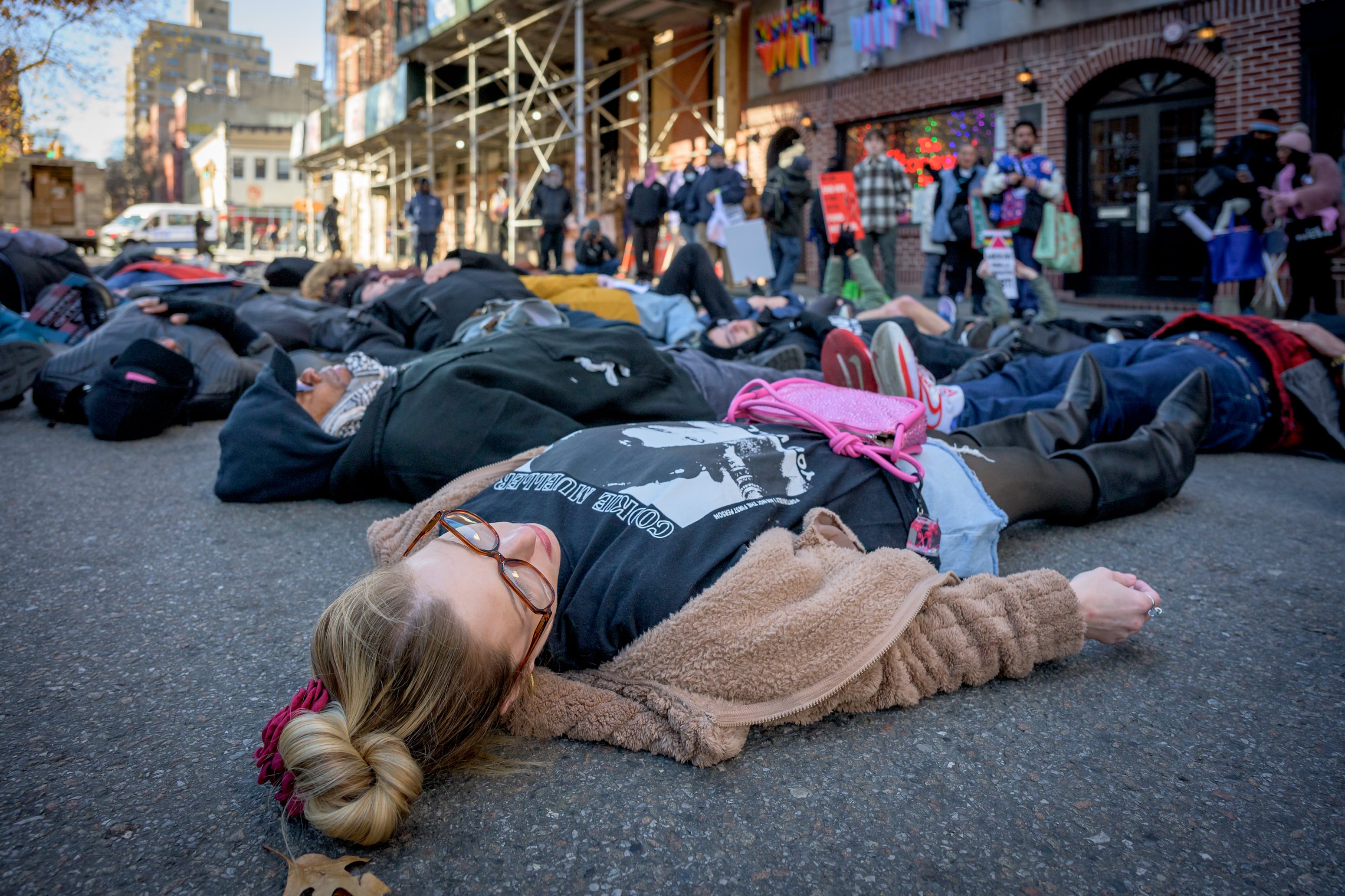
Public health leaders and healthcare advocates are preparing to mark World AIDS Day on Dec. 1. Housing Works, a New York City nonprofit focused on healthcare and housing, will join other advocacy groups, community leaders, and elected officials in Times Square that day to read aloud the names of 120,000 New Yorkers who have died of AIDS-related causes.
“It’s crazy in 2026 that we’re talking about this — the same things that we were talking about in the ’80s, but people need to be educated,” said Nikki Boone, a 52-year-old Bronx resident who has been living with HIV since 1992. “There’s no cure, you know. So we do still need the funding.”
The number of HIV diagnoses in New York City increased from 1,505 cases in fiscal year 2022 to 1,731 in fiscal year 2025, the latest year for which data is available, according to the Mayor’s Management Report released in September. Among New Yorkers newly diagnosed with HIV in 2024, 44% were Black and 41% were Latino, proportions similar to those observed over the previous five years.
City officials attribute the recent rise to pandemic-related disruptions in prevention, testing, and care, though they note that increased testing could account for some of the rise.
The loss of the grant could force New York City community organizations and other healthcare centers to scale back services, or even close, as has happened elsewhere, according to Jeremiah Johnson, executive director of PrEP4All, an advocacy group working to make HIV medication more widely available. Many healthcare providers are already facing financial pressure from Medicaid cuts under H.R. 1, President Donald Trump’s sweeping budget package.
During his first term, in 2019, Trump announced an initiative to eliminate the HIV epidemic in the United States by 2030.
In July, a coalition of 71 public health and advocacy organizations wrote to Health and Human Services Secretary Robert F. Kennedy Jr. and then-acting CDC Director Jay Bhattacharya, urging them to reconsider the funding lapse and “immediately” provide grant recipients with a timeline to prevent layoffs and closures.
“Ending this program without a clear plan for what comes next would dismantle prevention infrastructure that has taken more than three decades of federal investment to build, and do so just as that long record of measurable returns is accelerating,” they wrote in their letter.
HIV prevention organizations and advocacy groups met with congressional leaders last week to discuss restoring the funding, hoping the sweeping Democratic victory in the midterm elections could help reverse the CDC’s decision. The groups are lobbying the Senate to propose more funding for HIV prevention and include language in its budget report guaranteeing direct funding for community groups providing those services.
Congress should direct the CDC to reopen the grant program to community organizations, said Julie Scofield, a member of Defend Public Health, a volunteer network of public health leaders, workers, and other advocates.
Community health groups confront funding “unknowns”
The federal government has awarded $91 million nationwide in one-time grants to state and local health departments to support HIV prevention efforts through May 2027. Health departments are encouraged to work with community-based organizations but are not required to allocate funding to them, according to KFF, leaving those organizations uncertain about their future funding.
“There’s a lot of unknowns about what organizations can do for the future,” said Rosy Mota, director of health policy for the Latino Commission on AIDS in Manhattan’s Chelsea neighborhood, an advocacy group that wasn’t directly affected. “That’s what I think people are thinking about — unsure if they can hire that one staffer they need to do this one job, or do HIV testing.”
In a statement to Healthbeat, CDC press secretary Emily Hilliard said the agency remains committed to supporting HIV prevention efforts nationwide as it “streamlines” HIV funding through local health departments.
The CDC awarded the New York City Department of Health and Mental Hygiene $5.8 million and the New York State Department of Health $2.6 million.
In New York City, the money will supplement existing federal and local funding for HIV testing, treatment, and prevention services, a spokesperson for the city Health Department said. The state will use its award to improve HIV surveillance systems and cover other prevention expenses, a state Health Department spokesperson said.
The New York City-based organizations that lost direct CDC funding, according to a KFF analysis and a Healthbeat review of federal contracts, are:
_ African Services Committee, Manhattan: $2.6 million
_ AIDS Service Center of Lower Manhattan, also known as the Alliance for Positive Change, Manhattan: $2.3 million
_ BronxCare Health System, Bronx: $2.3 million
_ Montefiore Medical Center, Bronx: $2.6 million
_ New York-Presbyterian Hospital, Manhattan: $2.9 million
_ New York City Health + Hospitals/Jacobi, Bronx: $2.3 million
_ Sunset Park Health Council, Family Health Centers at NYU Langone, Brooklyn: $2.3 million
Among those losing funding is the African Services Committee, a Harlem nonprofit founded by an Ethiopian refugee 40 years ago. Today, the organization has a staff of 58 and serves thousands of people every year in New York City and Ethiopia, providing HIV and tuberculosis prevention services, as well as housing and legal services to African immigrants and refugees, according to the group’s website and tax documents.
In 2021, the year the African Services Committee began receiving the CDC grant in annual installments of $441,625, the nonprofit reported $5.7 million in revenue, according to federal records and tax documents.
Public health advocates say community-based organizations such as the African Services Committee fill a need that larger government agencies struggle to meet because of the trust these organizations have built in the neighborhoods they serve.
“These are people on the ground,” said Carl Schmid, executive director of the HIV+Hepatitis Policy Institute, a Washington, D.C.-based advocacy group. “They’re part of the community. They know the community. They really do a better job of finding people living with HIV, connecting them to care quicker.”
Trenton Daniel is a reporter covering public health in New York for Healthbeat. Contact Trenton at tdaniel@healthbeat.org or on the messaging app Signal at trentondaniel.88.