Public health, explained: Sign up to receive Healthbeat’s free national newsletter here.
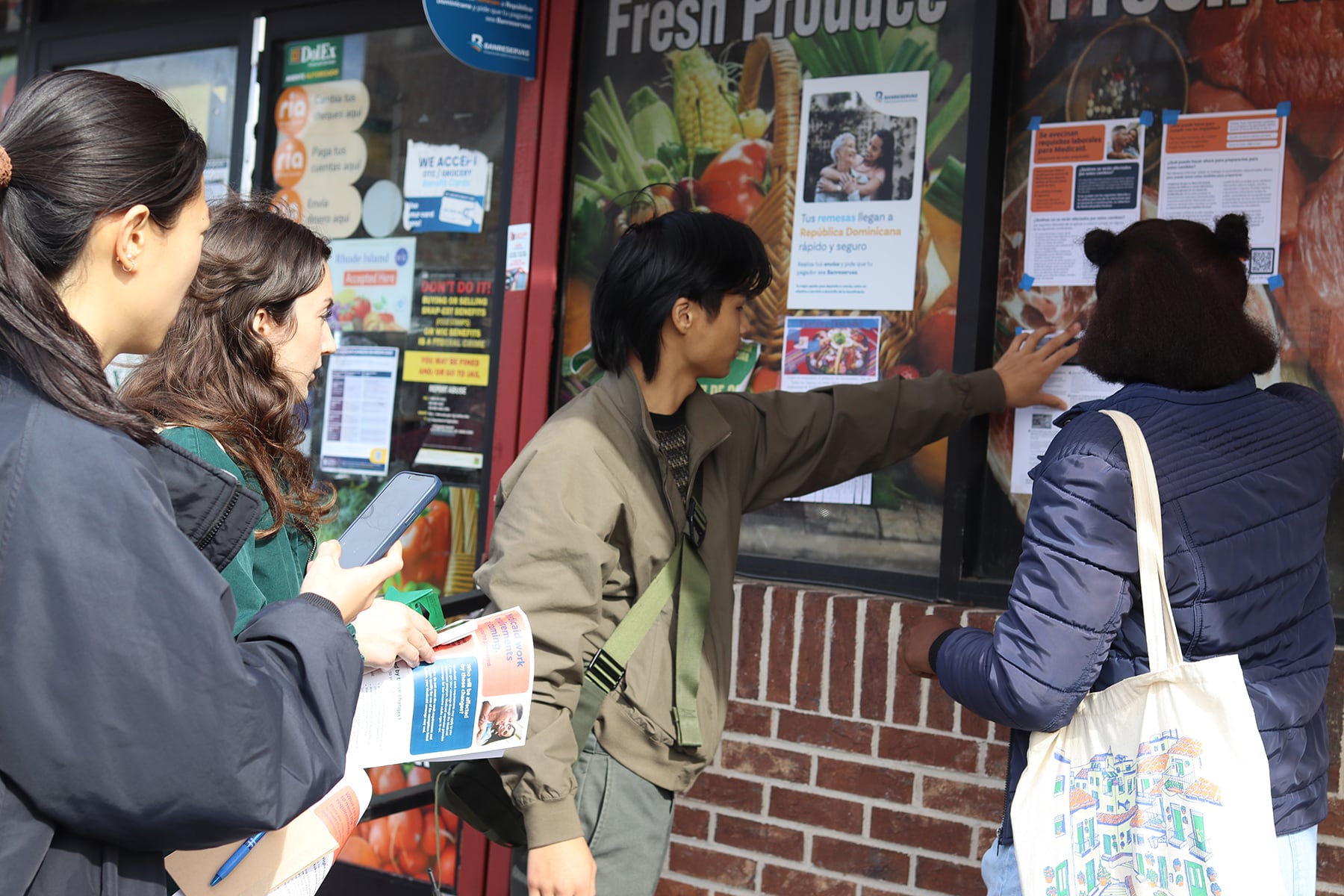
Inside a small gas station, surrounded by chips, candy, cigarettes, and lottery tickets, a group of public health graduate students waited as the cashier finished helping customers.
When it was their turn, Debbie Kariuki and her fellow Brown University students stepped forward with their stacks of Medicaid flyers. Through a glass partition, they explained to the woman at the register that they were sharing information about changes to Medicaid that could affect people’s healthcare coverage.
“There wasn’t actually much room for us to post flyers,” Kariuki told me.
But the cashier was eager to help alert others in her South Providence, Rhode Island, neighborhood. She welcomed the English and Arabic flyers, clearing out space for them at the checkout counter. She also asked for additional flyers in Pashto.
The Brown students are part of wide-ranging efforts to reach millions of people across the country who are affected by major changes to Medicaid that start for certain recipients in January. To keep or obtain Medicaid healthcare coverage, these people will be required to demonstrate they meet new work or “community engagement” requirements, and they will face more frequent eligibility checks.
But the rules are complicated. So much so that an estimated 1.3 million people are projected to lose their healthcare coverage next year — not because they aren’t eligible, but because they will have problems navigating Medicaid’s new bureaucratic requirements, according to an independent analysis.
The neighborhood canvassing effort that drew Kariuki into the gas station is part of a new nine-student fellowship program — a partnership between Brown’s School of Public Health and Rhode Island’s Medicaid program.
“I would have never expected walking into a gas station being a part of this project,” Kariuki said. But those flyers may help keep someone from losing their Medicaid coverage, she said,
The challenge of communicating the changes is enormous because the rules are complex, they don’t apply to all Medicaid recipients, and they can vary by state. Figuring out who is affected depends on a range of individual circumstances.
Mary-Beth Malcarney, senior advisor on Medicaid policy at the healthcare consumer advocacy group Families USA, said that while state agencies are sending out materials to Medicaid recipients, not everyone will understand the changes or what they need to do.
Information delivered by trusted messengers — such as people at neighborhood clinics, community centers, or schools — may be more effective for some Medicaid beneficiaries than a government letter, Malcarney said.
“States are trying to do their best, but it’s the biggest change to Medicaid in a generation,” she said.
State Signals
Here are some ways states and organizations are helping Medicaid recipients navigate changes enacted last year as part of H.R. 1, also known as the One Big Beautiful Bill Act, which was a key budget initiative of President Donald Trump and congressional Republicans.
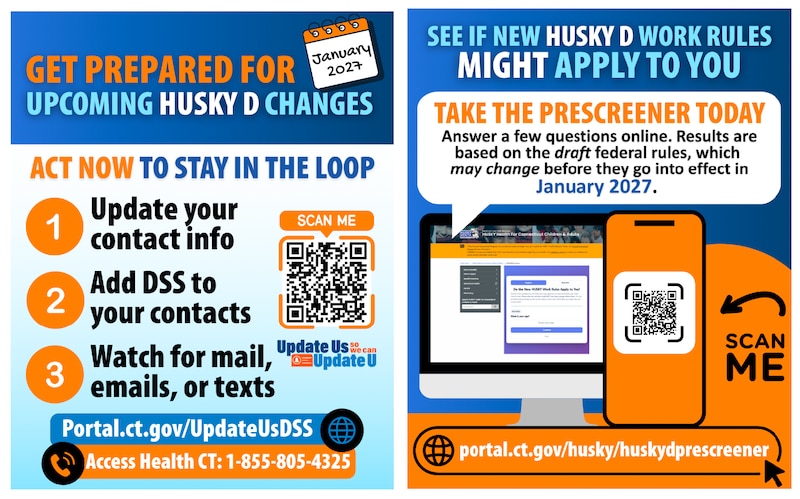
Connecticut: The Connecticut Hospital Association has been creating and updating outreach materials, education guides, and checklists to help hospitals, health systems, and community groups raise awareness about the Medicaid changes. A messaging starter kit includes a series of pre-written text messages, social media posts, fact sheets, and a poster that anyone can download. A graphic flowchart in the kit is designed to help Medicaid beneficiaries assess whether the new work rules apply to them.
Michigan: The state launched a new online interactive tool in October to help its Healthy Michigan Plan beneficiaries determine whether the work rules apply to them, whether they qualify for an exemption, and what actions they may need to take. The Michigan Work and Exemptions Screening Tool (MI WEST) uses plain language to guide users through the rules.
West Virginia: Medicaid managed care provider Highmark Health Options West Virginia has partnered with Fortuna Health on a consumer navigation platform that seeks to help eligible people maintain their Medicaid health coverage by simplifying the renewal process and alerting recipients when actions are due. The company says the platform offers plain-language guidance in multiple languages. Recipients get outreach via text, email, and phone and have access to live navigators.
California: The California Primary Care Association is partnering with the California Department of Health Care Services to provide more than $3.1 million in funding for new navigator programs at community health centers. These navigators will help Medi-Cal members address the work and community engagement requirements, six-month renewal cycles, and shorter retroactive eligibility periods.
Virginia: More than 30 organizations — ranging from health insurers and providers to food banks and community organizations — have joined a new statewide coalition announced last month. The Virginia Interfaith Center for Public Policy plans to leverage its network of 900 congregations and faith communities to help with Medicaid outreach. Goodwill of Central and Coastal Virginia is establishing a referral process to connect people affected by new work requirements with job opportunities.
The Reality Check
Even with innovative outreach, people who are eligible for Medicaid could still lose coverage because of paperwork and other administrative hurdles, advocacy groups say.
“It just can’t make up for these processes that are asking compliant people to prove it on paper – and to prove it every six months, again and again and again,” Malcarney said. “It would be hard enough if it were a one-time deal. But this is in perpetuity.”
Federal officials estimate that 3.1 million people will lose Medicaid coverage in the first full year of the new work requirements. Of those, an estimated 1.3 million people — more than four in 10 — could lose health coverage because they have difficulty with the new verification and reporting processes, even though they meet the new requirements or qualify for exemptions, according to an Urban Institute analysis of federal projections. But the federal government’s numbers, the institute says, likely underestimate how many people will lose coverage.
Officials with the Centers for Medicare and Medicaid Services did not respond to Healthbeat’s questions about whether current outreach efforts are sufficient to inform beneficiaries about the changes and prevent unnecessary coverage losses.
Back in Rhode Island, Kariuki said she knows the students can’t reach everyone who needs help. But by getting information into the hands of people who can further share it with their neighbors, she hopes their work will make a difference beyond the places they visit.
Alison Young is Healthbeat’s senior national reporter. You can reach her at ayoung@healthbeat.org or through the messaging app Signal at alisonyoungreports.48