Public health, explained: Sign up to receive Healthbeat’s free national newsletter here.
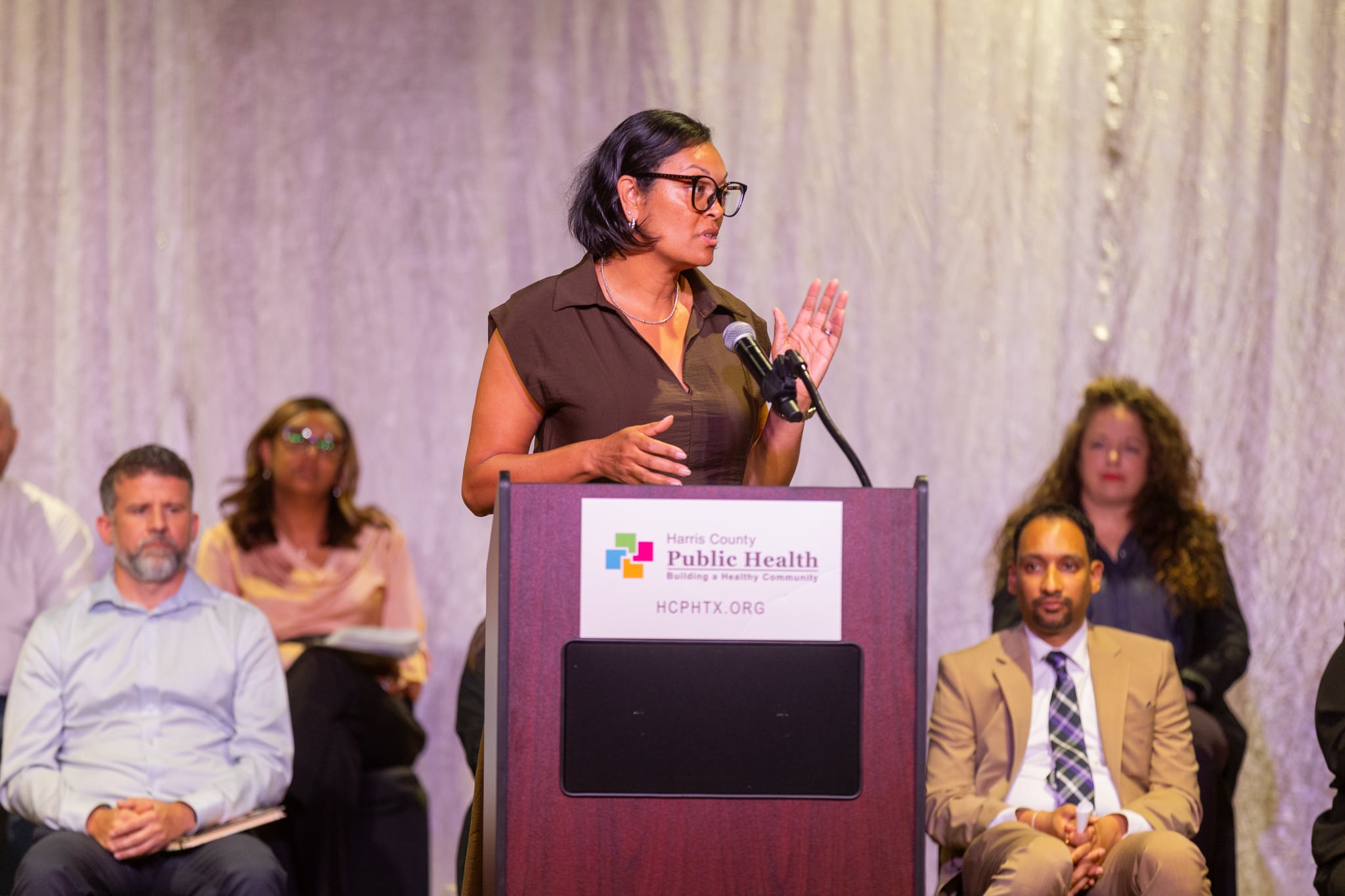
Dr. Ericka Brown, the local health authority at Harris County Public Health in metro Houston, began her career as a physician providing clinical care.
But Brown was always focused on helping underserved communities, she said, initially working in Harris County’s safety net health system and now serving as the county health department’s division director for community health and wellness.
We recently spoke with Brown to get her insights on five questions about her public health work in Texas’ largest county by population. This 5 From the Field interview has been edited for clarity and length.
What drew you to a career in public health? Is it something you planned? Did you stumble into it?
It’s a little bit of both. I am a family medicine physician by training, and when I trained, there was not much education or exposure to public health. It was strictly clinical practice. I always practiced with underserved communities. As a provider, that’s just my love.
Now I get to affect the lives of patients and vulnerable populations, not just one patient at a time, but really thinking about it from a more global perspective, and driving the health of the community forward.
What are the one or two most pressing public health issues that your department is working on right now?
Immunizations. It’s really a huge issue since Covid and the politicization of immunizations. There is a lot of misinformation, which leads people to make misinformed decisions. So providing factual, scientific, evidence-based information about immunizations is one of the key issues we’re working on.
The other issue is equity, specifically equity for marginalized, vulnerable populations. Not just around their medical care, but around all the social support drivers that make a community healthy.
Access is one of the biggest issues. Providing education to the community and support about what is out there and what is everyone eligible for, what’s available. Then working with those partners to make sure that there is direct access and that the barriers to that social support service or medical service are removed, whether it be a language barrier, transportation barrier, or financial barrier.
How has declining public trust impacted the work your department is doing in the community?
It makes it more difficult.
The role of the community health workers and our outreach teams is very important to make sure we are reaching into communities from a culturally responsible perspective. I can say for Harris County Public Health, that is something that we do very well.
We are still a trusted member of the community, and I think that that is something that was built over time, and it is withstanding what is happening now.
We have a huge network of community health workers, both internal to our department and with external partnerships. These are people who are trusted advisers in the community, who are of the communities and part of that culture.
This goes a very long way to be able to speak to different communities in a culturally competent way, so that they can hear and receive the message that we are trying to give, hear and receive information about resources, about prevention. And they can trust that the information is factual.
What public health accomplishments are you particularly proud of?
My division holds all of the clinical and some of the social support services for the county public health department.
The team has done a phenomenal job at standing up a maternal-child health program, a Healthy Start program, and one of the leading WIC programs. Harris County, unfortunately, has one of the highest Black maternal mortality rates in the country.
It is our role to not only provide a strategy on how to move the needle in improving those outcomes, but to bring the community together and then to also provide programming around that.
Our clinical services for those who are vulnerable, in marginalized populations, who may be uninsured or under-insured, provides a range of health services, such as dental services, preventive services, STI [sexually transmitted infection] testing and treatment. Our substance use department is doing a phenomenal job at educating the community about the substance misuse problems that we have in our county, what to do about them, how to destigmatize those who are suffering from that condition.
Those are just some of the things that I’m just extremely proud of that we’ve been able to make a difference in improving the health of the community.
It’s the holiday travel season. Do you have any personal best practices for staying healthy when you travel?
When I’m sick, or when my children or someone in my family is sick, I stay home. You may not have the flu, you may not have Covid, but you have something. Nine times out of 10 that something is contagious. So, I try to stay home and keep my germs to myself.
If I’m traveling on a plane, I am one of those people that has my own sani-wipes, and I wipe my space down.
Certainly when we’re traveling, hand washing with soap and water is really key because all of those things we’re touching, other people are touching. It’s a naturally occurring thing that germs are around.
I am a huge proponent of vaccinations for myself, for my children, for my family. I do think they keep the public and myself and my family safer. So getting vaccinations at least two weeks prior to travel, because immunity has to have time to build up.
Alison Young is Healthbeat’s senior national reporter. You can reach her at ayoung@healthbeat.org or through the messaging app Signal at alisonyoungreports.48