Public health, explained: Sign up to receive Healthbeat’s free national newsletter here.
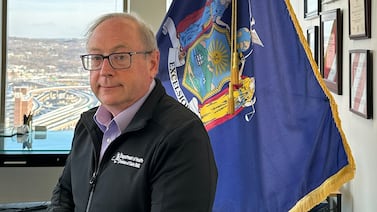
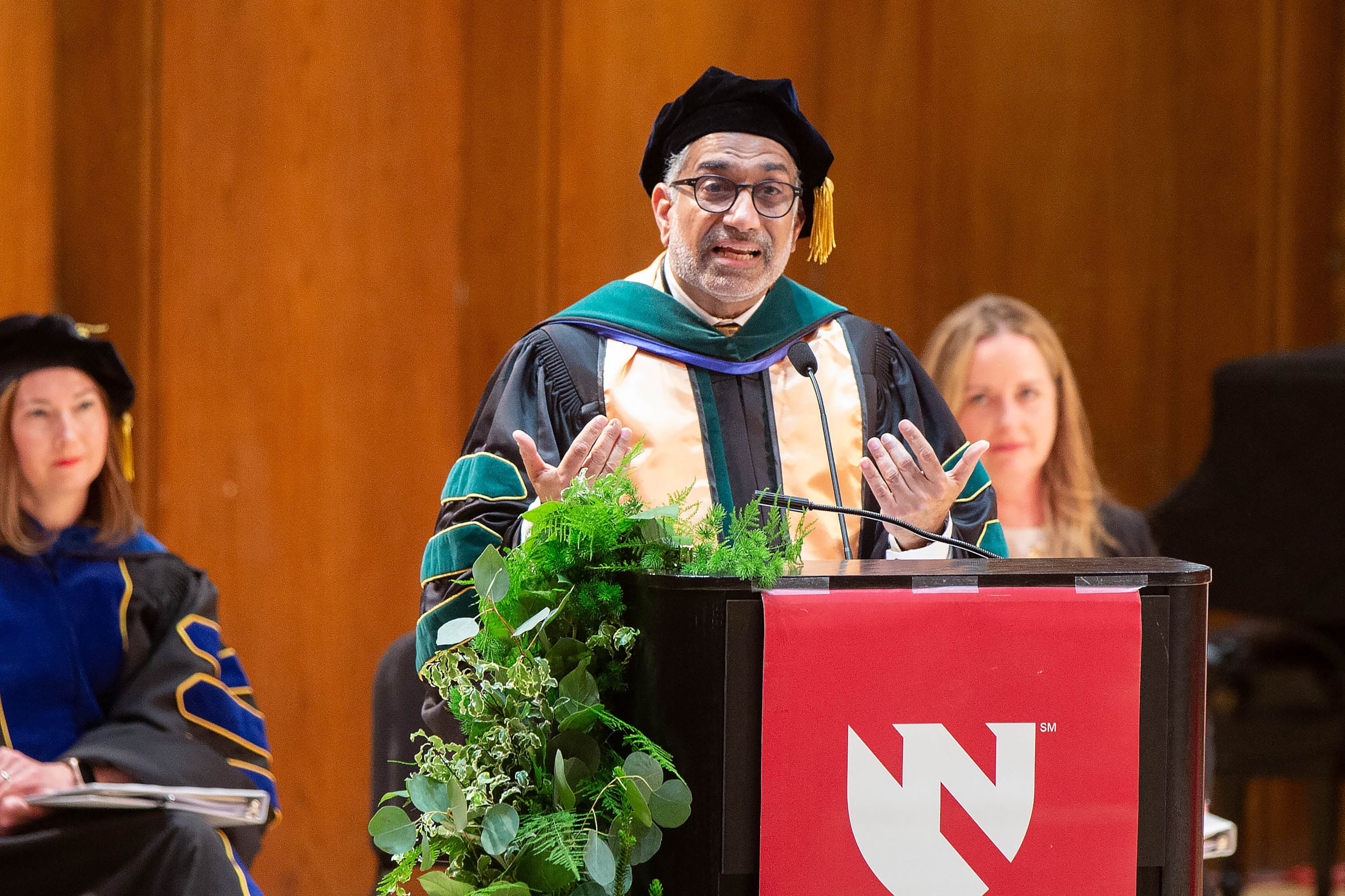
Trust, transparency, and sustained investment in public health will help determine how well the United States responds when the next public health crisis arrives, according to Dr. Ali Khan, dean of the College of Public Health at the University of Nebraska and a former assistant surgeon general.
Healthbeat spoke with Khan to get his insights on five questions about issues facing public health, including the “dismantling” of the Centers for Disease Control and Prevention, where he had a 23-year career that included serving as director of the Office of Public Health Preparedness and Response.
Despite financial and physical threats across the country, Khan says he remains optimistic about the opportunity public health professionals have to reshape and grow their relationships with their communities. This 5 From the Field interview has been edited for clarity and length.
You have a long history with the CDC. What are your biggest concerns about the changes underway there?
We’re not reforming the agency. We’re dismantling the agency. Sometimes it feels like we’re humiliating the agency.
We need to go back to what we are: a science-driven, neutral public health agency that was trusted by the American people.
I hear these complaints that we need to rebuild trust in public health. Unfortunately, the people saying they need to rebuild trust in public health are the ones who destroy the trust.
CDC came out of concerns about malaria in war areas. The U.S. has depended on CDC again and again. Whether it was the Cutter incident around contaminated polio vaccine [in 1955], foodborne outbreaks, Ebola, and our hurricane responses. After Hurricane Katrina, I was left on the tarmac in New Orleans with the advice to do good work, and the plane takes off. What I have is my team and access to a humvee and that was it. We reestablished a rudimentary public health system in that city to keep people safe.
That is the CDC I know. It’s very response oriented.
CDC was in a very uncomfortable position [during the pandemic]. CDC gives advice that for a respiratory pathogen, wearing a mask, staying away from other people, and getting vaccinated saves lives. Somehow we have forgotten that there was a point in time when we were thinking about can you use one ventilator for two people.
Across multiple administrations, CDC has not had the leadership that’s understood the culture of the agency. We need to make sure we have the right leadership at CDC.
CDC has always been a science-based, boots-on-the-ground agency. Just give them the opportunity to do that again without this partisan interference in what they do.
What drew you to public health?
I tell people I’m an accidental public health practitioner. I wanted to be an infectious disease doctor after reading about Louis Pasteur. I’d done my residency in internal medicine and pediatrics.
I was lined up to do an infectious disease fellowship, and had a great mentor who said: Why don’t you go to CDC? And I said: How do you spell that?
So there I am, off to the EIS, the Epidemic Intelligence Service disease detective program.
I fell in love with public health and the ethos of public health, the mission of public health to address the health of people writ large, worldwide, millions at a time, not just one at a time, and really not about sick care, but about helping people be healthy and promoting health within communities.
What was supposed to be a little two-year stint as a disease detective has now become almost a 35-year career working at the interface of medicine and public health. That’s the space I’m in every day, and I love it. I whistle to work every day.
What challenges are your students facing that the faculty didn’t have to contend with at the start of their public health careers?
It’s a completely different landscape for our students. A lot of this has to do with how they now manage a mistrustful public.
We need to develop our own trust with our communities, and we need to be visible in the work we do. Also better skills around information and disinformation. We are awash in data. How do they use that data to drive better policies? We have to train them differently.
They need to be more visible at community events, more visible at the legislature and county meetings. I’ve gone beyond telling my students that they need to have good relationships with policymakers and politicians, to saying they should become policy makers and politicians.
Also more time with their expertise spent on social media. I want to see more public health influencers.
But I’m excited about public health because they get to do something I didn’t get to do, which is they get to define what public health looks like in the 21st century, and they get to reintroduce public health to America and say: This is what I do for you, and I am so much more than infectious disease preparedness work.
What are some of the most pressing public health issues right now?
I think it’s a duality of chronic diseases and health equity in the United States.
If you look at, for example, obesity, 40% of Americans are obese. If I flip to other high-income countries, it’s somewhere between 18% and 25%.
I like to show that discrepancy globally to remind people we get to choose how healthy our community is. That’s a choice. There’s nothing biologically about Americans that make us obese. It’s about a social system and structure around us that allows this to happen.
Social justice, to me, is the heart of public health, and that includes equity issues for our community.
We need to recognize that your ability to be healthy is a function of what’s called social determinants of health. Do you have a job? Do you have transportation? Do you have shelter? Do you have access to fresh fruits and vegetables?
The second thing is the erosion in public health people and systems that we’re seeing across the nation.
There’s been a significant attrition in the systems and the people we need to keep our communities healthy. And the workforce is burnt out, not well paid, and many of them are threatened – not just mentally, but physically. Heck, somebody shot up CDC.
The core science we’re doing right. I think about the genomics, the data science, and the clinical advances. And when I tell somebody their ZIP code is more important than their genetic code, people generally don’t scratch their head anymore. They sort of get it. So that part we’re doing right.
What we’re not doing right is the way our systems are structured. Prevention is not at the heart of our health system in America. It’s actually sick care that is at the heart of the American health care system.
We’ve underinvested in public health systems at the state and local level. We’ve underinvested in our data systems. We’ve definitely underinvested in our ability to formulate and move policy within our communities.
What do you see as the root causes of the decline in public trust and what can be done?
I think we should be honest with ourselves that trust issues have deep roots. It’s not brand new.
If I talk about vaccine hesitancy, even [Edward] Jenner had to deal with vaccine hesitancy [in the 1800s] around his cowpox vaccine.
We need to be honest that actions on behalf of CDC and local and state public health officials over years have also undermined some of this trust, recognizing that the large decline in trust we saw was definitely during the pandemic.
Some of the communication failures, our inability to frame scientific uncertainty the way it should have been framed, so that when we make changes, it’s not like all of a sudden we decided this. It’s because science has changed. When we say follow the science, people think science is fixed. That’s not true about evolving science around an emergency. You get new information.
Social media has made this so much more possible. There has been a weaponization of science. It’s highly partisan right now.
I think we need to take the blame or however we want to frame it, for our missteps as public health practitioners and how we communicate with communities.
We’ve been invisible too long. The first time you hear from your public health practitioner should not be when they stand in front of a microphone and they put on a mask, and you go: Who are you telling me what to do?
They should have known that even before you were born, public health practitioners were worried about putting folate in cereal so that this child didn’t have a birth defect. And after you’re born, making sure that you’re vaccinated so you don’t have hepatitis B from your mom, the people putting you in a car seat, the people who are inspecting your restaurants, the people making sure you can turn on the tap and drink the water.
We’ve been too invisible for too long and that needs to change.
We also need to realize some people will never change.
While our vaccination rates are not 95%, which is what we’d like them to be, 92% of Americans – despite all of the misinformation and disinformation out there – still believe our advice and are going out to get kids vaccinated.
Maybe I should focus on educating the 92%, which is across the political spectrum, across race, ethnicity, every divide.
For that 92%, how do we have them trust us better as public health practitioners?
A lot of that is about radical transparency, talking about what matters to them at the local level, reminding them what public health does every day. We are the kids who help you think about what’s the right car seat size. We’re the kids who make sure when you walk into a restaurant you don’t get food poisoning.
I want to focus on the 92% in a nonpartisan way. I don’t want to lose that 92% because we’re becoming too shrill or becoming too personally partisan to remind people why they have a CDC. And I’d rather that happen before the next pandemic, as we’ve undermined our pandemic preparedness across the United States.
I’m hopeful. I’m going to give you a Warren Buffett quote because I’m in Nebraska. He said, “Never bet against the United States.” I know he meant it in a financial standpoint. But I’m going to say it in terms of public health and taking care of our communities.
I’m never going to bet against us.
Alison Young is Healthbeat’s senior national reporter. You can reach her at ayoung@healthbeat.org or through the messaging app Signal at alisonyoungreports.48