Public health, explained: Sign up to receive Healthbeat’s free New York City newsletter here.
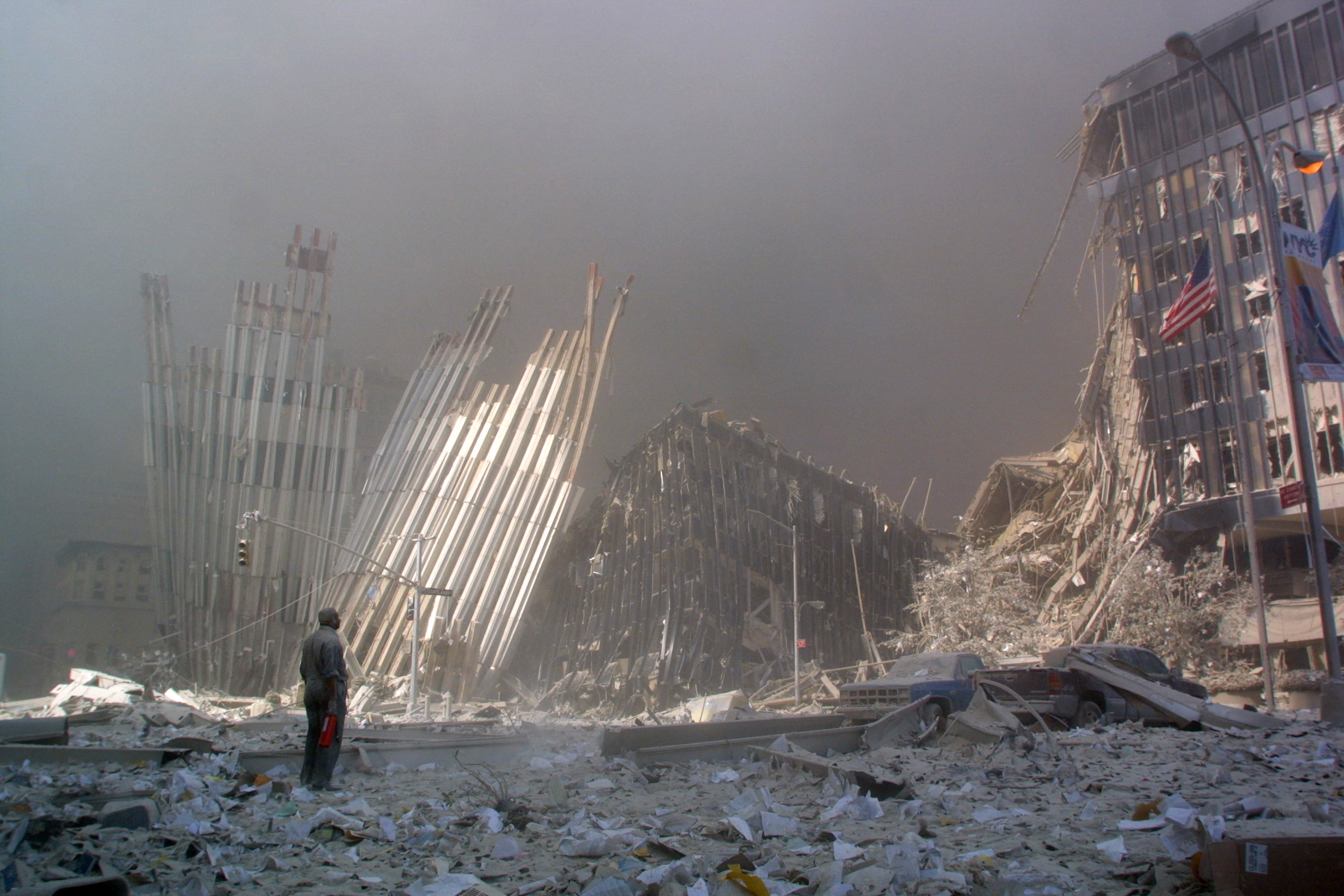
Twenty-five years after the World Trade Center attacks in Lower Manhattan, the federal government wants to study the health effects on an overlooked demographic: children, teens, young adults, and those in utero on Sept. 11, 2001.
Previous health studies have mainly focused on adults, in particular the emergency responders who rushed to Ground Zero in the hours and days after the Twin Towers crumbled on 9/11 and fell ill because of toxic exposure at the site. Hundreds of studies have looked at issues involving the lungs and upper respiratory tract, the stomach and esophagus, and various cancers — but not for younger New Yorkers.
Overseen by the World Trade Center Health Program and the Centers for Disease Control and Prevention, the Youth Research Cohort is in its infancy. Those involved are trying to find eligible participants. The study, with projected funding of $50 million, comes five years after Congress directed the World Trade Center Health Program Administrator to establish the study of young people affected by 9/11. Advocates have noted the delay in bringing the effort to fruition. It is expected to kick off July 1, 2027, according to a government website announcing federal grants. The same site says research will begin once the number of people participating “grows large enough.”
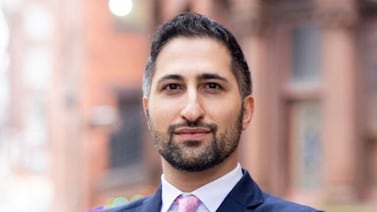
Forty-thousand youngsters lived in Lower Manhattan and western Brooklyn — what officials designated as the “disaster area” — during 9/11, said Dr. Matt Karwowski, chief of research at the WTC Health Program.
Many schools and daycare centers, some mere steps from Ground Zero, also dot Lower Manhattan, including Stuyvesant High School and Children’s Discovery Center at the World Trade Center.
Karwowski noted that children experience “environmental exposures differently than adults” and could fall ill in ways different from adults.
“Children are exposed to more dust and other potential sources of exposure through just normal activities that they do, like crawling on the floor, exploring things with their mouths,” said Karwowski.
CDC spokesperson Stephanie Stevens didn’t respond to questions seeking clarification on its plans to reach eligible people beyond pointing to a CDC website. Some of the 9/11 survivors may have left New York City.
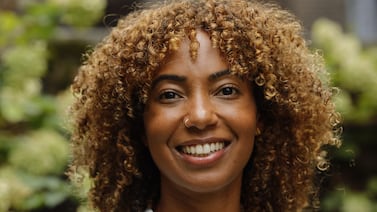
Others have stayed put, including Mariama James, a 9/11 health advocate who was eight months pregnant during the attacks and lived in an apartment on Gold Street in Lower Manhattan.
Her daughter, who is now 24, and two other adult children suffer from respiratory issues, PTSD, and other mental health issues, James said.
“She wasn’t even here, but the experience of growing up ill from an event that occurred before you were even born, and you don’t even know why you’re impacted.”
In recent years, the attacks have taken on greater significance as a major public health concern as the death toll for people who died from illnesses such as cancer have surpassed the nearly 3,000 people who were killed on 9/11.
Since that day, more than 96,000 people have been diagnosed with physical and mental health conditions as a result of exposure to the dust, smoke, debris, and traumatic events of 9/11, according to the WTC Health Program. The program says it has recorded more than 9,000 deaths since 9/11, but it’s not clear what role 9/11 played in those deaths.
Mayor Zohran Mamdani underscored the 9/11-related public health dangers this week, as his administration released more than 170,000 pages of documents showing that the city’s air quality was much more toxic than officials said at the time. At a news conference at City Hall, Mamdani accused unnamed city and federal officials before him of lying about air quality safety. Records note that buildings less than a mile from the World Trade Center found evidence of asbestos.
The World Trade Center Program was born 10 years after 9/11
In 2011, Congress passed the James Zadroga 9/11 Health and Compensation Act of 2010, which created the WTC Health Program to provide healthcare to more than 140,000 responders and survivors nationwide who fell ill because of exposure to the 9/11 attack sites in Lower Manhattan, the Pentagon, and Shanksville, Pennsylvania.
In December 2022, Congress directed the WTC Health Program Administrator to establish the research cohort of young people willing to participate in studies on the health and educational impacts of 9/11 on children, teens, and young adults up to age 21, including those who were in utero during the attacks. The program will study people who were in those age groups and were physically present south of 14th street in Manhattan or in Brooklyn from Sept. 11, 2001 to July 31, 2002.
Karwowski didn’t say how the program arrived at the geographical boundaries for the study.
Efforts since the congressional order to get the Youth Research Cohort up ran into delays and more recently, cuts from the Department of Government Efficiency. The turbulence included the termination and rehiring of Dr. John Howard, head of National Institute for Occupational Safety and Health, or NIOSH, and director of the World Trade Center Health Program. Howard has served as administrator since the program was established in 2011.
The staffing shortages at the WTC Health Program drew the attention of a group of New York and New Jersey members of Congress, all of them Republican. In a letter to Health and Human Services Secretary Robert F. Kennedy Jr., they raised concerns at the WTC Health Program, citing “devastating medical consequences” that threatened 9/11 responders and survivors. Health advocate Lila Nordstrom said efforts to promote the Youth Research Cohort, including a talk by a physician at a recent panel on 9/11 at Manhattan’s Mount Sinai, bode well.
“This newest call seems promising,” said Nordstrom, a youth advocate who was a student at Stuyvesant High School on 9/11 and parlayed that experience into a life of healthcare advocacy as the founder of an organization called StuyHealth. “I think everyone’s feeling really hopeful about it.”
Trenton Daniel is a reporter covering public health in New York for Healthbeat. Contact Trenton at tdaniel@healthbeat.org or on the messaging app Signal at trentondaniel.88.