Public health, explained: Sign up to receive Healthbeat’s free New York City newsletter here.
Health care professionals at the nation’s oldest hospital in New York City have been quietly preparing for an influx of soccer fans to come watch the 2026 FIFA World Cup this summer.
Such a large increase in visitors from around the world also raises the risk of imported infectious diseases – including “high-consequence” ones, or special pathogens that have high mortality rates, like Ebola or the Marburg virus.
That’s why doctors, nurses and others at NYC Health + Hospitals/Bellevue Hospital have been practicing elaborate drills that include actor patients and even chartered and commercial airplanes. As part of that broader preparation effort, some 500 health care professionals working at hospitals near the main World Cup venue in New Jersey have received training to ensure they’re ready to treat what comes.
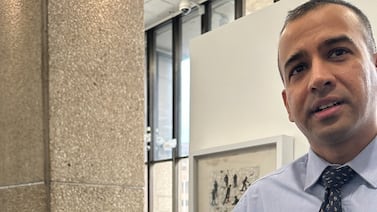
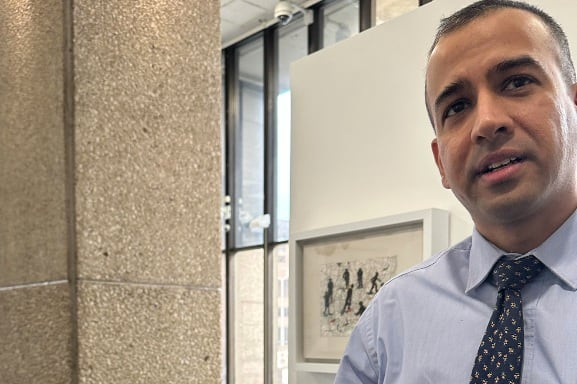
“We’re training a lot,” said Dr. Vikramjit Mukherjee, an intensive care physician who is chief of critical care and the special pathogens program at Bellevue. “Through June, we’re going to the hospitals next to the MetLife stadium, where people will be more prone to present with symptoms, and making sure their front-end capabilities are ready.”
MetLife Stadium in East Rutherford, New Jersey, a venue that holds 82,500 spectators, will host eight World Cup matches starting June 13, including the championship on July 19. Greater New York is expected to see more than 1.2 million visitors this summer for the tournament, as the United States expects up to 10 million. Sixteen major cities, and a few smaller ones, across North America will host matches.
Big crowds will gather. A watch party in Central Park is expected to draw some 250,000 viewers. A separate party is scheduled for Liberty State Park in Jersey City.
Public health leaders see this year’s World Cup, billed as the largest tournament in world history, as the world’s largest temporary migration into the United States’ most densely populated urban corridor. They are planning accordingly.
“We’re looking at it as if it’s a huge global migration event,” Mukherjee said while giving Healthbeat a tour of Bellevue, including its biocontainment lab and tuberculosis ward. “The whole health care system in New York City will be a bit on alert for all of these events.”
Bellevue Hospital leads outbreak preparedness
The New York City health care system has experience with an influx of international visitors and potential pathogens. Greater New York has three international airports that are among the busiest in the world, and the city has been on the front line of recent disease outbreaks as they near or encroach upon the United States. The oldest hospital in the United States and one of the largest, Bellevue has had years to prepare.
In October 2014, the hospital received a bit of fame for treating New York City’s only confirmed Ebola patient. Dr. Craig Spencer had been treating Ebola patients in Guinea when he contracted the fatal disease and later entered Bellevue (his discharge is captured in a photo hanging on a hospital wall).
“Because of what we’ve seen in the last few years — Ebola, Covid, and mpox — we feel that we will be the ones who will be affected first for the next outbreak, and therefore have an additional responsibility of keeping prepared,” Mukherjee said.
Central to preparation has been simulated exercises that bring together different agencies working in different time zones and across international borders. Repeated drills help spot deficiencies.
Last summer, Bellevue health care professionals and others participated in a four-day exercise that required transporting by air a group of pretend patients with a high-consequence infectious disease from Toronto, a World Cup host city, to LaGuardia Airport in New York. The pretend patients were then taken to Bellevue for treatment. The exercise aimed to test workers’ ability to handle a portable biocontainment unit — a device used to isolate and transport patients with highly contagious diseases.
“That was the biggest drill we’ve done, because that involved local, state, federal, and international partners,” said Noel Alicea, a spokesman for Bellevue.
New York City Mayor Zohran Mamdani named a former campaign manager to the new post of “World Cup Czar,” but it is unclear whether the position has public health responsibilities.
“Maya Handa will use this innovative role to oversee the Mamdani administration’s inter-agency work to host the FIFA 2026 World Cup and ensure the historic event benefits the city’s residents and economy,” the city said in announcing the role.
Cities have stronger role in preparedness
The World Cup games are also certain to test local public health workers’ ability to coordinate with the federal government. Because the Trump administration has overhauled the U.S. Centers for Disease Control and Prevention and withdrawn from the World Health Organization, both of which have historically played a major role with disease surveillance, state and local governments have taken on additional responsibilities preparing for the World Cup. They are expected to do the same once the matches begin.
This week, the New York State Department of Health announced that it was joining a WHO global network of public health institutions, governments, academic agencies, and labs that aims to coordinate responses to public health threats. New York City, California, and Illinois have also joined.
For its part, the White House created a FIFA task force, led by Andrew Giuliani, the son of former New York City Mayor Rudy Giuliani. Reporting to the Department of Homeland Security, Andrew Giuliani is “spearheading the federal government’s extensive efforts to ensure that the largest World Cup in history will also be the safest,” according to the task force’s website.
Asked how Bellevue was preparing for the World Cup in light of the significant federal changes, Mukherjee said:
“We are trying to paint the picture that this is essential to U.S. biosecurity, which has great bipartisan support, and we recognize that at the end of the day our biggest asset are our health care workers, and if we cannot keep them safe, the entire health care system infrastructure falls through.
“So our priority — our laser focus — is toward making sure our health care workers are safe as they go into relatively dangerous zones of high-consequence, infectious diseases. And that’s what we advocate for in D.C. That’s what we teach and train every day at the front lines.”
Trenton Daniel is a reporter covering public health in New York for Healthbeat. Contact Trenton at tdaniel@healthbeat.org or on the messaging app Signal at trentondaniel.88.