Public health, explained: Sign up to receive Healthbeat’s free New York City newsletter here.
Federal funding cuts under President Donald Trump’s administration are putting domestic violence survivor services at risk across New York City, particularly for nonprofits that provide culturally specific, trauma-informed care to immigrant and marginalized communities.
Advocates and service providers warn that the cuts could lead to reduced counseling services, longer wait lists, and fewer safe options for survivors — outcomes that public health experts say will have lasting consequences for physical and mental health.
Last February, the North Brooklyn Coalition Against Family Violence, an organization that serves survivors of domestic violence and sexual assault within Latinx, immigrant, and LGBTQ+ communities, applied for federal funding as it has every year since the organization was founded in 1998.
However, the grant language had changed in ways that felt exclusionary and potentially dangerous for clients, said Leana Pardo, the coalition’s executive director.
“I contacted the rest of the team immediately,” Pardo said. “It felt like a direct attack on the people we serve.”
How the Violence Against Women Act is affected
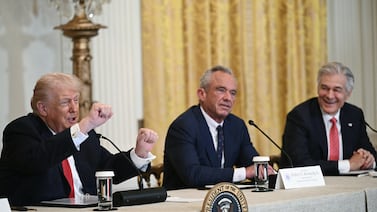
The Trump administration has argued that certain Department of Justice grant programs have funded initiatives tied to diversity, equity, and inclusion, feminist organizing, and what it characterizes as “cultural Marxism.” The administration has characterized these programs as progressive initiatives rather than ones focused on combating crime and protecting U.S. citizens.
Those priorities have translated into cuts and revised guidelines affecting programs funded under the Violence Against Women Act, a critical resource for survivors of domestic violence.
In New York, advocates say the survivors who rely on services offered in their native languages are likely to be among the first affected.

Organizations like North Brooklyn Coalition serve clients who speak languages other than English, requiring bilingual staff, translated materials, and culturally informed care. Those needs increase operating costs, making federal support especially critical.
The revised grant guidance included terms such as “human trafficking,” “crimes linked to illegal immigration,” and “cartel operations,” language that raised concerns among providers that survivor services could be conflated with immigration enforcement or criminal investigations.
Pardo said her primary concern is client safety. About 21% of the coalition’s clients are undocumented, recipients of Deferred Action for Childhood Arrivals, or holders of U visas, an immigration protection program available to certain crime victims who assist law enforcement.
The new guidelines emphasize anti-trafficking efforts and include language linking trafficking to illegal immigration. Pardo worries that reporting requirements could pressure organizations to share information that puts survivors at risk.
“We’re concerned that under the current federal administration, this could lead to requests for confidential client information during reporting,” she said.
Under standard Office on Violence Against Women rules, organizations submit semiannual reports detailing how funds are used and what services are provided. With the updated language, Pardo fears increased scrutiny that could expose survivors — particularly recent arrivals, including Venezuelan clients who were trafficked for sexual exploitation before reaching the United States.
With funding shrinking or if reporting conditions become untenable, organizations may be forced to turn survivors away.
‘Domestic violence is a public health issue’
Public health experts emphasize that domestic violence is not only a criminal justice issue but a major health concern.
“These funds are not wasteful,” Pardo said. “Domestic violence is a public health issue.”
Research backs that up. The World Health Organization classifies domestic violence and sexual assault as public health crises due to their severe physical, mental, and reproductive health impacts.
One in 3 Latinas will experience intimate partner violence in her lifetime, and 1 in 12 experienced domestic violence in the past year, according to Esperanza United, an organization focused on ending gender-based violence.
Dr. Denis Nash, an epidemiology professor at CUNY’s Graduate Center, said funding cuts disproportionately harm communities that are already facing barriers to care.
“Vulnerable communities that already struggle to access public health services are the first and worst affected,” he said. “Cuts like these reduce prevention, de-escalation, and safe exits from dangerous situations.”
Fewer resources available to meet higher demand
The Department of Justice supports survivor services primarily through the Office on Violence Against Women and the Crime Victims Fund, which distributes money under the Victims of Crime Act. Funds are allocated to states based on population, and in New York, the Office of Victim Services distributes grants to shelters, hospitals, and community organizations.
While some organizations have avoided direct cuts so far, the broader funding picture is grim.
“We’ve been fortunate not to lose funding outright,” said Kristen McGuire, development director for the Domestic Violence Project at the Urban Justice Center. “But we’re also not receiving new funds, even as demand continues to grow.”
According to the New York State Coalition Against Domestic Violence, many programs have lost staff due to funding shortfalls. That translates into fewer shelter beds, shorter hotline hours, and fewer advocates available to help survivors obtain orders of protection.
The organization said that 90% of the funding New York state uses to support domestic violence services comes from the federal government.
Data from the National Network to End Domestic Violence show that domestic violence programs in New York assist about 67 survivors every hour. Yet at least 1,717 survivors were unable to access services due to lack of funding, staffing, or resources.
New York state trying to fill gaps
The cuts are not just financial but political. New York Attorney General Letitia James has sued the Department of Justice, arguing that the federal government is unlawfully conditioning VOCA funding on cooperation with immigration enforcement.
According to the lawsuit, those conditions could undermine trust in survivor services and deter people from seeking help.
Gov. Kathy Hochul has attempted to offset some of the damage, allocating $100 million in state funding to cover anticipated VOCA losses. In January 2025, the Office of Victim Services opened applications for a three-year, $379 million state grant cycle — the largest in its history.
State Assemblymember Maritza Dávila, who represents North Brooklyn in Albany, said lawmakers are trying to fill federal gaps, but she acknowledged limits.
“We’ll do everything we can in Albany to continue supporting these organizations,” Dávila said. “Our priority is our community.”
Still, advocates warn that state funds alone cannot replace federal support, particularly for smaller, culturally specific organizations that rely heavily on grants to operate.
For decades, federal funding has been a financial backbone of domestic violence survivor services. Without it, providers say they face impossible choices: Reduce services, lay off staff, or close programs.
For survivors, the consequences can be devastating.
“These programs aren’t optional,” Nash said. “They are essential to safety, recovery, and long-term health.”
If you or someone you know is experiencing domestic violence, call New York State’s confidential hotline at 1-800-942-6906 or text 844-997-2121. Counselors are available 24/7 in Spanish and many other languages.
Ilvea Lezama is a freelance reporter in New York.