Public health, explained: Sign up to receive Healthbeat’s free New York City newsletter here.
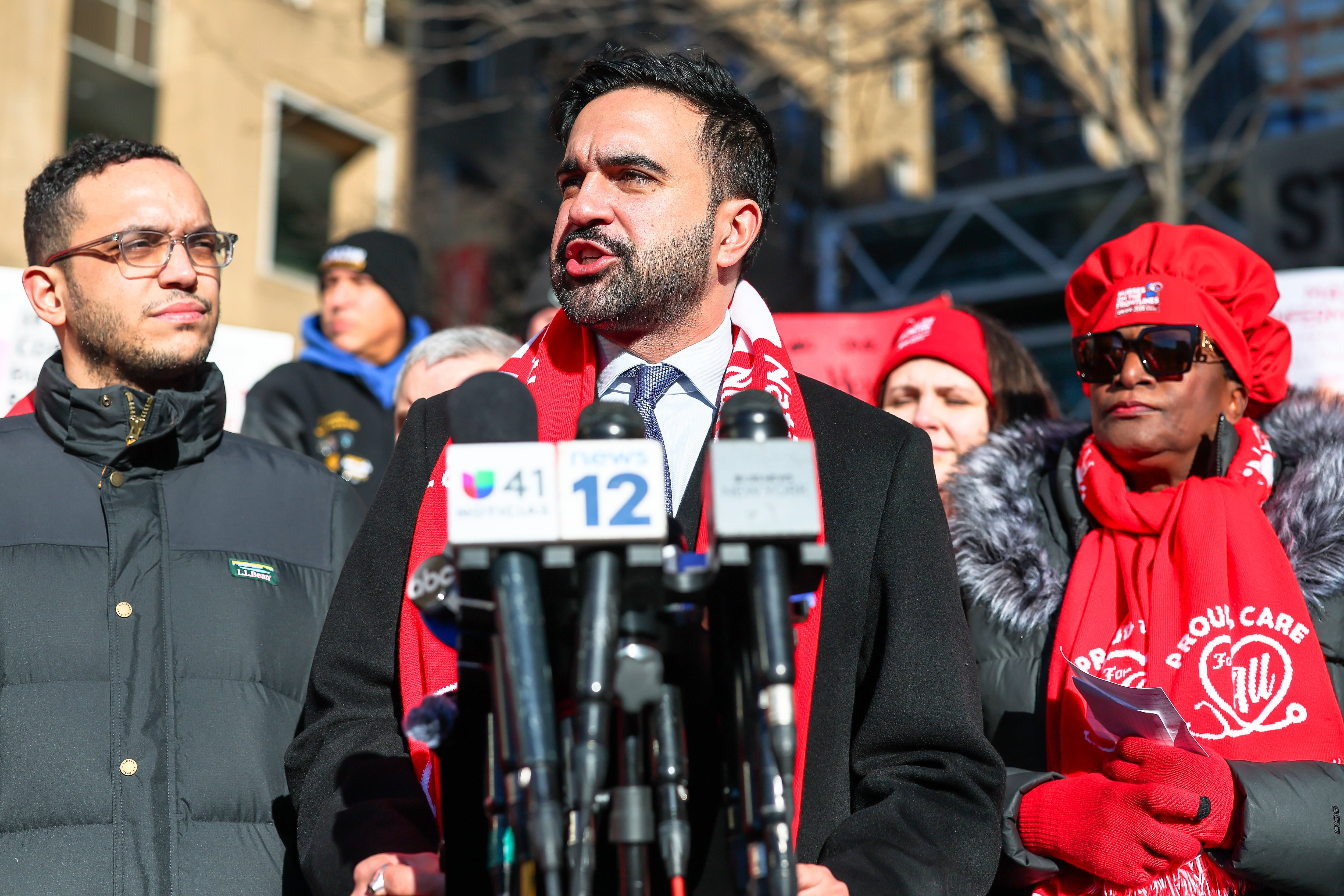
New York City Mayor Zohran Mamdani on Monday stood in support of thousands of nurses who began striking at some of the biggest private hospitals in the city after months of failed bargaining.
Nurses with the New York State Nurses Association began their strike Monday morning citing unsafe staffing levels, paltry health care benefits, and unmanageable workloads. Another major part of their grievances: their pay, compared to the multimillion-dollar salaries of hospital executives at Mount Sinai and New York-Presbyterian hospitals in hospitals in Manhattan, and Montefiore Medical Center in the Bronx.
“At every one of our city’s darkest periods, nurses showed up to work,” Mamdani said at a news conference called by the union, flanked by members and wearing a red union scarf in front of New York-Presbyterian, one of the largest and more well-regarded hospitals in the world. “Their value is not negotiable, and their worth is not up for debate.”
Organizers say the walkout of 15,000 nurses is the largest strike of its kind in the city’s history, coinciding with an early flu season that is sending more people to the hospital than years past.
All three hospitals released statements saying they have brought in nurses to cover those on strike and were prepared to care for patients.
New York-Presbyterian said in a statement that it would keep negotiating toward a contract that respects nurses’ “critical role,” while recognizing the challenges facing health care.
“While NYSNA has told nurses to walk away from the bedside, we remain focused on our patients and their care,” the statement said. “This strike is designed to create disruption, but we have taken the necessary steps so our patients continue to receive the care they trust us to provide. Our patients should visit nyp.org/nursingupdate for important updates and other additional information.”
The strike was led by union President Nancy Hagans, who was a member of Mamdani’s transition team, an informal group of more than 400 supporters that was formed following his November victory and solicited policy recommendations. Hagans belonged to the health group, which included a mix of hospital executives, university scholars, and public health advocates. The team disbanded following Mamdani’s inauguration on Jan. 1.
The strike comes at a time of looming cuts that will see New Yorkers lose health insurance and squeeze hospital budgets as a result of President Donald Trump’s One Big Beautiful Bill Act signed in July. Health care workers from nurses and technicians to doctors are certain to feel the effects, and public safety-net hospitals that receive Medicaid patients could even face closure.
Joe Solmonese, a spokesperson for Montefiore Medical Center, said in a statement, “NYSNA’s leaders continue to double down on their $3.6 billion in reckless demands, including nearly 40% wage increases.”
A statement from Mount Sinai called the nurses’ demands “extreme.”
“Unfortunately, NYSNA decided to move forward with its strike while refusing to move on from its extreme economic demands, which we cannot agree to, but we are ready with 1,400 qualified and specialized nurses – and prepared to continue to provide safe patient care for as long as this strike lasts.”
Mamdani said the nurses deserve more, citing the $16 million salary last year for the president and CEO of Montefiore and the $26 million salary of New York-Presbyterian’s CEO.
“There is no shortage of wealth in the health care industry, especially so at the three privately operated hospital groups at which nurses are striking, the wealthiest in the entire city, the hospital executives who run these hospitals, the ones where these hardworking nurses are asking for what they deserve,” he said.
The striking nurses cite worries about violence in hospitals, which have been the site of shootings and other incidents in recent years. Just last week, a man who checked himself into New York-Presbyterian Brooklyn Methodist Hospital in the Park Slope neighborhood was fatally shot by police after he cut himself with a sharp object and threatened others.
Tanya Fisher Morales, a nurse at New York-Presbyterian, said at the news conference that workplace violence against nurses had become routine.
“Every week, nurses are injured in incidents of workplace violence at our hospital, especially in our emergency room,” she said, choking up. “We need protection from work-based violence — now. This is not up for debate anymore.”
The strike is part of a broader trend across the United States in which health care workers are feeling emboldened to air their grievances following the Covid-19 pandemic that led to so much burnout.
In 2023, nurses went on strike at Mount Sinai and Montefiore for three days. The protest led to a deal raising pay 19% over three years at those hospitals. The same year, trainee doctors at Elmhurst in Queens went on strike for three days as they protested a salary gap compared to their colleagues at Mount Sinai. It was the first physician strike at a New York City hospital in more than 30 years.
Nurses in Massachusetts and California have also gone on strike, the former group in 2022 for nearly 10 months, the longest nursing walkout in state history.
Nurses at several hospitals on Long Island signed tentative agreements on new contracts Friday that averted a possible strike. The three-year tentative contract agreements include improved staffing levels, an annual wage increase each year of around 5% and improved pensions.
Hospital executives had been preparing for a possible strike for weeks by bringing in travel nurses to cover the absences in an effort to minimize disruption. Over the weekend, the state Department of Health asked hospitals not affected by the strike to accept patients from hospitals that were.
Trenton Daniel is a reporter covering public health in New York for Healthbeat. Contact Trenton at tdaniel@healthbeat.orgoron the messaging app Signal at trentondaniel.88.