This article originally appeared at Your Local Epidemiologist New York. Sign up for the YLE NY newsletter here. Public health, explained: Sign up to receive Healthbeat’s free New York City newsletter here.
If you know someone who works in health, chances are they banged their head against a wall at least once in 2025 — myself included. The past year brought the largest measles outbreak in decades and a tidal wave of false information on vaccines, including from the highest levels of government. Just days into 2026, the Department of Health and Human Services overhauled the recommended childhood vaccine schedule — not because of new science, but because of politics.

To put it simply, we’ve been through a health gauntlet.
But, despite the chaos, there’s a lot to still celebrate.
Across New York, health workers, policymakers, and supporters kept showing up, day in and day out, working toward a healthier New York, regardless of what was said on the news. That is worth celebrating.
I’ve put together a few milestones from the past year. It’s not exhaustive (there’s always important work happening behind the scenes that doesn’t make headlines), but here’s a roundup of some of the key wins that made New York a healthier place in 2025. I’ve also got your regular infectious disease weather report at the end.
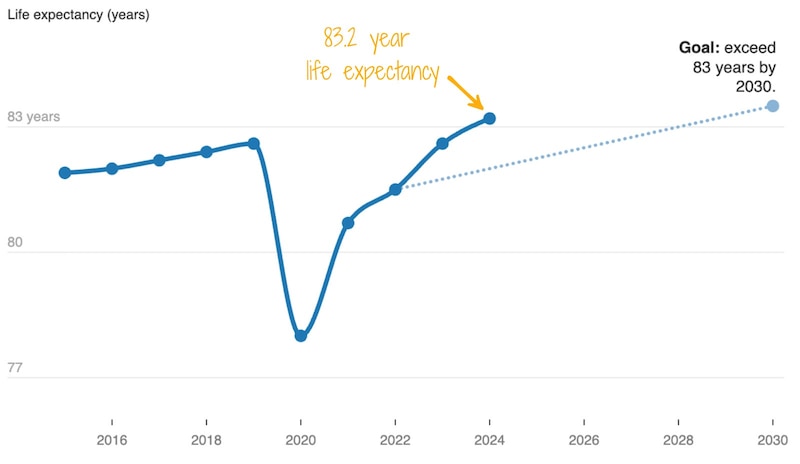
1. New York City life expectancy reached a record high.
New York City’s average life expectancy hit 83.2 years, surpassing the city’s HealthyNYC goal years ahead of schedule. This milestone reflects progress across several issues, including things like chronic disease management, overdose prevention, and Covid-19 treatment and vaccination, among others.
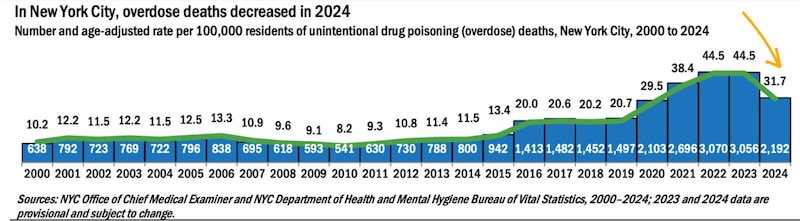
2. New York City had a significant reduction in overdose deaths.
New York City had a 28 % drop in overdose deaths in 2024 — the largest decline in nearly a decade. Staten Island experienced the most dramatic drop, tied to localized interventions and broader access to naloxone and treatment.
3. Youth tobacco use declined in New York state.
Tobacco use among high school students across the state continued to fall to record lows, showing the effectiveness of prevention efforts.
4. New York strengthened vaccine access and regional collaboration.
In 2025, New York City and the state continued to expand vaccine access through:
- Joining and helping lead the Governors Public Health Alliance, a 14-state effort to safeguard vaccine infrastructure, and the Northeast Regional Public Health Alliance.
- Passing new state laws that guarantee Covid-19 vaccine access for all New Yorkers, despite changes in federal vaccination recommendations.
- Continuing to recommend the hepatitis B vaccine birth dose for all newborns.
5. Investment in public health data infrastructure.
New York City launched a new Vaccination Data Explorer to help identify immunization gaps and inform outreach, and updated its respiratory illness dashboard. At the state level, New York also updated its respiratory virus reports and rolled out a new Heat Illness Risk tool to monitor extreme heat threats across the state.
6. Progress in medical debt relief and medication cost reductions.
Financial wins in 2025 included:
- New York City relieved $80 million in medical debt for New Yorkers with low incomes.
- New state laws eliminated cost sharing for asthma inhalers and eliminated co-pays for insulin under state-regulated plans.
These changes will improve access to live-saving medications and help reduce long-term health disparities tied to chronic illnesses like asthma and diabetes.
7. New York City opened a clubhouse to help New Yorkers with serious mental illness.
The Venture House clubhouse opened in Brooklyn to support people living with serious mental illness. Its goals are to provide community and social connections, supported employment and education, and recovery services through a supportive community of peers.
8. New York hospitals accomplished several medical milestones.
- A patient was cured of sickle cell anemia at Cohen Children’s Medical Center using a groundbreaking new therapy.
- Northwell Northshore University Hospital doctors performed a rare triple transplant — heart, kidney, and liver — on a Long Island patient that saved his life.
- A pediatric heart transplant saved the lives of three kids at New York Presbyterian Morgan Stanley Children’s Hospital. When one child received a full heart transplant, parts of her former heart were able to be transplanted for two other children in need.
9. New state laws and research centers in New York advanced maternal and reproductive health.
- Those who are pregnant or trying to become pregnant are now guaranteed 20 hours of paid leave for prenatal care.
- New York state laws expanded protection for reproductive health care clinicians and patients, including privacy safeguards on prescriptions for abortion medications.
- A new endometriosis research center was opened at the Cold Spring Harbor Lab on Long Island.
10. New York state surpassed the national breast cancer screening goal.
Some 81.9% of New York women were up to date on screenings, higher than the national goal of ~80.3%.
11. Improved air quality and citywide composting in New York City.
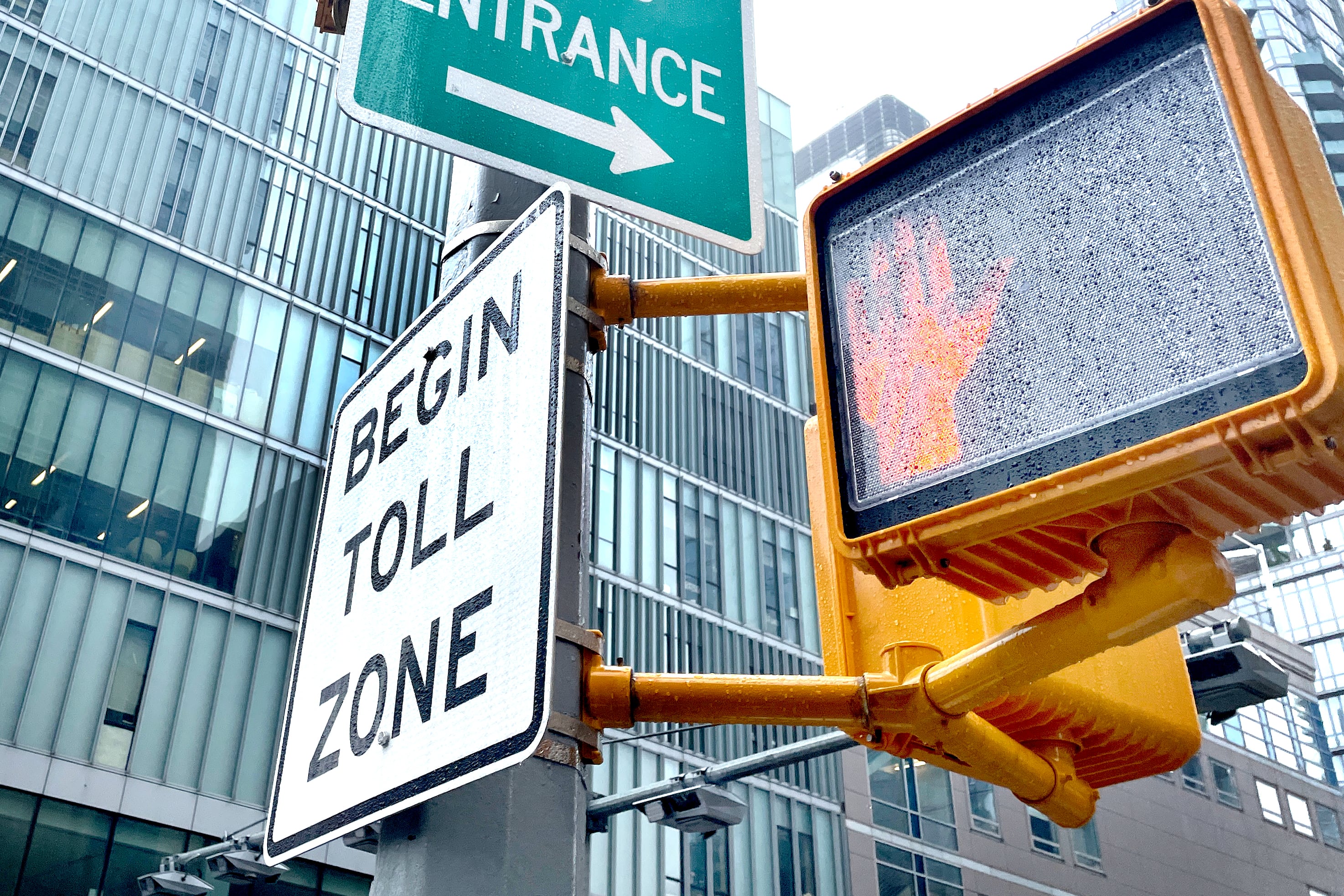
- A new study showed that air quality in Manhattan improved following the implementation of congestion pricing. In the first 6 months of the program, PM2.5 (particulate matter in the air, associated with major health issues like asthma) dropped by 22% in the Congestion Relief Zone.
- Citywide composting across all five New York City boroughs kicked off in 2025. The program helps build environmental resilience, reduce food waste sent to landfills, and reduce rats getting access to food scraps. It also provides compost back to city residents who can use it for gardening. Compost pick-up sites and events are located throughout the city from April to September.
12. NY SWIMS funded water safety and pool access.
Over $200 million was distributed through the NY SWIMS program to expand access to safe public swimming facilities across the state — supporting physical activity and reducing drowning risk.
13. The Wadsworth Center was recognized for national leadership in laboratory health science.
The Wadsworth Center, New York’s public health laboratory, was named a National Influenza Reference Center. Its director, Dr. Kirsten St. George, received a national award for her contributions to public health innovation, including expanding New York public health surveillance to incorporate wastewater monitoring and sequencing data to track new variants and outbreaks.
14. Albany began lead pipe replacement.
The state is funding a $129 million project to replace lead service lines in Albany, addressing a critical environmental health risk.
15. New York worked to increase temporary housing and meal access for those in need.
- The construction of a new emergency shelter in Buffalo broke ground.
- In Syracuse, a community-led program delivered a record-breaking number of free Thanksgiving meals to families in need. This was their 138th year serving Thanksgiving meals.
These victories are a testament to what’s possible when data, policy, and communities come together to improve health. Here’s to building on this progress in 2026 and beyond.
Quick infectious disease ‘weather report’
Flu: The flu has been intense this year! My partner and I got it this past weekend. But there’s some good news — data from New York show that we may be turning a corner.
In New York City, the latest data through Dec. 27 show that influenza is actually declining, i.e., we may have passed the peak.
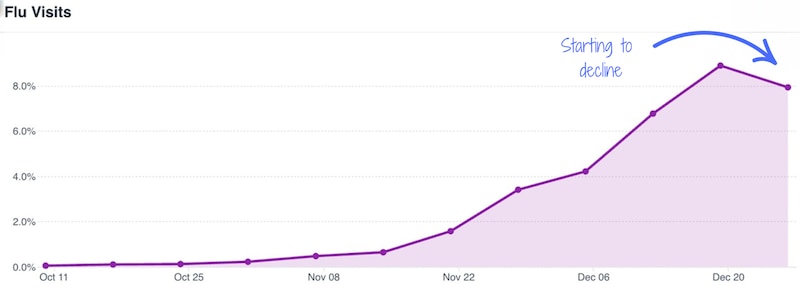
New York state shows the same — positive tests for influenza are declining. But we still see very high and increasing hospitalizations for flu, meaning we are still in the thick of the season.
RSV: Potentially at the peak. In New York City and New York state, emergency department visits and hospitalizations for RSV are still increasing, but the number of cases in New York state is starting to decline.
Covid: The same is true for Covid — the number of emergency department visits in New York City and New York state are still going up, but the number of cases is going down.
To sum it all up, declining case numbers for respiratory illnesses doesn’t mean we’re out of the clear. Influenza transmission is still really high, and many people are still being hospitalized. Don’t let your guard down yet. It’s still a good idea to keep masking in crowded, indoor spaces, especially if you are at higher risk for severe illness (immunocompromised, pregnant, older, etc.).
Bottom line
Even amid major federal disruptions to health guidance and policy, New Yorkers did what New Yorkers do best — we kept moving forward. And we have a lot to show for it. So here’s to building on that progress and improving health even further in 2026. Happy New Year!
Love,
Your NY Epi
Dr. Marisa Donnelly, PhD, is an epidemiologist, science communicator, and public health advocate. She specializes in infectious diseases, outbreak response, and emerging health threats. She has led multiple outbreak investigations at the California Department of Public Health and served as an Epidemic Intelligence Service Officer at the Centers for Disease Control and Prevention. Donnelly is also an epidemiologist at Biobot Analytics, where she works at the forefront of wastewater-based disease surveillance.