Public health, explained: Sign up to receive Healthbeat’s free New York City newsletter here.
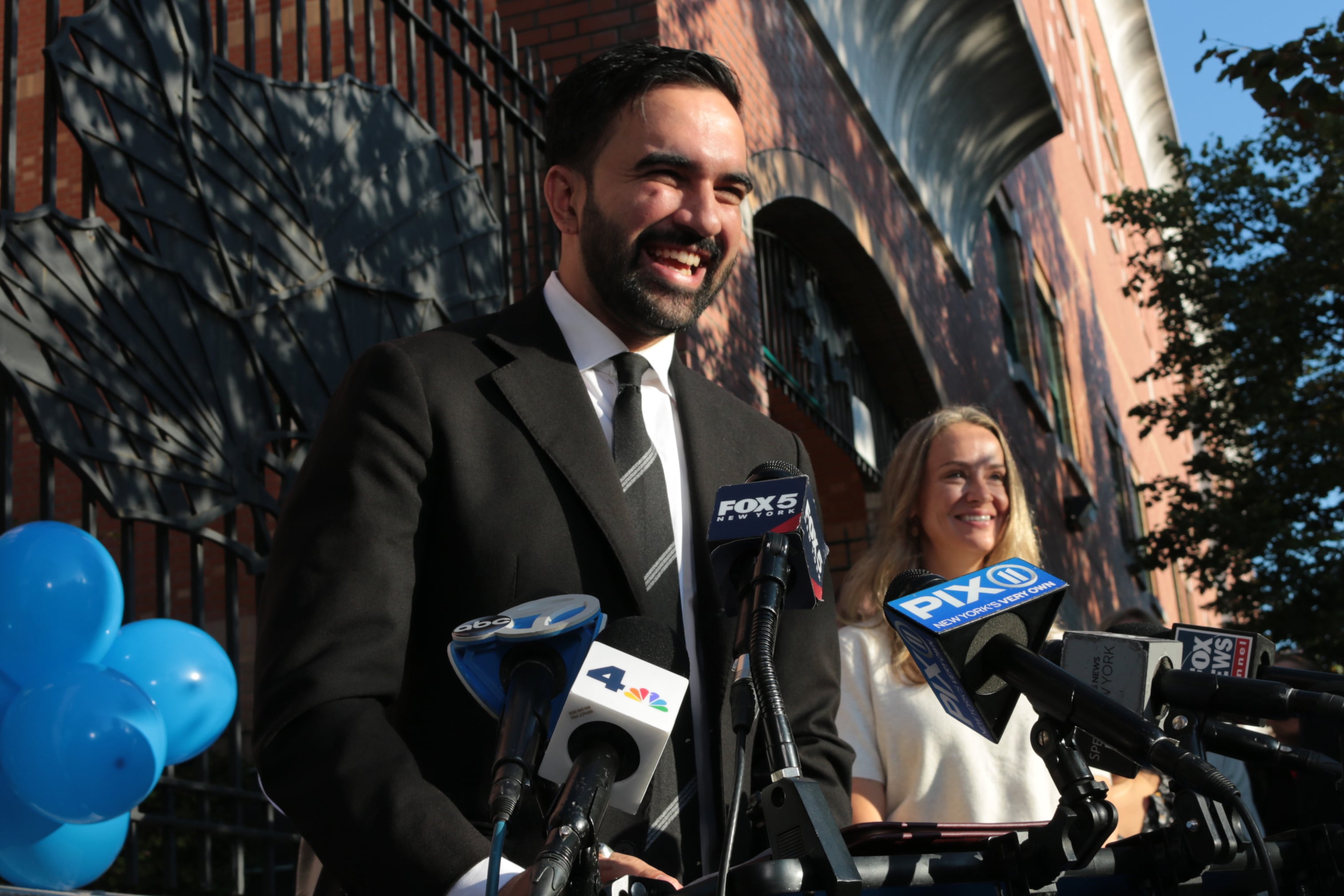
Among the more than 400 advisers New York City Mayor-elect Zohran Mamdani has assembled to help populate his administration are a team of 25 focused on health policy.
While free child care and free buses are a central part of Mamdani’s affordability agenda, the city will also face a monumental challenge in funding public health and health care. President Donald Trump’s “One Big Beautiful Bill Act” will slash funds for Medicaid, SNAP benefits, and the city’s hospitals and health systems.
More than 2 million people across the state are expected to lose their health insurance, and another 1.3 million will lose Medicaid coverage due to new eligibility and verification rules, according to Gov. Kathy Hochul. About half the city’s residents rely on Medicaid.
Mamdani, who takes office Jan. 1, has yet to publicly say how he will meet this challenge, or who he will appoint to lead the Department of Health and Mental Hygiene, the largest and oldest health department in the United States.
The Mamdani campaign did not respond to requests for comment. Many of the members of the mayor-elect’s health committee reached by email declined to comment or didn’t reply, adhering to a request from the campaign not to speak to the media.
Who are Mamdani’s health policy advisers?
The committee includes a mix of hospital executives, former city and state health commissioners, and scholars from public and private universities, union leaders, and LGBTQ advocates, many who share Mamdani’s progressive politics.
The larger institutions represented include SBH Health System in the Bronx, the Greater New York Hospital Association, the New York State Nurses Association, and Planned Parenthood of Greater New York.
Some large New York health institutions are not represented on the health committee, such as Norwell Health and Mount Sinai, a major employer in the city. Also absent, said Bruce Y. Lee, a professor of health policy and management at the City University of New York: expertise in the field of artificial intelligence and health care.
Lee also noted the absence of a certain kind of rigor: “I do wonder, in general, whether there is a dearth of scientific expertise.”
Former health commissioners on the team include:
- Oxiris Barbot, president and CEO of the United Hospital Fund who served as city health commissioner in the early days of the pandemic.
- Torian Easterling, a physician and former city deputy commissioner who now serves on the board of directors at the Brooklyn Communities Collaborative, a nonprofit that promotes health equity in Kings County.
- Mary Bassett, a former city and state health commissioner who is leaving her post as director of the François-Xavier Bagnoud Center for Health and Human Rights at Harvard in January. A Harvard task force on antisemitism and anti-Israeli bias cited the center in a report as focused “heavily on Palestinians” in course offerings and guest lectures.
Among the more well-known names on the health committee is Demetre Daskalakis, an infectious disease doctor who resigned in August as director at the national immunization center at the Centers for Disease Control and Prevention, citing the Trump administration’s political interference in science.
Daskalakis recently accepted a position as chief medical officer at Callen-Lorde, an LGBTQ+ health center in Manhattan. A former employee of the New York City health department, Daskalakis is scheduled to begin his new job in February.
In a video for a Fund for Public Health event Dec. 3 in New York, Daskalakis urged viewers to chart a new course because the CDC is no longer a “credible source of information.” He didn’t name Mamdani, but singled out New York City as an impetus for change.
“After this dark age, there will be a renaissance, and it starts here — not in Atlanta or Washington, D.C.,” Daskalakis said in the video. “We’re not going to fix the Acropolis, but instead work to build the Sistine Chapel — a new public health, by and for the people, founded on science and equity.”
Who will be Mamdani’s health commissioner?
Michelle Morse, a longtime global health advocate and internist who has been serving as the city’s acting health commissioner since October 2024, hasn’t met with Mamdani but has communicated through mentors like Bassett her interest in staying on. She submitted an application through an online job portal that has received more than 70,000 applications.
At the Fund for Public Health event, Morse spoke on a panel about the near future of public health in the city. Her enthusiasm for the incoming administration was evident.
“It is an anything-is-possible kind of moment,” she said. “I actually think that investing our time in the success of the platform that our mayor-elect has put forward would be a massive public health win.”
Morse has focused on health equity in her time as acting commissioner. She also works part time as a hospitalist at Kings County, serves as an assistant professor at Harvard Medical School, and is a co-founder of EqualHealth, a global network of health professionals, educators and activists that aims to achieve “health justice through social medicine.”
Mamdani has decided to keep on New York Police Commissioner Jessica Tisch from Eric Adams’ administration.
Fund for Public Health CEO Sara Gardner wished the same for Morse at the event: “I’m saying a little prayer at night that she continues as commissioner.”
Trenton Daniel is a reporter covering public health in New York for Healthbeat. Contact Trenton at tdaniel@healthbeat.org or on the messaging app Signal at trentondaniel.88.