Public health, explained: Sign up to receive Healthbeat’s free New York City newsletter here.
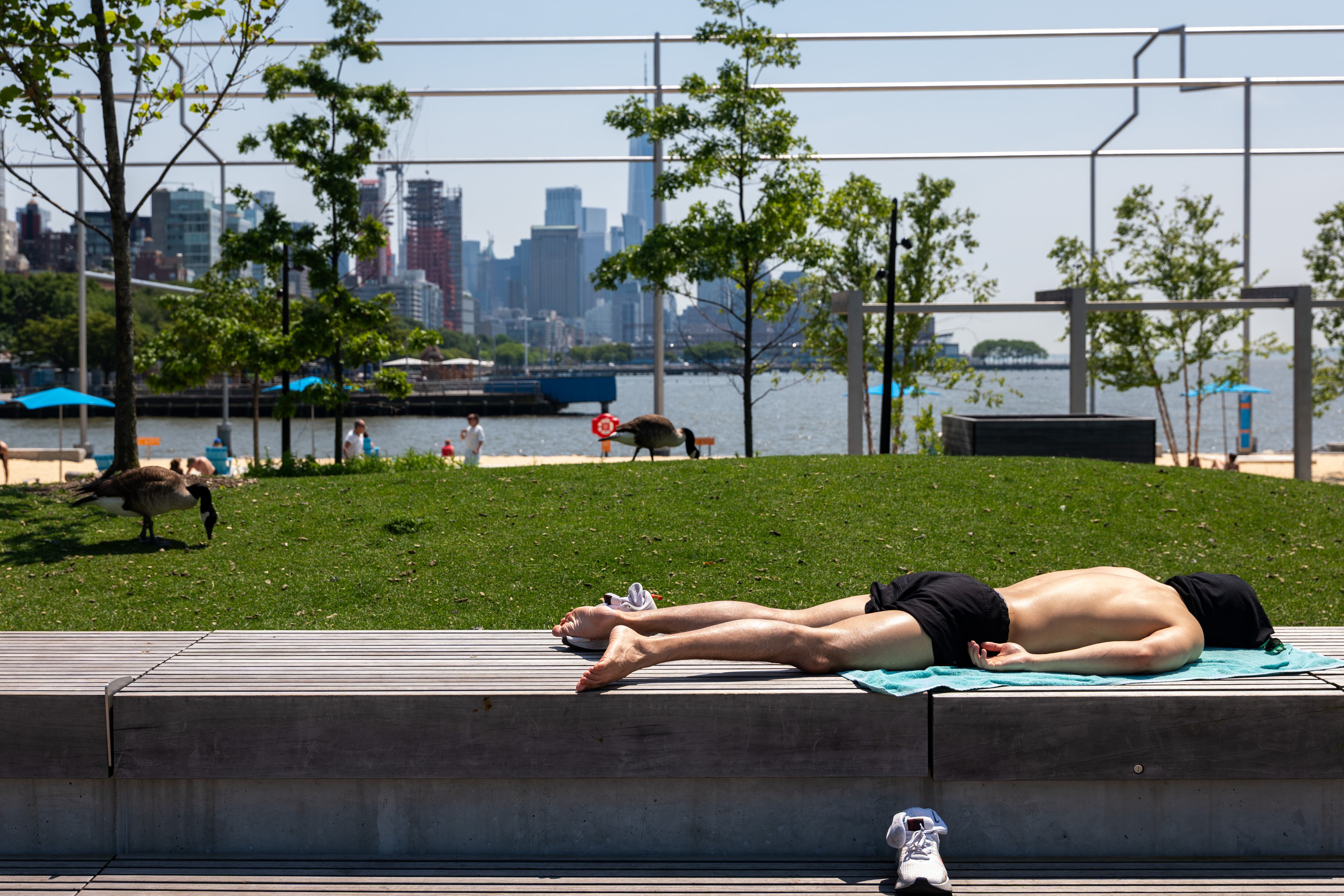
Poor air quality continued in New York City and surrounding regions on Thursday, posing health risks to sensitive groups.
The New York State Department of Environmental Conservation extended an air quality health advisory into Thursday, for New York City, Long Island, and nearby counties from 11 a.m. to 11 p.m.
Young children, elderly people, and those with respiratory diseases like asthma are advised to avoid strenuous activities in the afternoon and early evening. New Yorkers can check up-to-date air quality at AirNow.
The city’s degraded air quality is a result of ground-level ozone, a pollutant, although on Wednesday smoke from Canadian wildfires also created hazy skies, said Dave Radell, a National Weather Service meteorologist.
“The air quality alerts that are in effect through tonight are because of ozone, which is a pollutant that we often see this time of year, once we start getting into the warmer weather and some pretty stagnant like conditions,” he said Thursday.
Ozone can be particularly dangerous for people with asthma, children, older adults,and those who are active outdoors, according to the U.S. Environmental Protection Agency. Ozone can cause coughing or a scratchy throat, make it more difficult to breathe, and aggravate lung diseases.
In 2023, smoke from Canadian wildfires posed significant health risks for New York City residents, shrouding the city in smoky orange clouds. Public health and environmental researchers later identified an association with the degraded air quality and a spike in emergency department visits in the city for asthma.
Wildfire smoke poses a risk to respiratory health because it is a mixture of water vapor and pollutants like particle pollution — tiny droplets of soot, acids, metals, and other compounds — which can easily seep into homes, according to the EPA. Inhaling particle pollution can result in minor health effects like eye and respiratory tract infections, or more severe ones, like the exacerbation of asthma, or heart failure.
To limit detrimental health effects from wildfire smoke, the New York City Department of Health and Mental Hygiene recommends staying indoors with windows and doors closed, if temperatures allow. If the outdoor temperature is higher than 85 degrees, the Health Department recommends using an air conditioner, with the fresh air intake closed to prevent pulling polluted air inside. Those without air conditioners can seek out libraries, public buildings and other cool indoor spaces.
The agency also recommends using a portable air cleaner to filter the air, and wearing a well-fitting N95 or KN95 mask if you need to go outdoors.
The story has been updated with Thursday’s air quality alert and to specify that the ground-level ozone resulted in the region’s degraded air quality.
Eliza Fawcett is a reporter covering public health in New York City for Healthbeat. Contact Eliza at efawcett@healthbeat.org.