Public health, explained: Sign up to receive Healthbeat’s free national newsletter here.
The nurse asked Paul Vercammen what should have been a simple question: What is your pain level on a scale from one to 10?
As he lay in a hospital bed at UCLA Santa Monica Medical Center in September, Vercammen struggled to find words. West Nile virus had attacked his brain.
He incoherently managed to mumble: LinkedIn and Instagram.
The moment was terrifying. Words had been the foundation of Vercammen’s life and career as a former CNN correspondent and now as a communications director for an international disaster relief charity.
“I think I had a pretty good reputation for never tripping over my words. And suddenly, I can’t even formulate a sentence, and I’m blabbering nonsense about LinkedIn,” he told me recently.
Just days earlier, Vercammen had felt fine, other than some mosquito bites after an evening of hitting golf balls at an outdoor range on Aug. 29. Then came the brain fog a few days later, followed by worsening dizziness, headaches, and a loss of balance.
By Sept. 11, he had been admitted to the hospital.
“I’m absolutely shocked that a mosquito knocked me into the hospital for five days and four nights with West Nile virus. It seems surreal,” he said.
Vercammen’s infection occurred during a West Nile virus season where the number of people hit with severe, neuroinvasive infections is tracking above the country’s 10-year average, officials at the Centers for Disease Control and Prevention told me.
Preliminary reports indicate that deaths are up as well, the agency said.
And Southern California, where Vercammen lives, is among areas being particularly hard-hit this year.
By The Numbers
So far in 2026, more than 880 people across the United States have developed a severe, neuroinvasive form of West Nile virus infection that can cause meningitis, encephalitis, paralysis, and sometimes death.
West Nile virus is the leading cause of mosquito-borne disease in the contiguous United States. It is spread through the bite of an infected mosquito, primarily during the summer and fall months. Each year, about 1,300 life-threatening neurological illnesses and 130 deaths are reported to the CDC.
The good news is that about 80% of people infected with West Nile virus won’t become ill. Those who do show signs of illness will get West Nile fever, along with fatigue, headache, joint and muscle pain, and perhaps a rash or gastrointestinal problems.
But about one in 150 people won’t be so lucky and will develop severe illness affecting their central nervous system, according to the CDC.
“Unfortunately, the West Nile virus season is not over and what happens over the next month or so will ultimately determine how this year will compare to prior years,” the CDC said in emailed answers to questions from Healthbeat.
Infections are being reported across 44 states, but some parts of the country — especially California — are being hit harder than others.
In California there have been 298 human cases as of Oct. 9 – far higher than the state’s five-year average of 97 cases. Among this year’s cases, 251 people had neuroinvasive disease and 19 people died, according to the state health department.
Also in the top 10 states in the CDC’s data as of Oct. 6: Arizona (94 cases), Texas (72), New York (58), Colorado (56), Illinois (55), South Dakota (54), North Dakota (49), Utah (48), and Nebraska (45). There can be a lag in case reporting, and CDC and state data may differ.
But these numbers don’t tell the full story.
The Gap
Most West Nile virus infections are never counted.
“Silent disease doesn’t get reported very often,” said Duane Gubler, an emeritus professor of emerging infectious diseases at Duke-NUS Medical School, and a former director of CDC’s division of vector-borne infectious diseases.
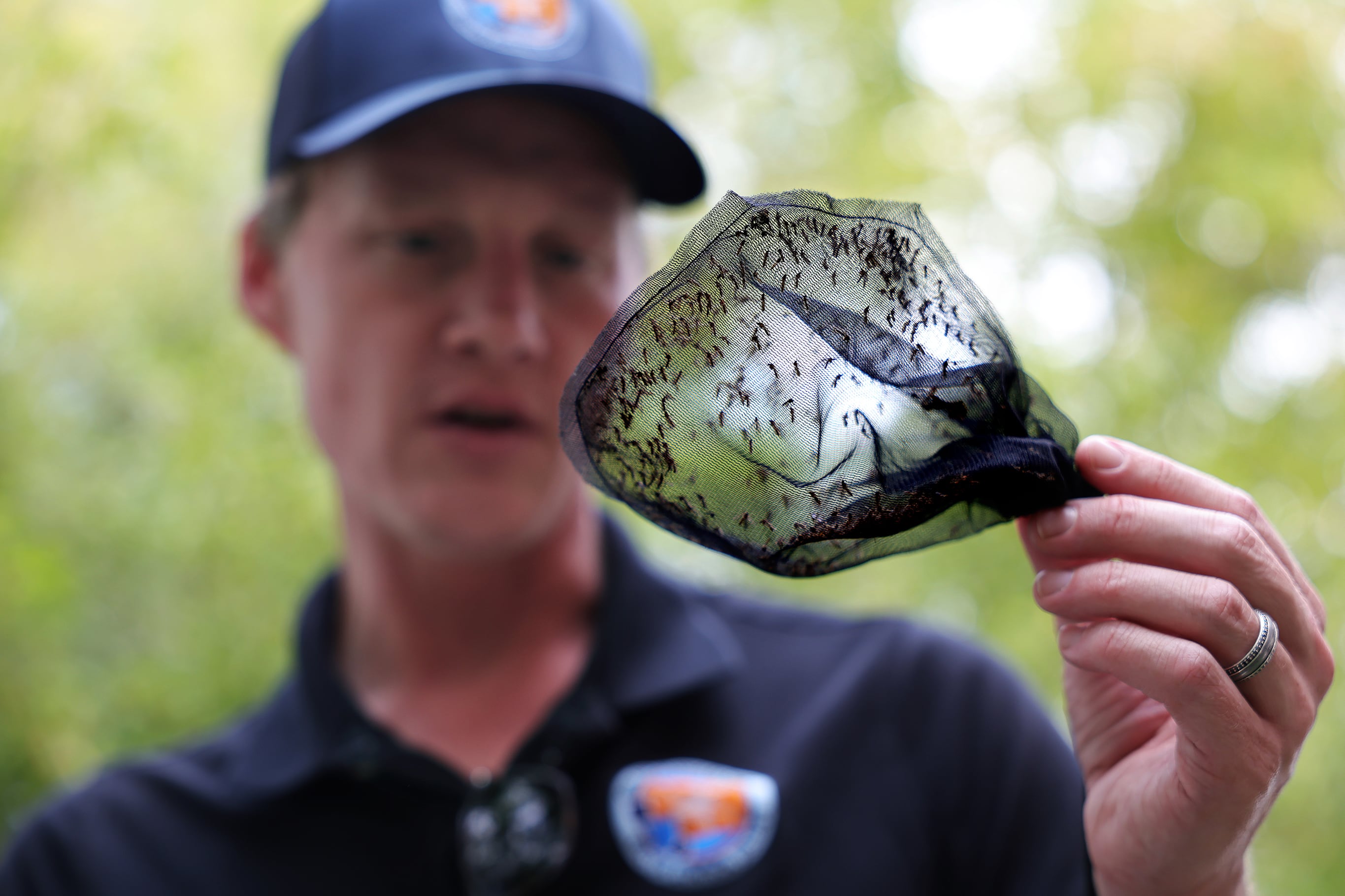
Because people who are asymptomatic or don’t get very sick are unlikely to get tested, public health officials across the country look at a variety of indicators to gauge West Nile virus activity. They include testing for the virus in dead birds, mosquito samples, and in horses.
Some mosquito-control programs also regularly test the blood of flocks of “sentinel chickens” that are kept in pens in areas with biting mosquitoes.
All of those measures are important, Gubler said. But perhaps the most reliable measure is the number of people sickened with neuroinvasive disease. Because these people are seriously ill, their infections are more reliably counted.
Asymptomatic and mild infections sometimes get caught when people donate blood, which is screened for the virus to prevent transfusion-related infections.
That’s how Vercammen first learned he might be carrying the virus in his blood.
On Sept. 1, two days before he began feeling foggy headed, Vercammen donated blood. It’s something he said he does often because his CMV-negative blood is relatively rare and especially valuable for newborns and premature babies.
As his brain fog got worse, Vercammen received a letter from the American Red Cross informing him that screening testing on his blood indicated he may have been infected with West Nile virus.
“I immediately went online and tried to read everything I could about West Nile virus,” he said.
His symptoms continued to get worse and by Sept. 11, after losing his balance, developing double vision, and a severe headache, he went to the emergency department and shared the blood bank’s findings.
Emerging Signals
Vercammen remembers little about his first two days in the hospital.
The virus had caused encephalitis, an inflammation of his brain, that can cause confusion and tremors and lead to a coma, said Dr. Seth Judson, an assistant professor and infectious disease physician scientist, who treated Vercammen at UCLA Santa Monica Medical Center.
Once a patient develops neuroinvasive disease, how severe it will be – including whether they develop a polio-like paralysis or need intubation and intensive care – will often become known in the first 48 hours, Judson said.
“Unfortunately we don’t have any treatments that are known to be effective for West Nile,” he said. So patients receive high-level nursing and supportive care.
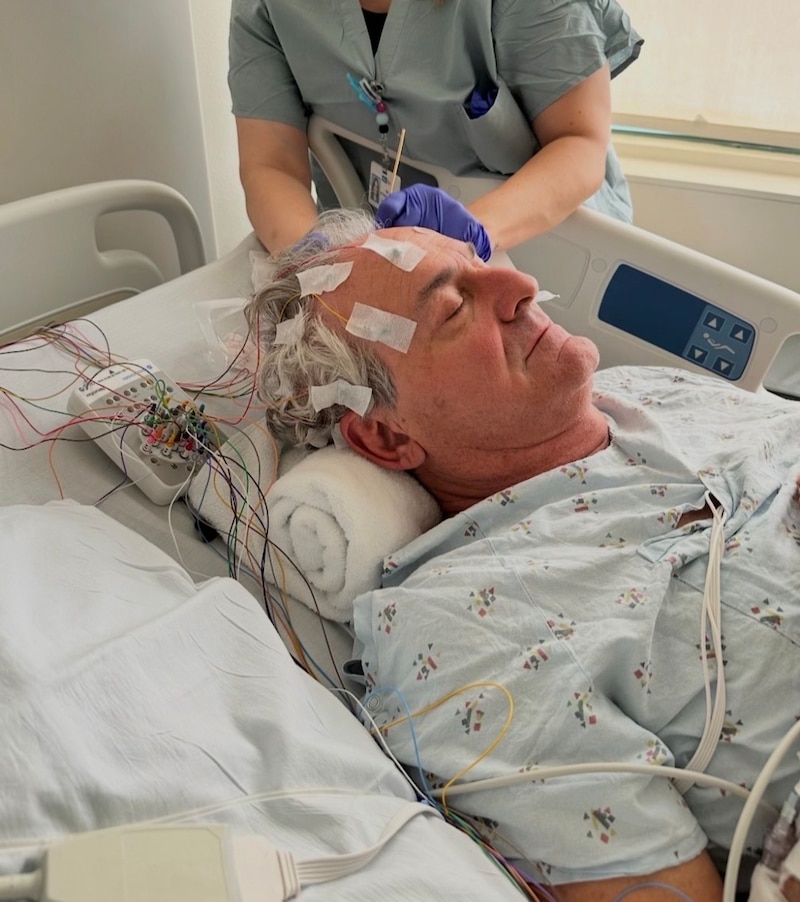
With Vercammen’s speech and word-finding ability significantly impaired, doctors monitored the electrical activity in his brain to see whether he was having any seizures or a stroke. Judson said that when the virus crosses the blood-brain barrier, it can cause inflammation and affect parts of the brain that involve language.
While anyone can develop neuroinvasive West Nile virus disease, studies have found that age is a significant risk factor. People who are 60 to 69 years old are twice as likely to be hospitalized from the virus than younger adults; people 70 and older are more than six times as likely, according to the CDC.
Other risk factors include cancer, diabetes, high blood pressure, kidney disease, and a suppressed immune system.
In August, the CDC issued a health alert to physicians and the public warning that certain immune-suppressing medications can increase the risk of severe neuroinvasive disease. These patients should be sure to take precautions against insect bites.
The alert warned these drugs can also interfere with tests used to detect West Nile virus.
The CDC said it issued the alert after a growing number of reports from doctors consulting federal and state health officials about severe neurological illness among people taking what are called B cell-depleting or modulating medications, especially anti-CD20 monoclonal antibodies. They are used to treat some cancers, autoimmune diseases, and transplant rejection.
For Vercammen, the immediate danger has passed. But recovery can be lengthy even for patients who improve quickly.
Vercammen said his severe challenges finding words in the hospital has improved significantly, but he still has some balance problems and deals with significant fatigue.
“Six months is a number they use a lot,” he said of the time doctors say he should expect his recovery to take. “That seems too long for me.”
Each patient’s prognosis is different, Judson said. Some will recover fully, some will have ongoing paralysis and other complications.
Vercammen has been recovering on the faster side, Judson said.
What to Watch
While West Nile activity usually peaks over the summer, infections continue to occur into the fall as long as mosquitoes remain active.
California public health officials are already looking toward 2027, watching how a strengthening El Niño could affect next year’s West Nile activity
West Nile virus prevalence involves a complex interplay between weather, the local environmental conditions, mosquito populations, and birds.
“We anticipate that this coming El Niño year will bring a lot of moisture and will have a big impact on next year’s West Nile virus activity,” said Hannah Romo, chief of the vector-borne disease section at the California Department of Public Health.
More available standing water sources allow for faster mosquito growth and contribute to the virus’ transmission, she said.
But the relationship isn’t straightforward. Romo said excessive rain can wash away mosquito breeding sites, while drought can concentrate birds, mosquitoes, and virus transmission around remaining water sources.
To protect themselves, people can limit outdoor activity at dawn and dusk, when the mosquitoes — primarily Culex mosquitoes — that spread this virus are most active, use insect repellent, and wear loose-fitting, long-sleeved clothing.
Vercammen wishes he had done that. He thinks about how vulnerable he was hitting golf balls at the driving range and hopes others will learn from his experience.
“I foolishly went out that night, no bug spray on, shorts, no long-sleeve shirt,” he said.
Alison Young is Healthbeat’s senior national reporter. You can reach her at ayoung@healthbeat.org or through the messaging app Signal at alisonyoungreports.48