Public health, explained: Sign up to receive Healthbeat’s free national newsletter here.
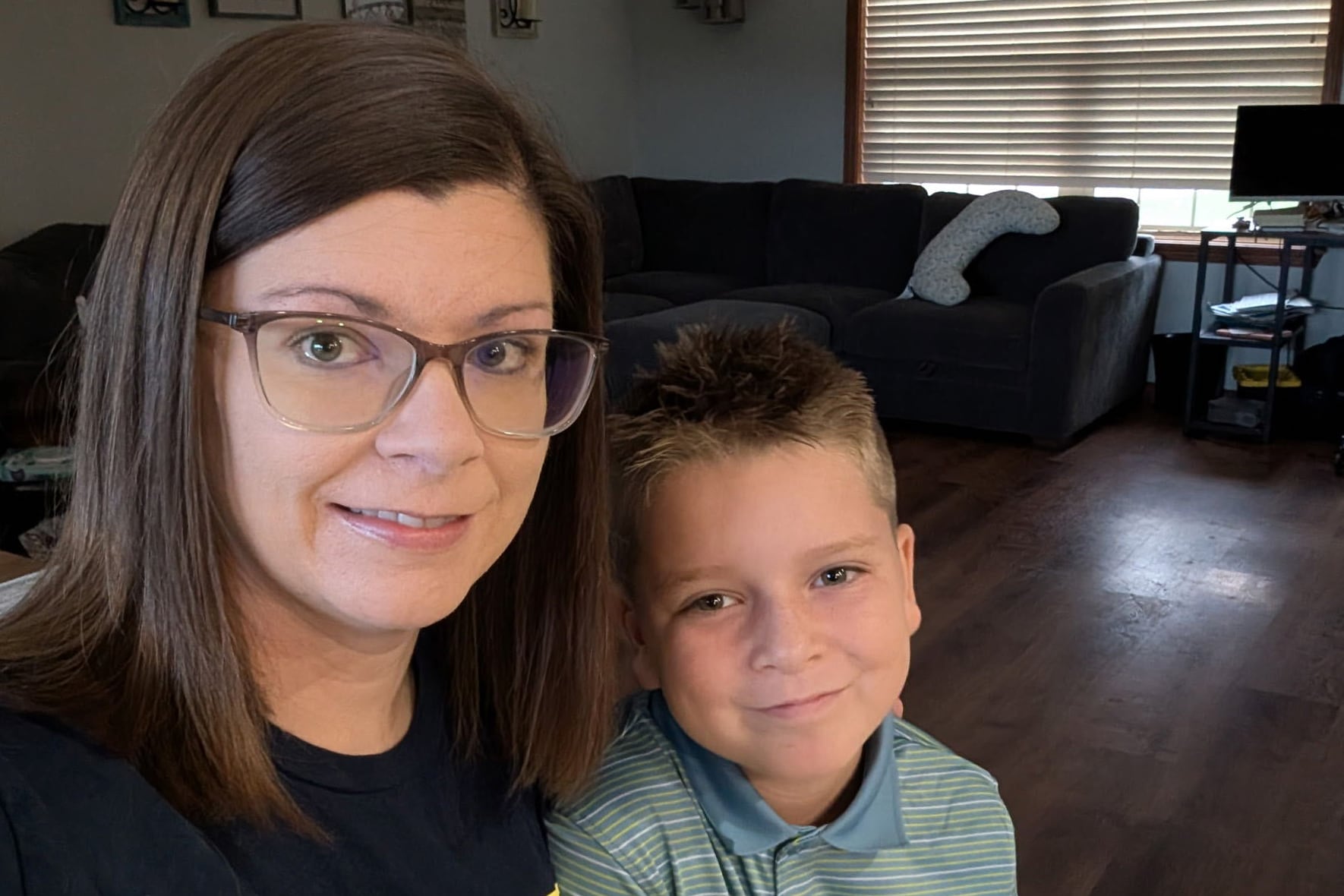
As Pennsylvania’s growing measles outbreak gets closer to her community on the west side of the state, Amanda Clear is taking actions to assess the risks to her son Dylan.
One of her first stops: A new state website that lets anyone look up the student vaccination rates at individual Pennsylvania schools. That’s how she learned that about 86% of the students at Dylan’s school are vaccinated against measles. That’s well below the 95% that’s considered necessary to prevent an outbreak of the highly contagious virus.
“Having that data point is very informative to help parents decide what they need to do,” Clear told me. Even though Dylan, 9, is vaccinated, he has an immune disorder that makes her worry he could be at increased risk for a breakthrough infection.
But across the country, not all parents can easily get access to this information. In some states, even public health officials don’t routinely know the vaccination rates at individual schools.
That’s despite research highlighting the importance of this data nationally in assessing the risks of outbreaks of measles and other vaccine-preventable diseases within local communities.
Here’s what I found.
What the research shows
Since measles was declared eliminated in the United States in 2000, CDC scientists have found that outbreaks involving more than 50 people have largely involved close-knit communities that for varying reasons have chosen not to get vaccinated. In the past few years, declining vaccination rates have contributed to these outbreaks spreading further within communities.
A prime example was the recent record-setting measles outbreak in South Carolina, which centered on a vaccine-hesitant Ukrainian- and Russian-speaking community in Spartanburg County and resulted in 997 documented infections by the time it ended in April. Most of those infected were school-age children and teens, and measles exposures that occurred at 33 schools resulted in 874 students being asked to quarantine at home for up to 21 days.
Yet across the country, data about childhood vaccination rates is often reported at a county or state level – averaging the vaccination status of kids over a broad geographic area.
It’s an approach that obscures localized pockets of unvaccinated people who live near each other, send their children to the same schools, and often share the same cultures, traditions, and beliefs, including about whether to vaccinate their children. In some cases these clusters may indicate shared barriers to accessing healthcare, such as transportation or language.
By analyzing South Carolina’s school-level immunization data, Clemson University researchers have identified clusters of undervaccinated students and their geographic relationship to measles exposures during the state’s recent outbreak.
As Clemson research associate Emily Serman mapped the data, it revealed that the risk from measles wasn’t spread evenly across Spartanburg County, which has one of the state’s lowest childhood vaccination rates.
“It’s really concentrated in the northern half of Spartanburg County,” she told Healthbeat. The Clemson team’s findings suggest that the geographic clustering of undervaccinated students may pave the way for outbreaks.
At the national level, researchers from Cornell University warned in the journal Nature Medicine last month that county-level vaccination averages can appear high enough to protect against measles spreading, yet still hide dense clusters of unvaccinated children that can fuel outbreaks.
How states compare
Knowing how many children are — and are not — vaccinated at individual schools is a powerful indicator of local outbreak risks, these researchers say. Yet whether parents, researchers, or even health departments have routine access to that information varies significantly by state.
Some states post easily accessible, up-to-date maps and data. Others require a public records request or suggest the public seek the information from school districts, which might also require a public records request. Some don’t collect it until an outbreak strikes.
Texas: Neither the public nor the state’s health department have routine access to school-level vaccination data. State law only requires school districts to report student vaccination rates at an aggregated district-wide level, said Chris Van Deusen, spokesperson for the Texas Department of State Health Services, which posts an annual report of the information it receives. The report includes some information about individual private schools. Legislation to require reporting at the individual school level failed amid concerns from some legislators that it could result in students and families being harassed.
“In the event of an outbreak in a particular school or area, public health can get campus-level data from schools,” Van Deusen said.
Minnesota: The state’s health department has posted vaccination rates for individual schools and school districts since 2014, said Ben Christianson, senior epidemiologist in the department’s vaccine preventable disease section. The department uses the data to identify at-risk areas and its public availability has helped make school and childcare leaders better aware of immunization coverage in their local areas, Christianson said. It’s also reduced the department’s workload responding to data requests, he said.
Florida: Obtaining school-level data doesn’t appear to be easy. The Florida Department of Health — which last month announced a proposed rule that would reduce the number of required school vaccines — only posts aggregated county-level data for the state’s kindergartners and seventh graders on its website.
Isabella White, the department’s press secretary, said by email that “school-specific rates are not publicly available unless requested directly from the relevant health department or school district.” Does the state collect school-level data so it can prepare for and respond to outbreaks? White wouldn’t say. Two school districts — Broward County Public Schools and Miami-Dade County Public Schools — told Healthbeat they only submit aggregated district-wide data to the state health department. Neither district makes its school-level data public without a public records request.
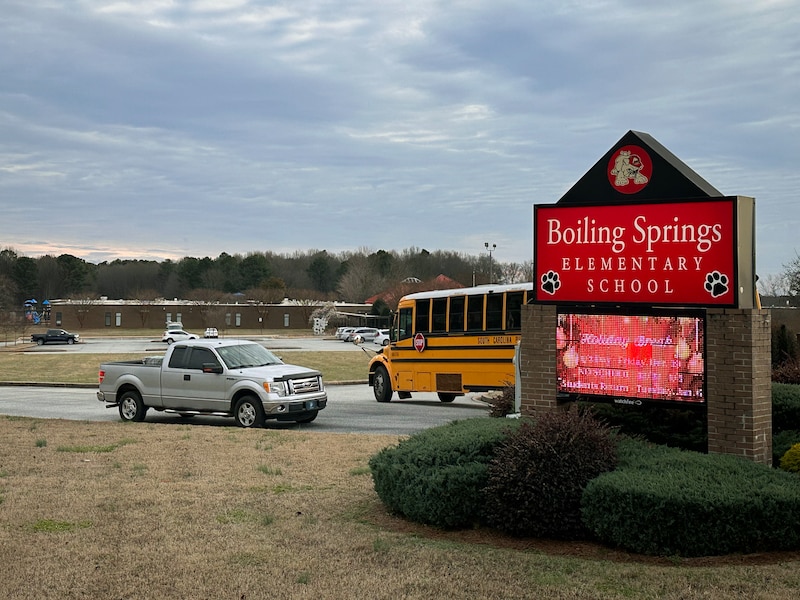
South Carolina: During the state’s recent measles outbreak, the state health department began posting school-level data on its website that shows the percentage of children who were up-to-date on all of their required school shots, but not by individual vaccines. The department told Healthbeat that the data helps it prioritize outreach to schools with low vaccine coverage and that it plans to continue posting updated data online each winter. Previously the state had only published school vaccination data at the county and regional level.
California: While the state health department posts school-level vaccination data on its website, it’s outdated — in some cases by several years, Healthbeat found. The most recent data displayed by the state’s interactive database and map is from the 2021-2022 school year. Elsewhere, the department posts some more recent, but still outdated, spreadsheets with school-level data for kindergarteners during the 2024-25 school year, plus some older data for seventh graders. Health officials have access to current data, the department told Healthbeat, and the 2025-26 school reports and data will be posted online over the next year.
“In the meantime, parents and members of the public may check with their school or local health department about coverage,” a department spokesperson said by email. School-level data can be found on at least some county health department websites, such as these for Los Angeles County and San Diego County.
Pennsylvania: This summer, the state’s health and education departments launched a new interactive website that details vaccination rates in key grades at individual schools. “Pennsylvania parents deserve clear, accessible data about the health of their children’s schools,” Dr. Debra Bogen, the state’s secretary of health, said in announcing the tool. The data will help families and local leaders work to reduce vaccine-preventable diseases, such as measles and whooping cough, she said.
Why it matters
Knowing the percentage of children immunized in individual schools can inform where and how health officials focus their resources, whether that’s for deploying staff to do contact tracing during an outbreak, assessing barriers to immunization, or conducting focused communication campaigns, the Clemson research team told Healthbeat.
“What the analysis did was it took a massive state-level problem and broke it down into several big, but more manageable, areas,” said Lior Rennert, a professor and director at the Clemson Center for Public Health Modeling and Response. “If you want to do an intervention, you now have targeted areas where you could do that.”
For the public, the data can provide a way to gauge outbreak risks in their immediate area. This can be especially useful for people at higher risk from certain diseases, such as pregnant women, infants, and young children who have not been vaccinated, and people with compromised immune systems, such as Dylan Clear.
After looking up Dylan’s school and learning not enough students were fully vaccinated against measles to prevent the virus spreading, his mother has begun working with school officials on a specialized plan in case he needs to miss school should Pennsylvania’s measles outbreak reach their area.
“If you have the knowledge,” Amanda Clear said, “you know how to respond appropriately rather than out of fear.”
What to watch
With the U.S. experiencing another record-breaking year for measles and outbreaks becoming a new norm, Pennsylvania and South Carolina this year made school-level vaccination data more transparent. We’re watching whether:
- The resurgence in measles prompts other states to reconsider what information they make visible about vaccination coverage in local schools.
- Parents and communities push for greater access to information about the outbreak risks at individual schools.
Alison Young is Healthbeat’s senior national reporter. Sign up to receive her free national newsletter here. You can reach her at ayoung@healthbeat.org or through the messaging app Signal at alisonyoungreports.48.