This story was originally published by The Trace, a nonprofit newsroom covering gun violence in America. Sign up for its newsletters here. Public health, explained: Sign up to receive Healthbeat’s free national newsletter here.
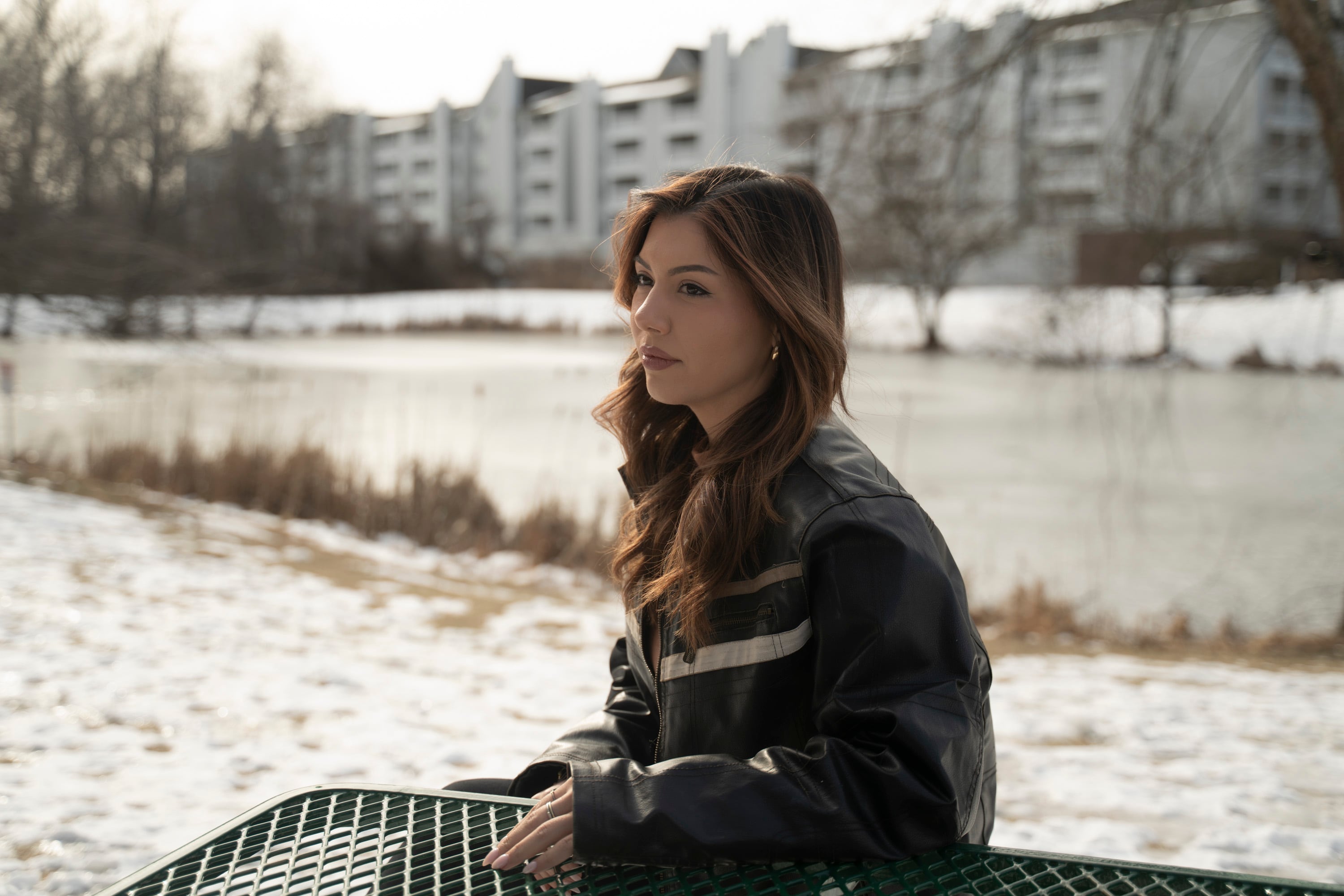
By her first semester of graduate school, in 2018, Jordan Costa was conscientious about suicide awareness. She was pursuing a doctorate in criminology at Rutgers University and had come to understand the interconnections between mental health, firearms access, and self-harm. As she shuffled through her classes on research methods and policy analysis, she began to see how a person’s environment affected their risk of suicide, as it did of homicide.
Costa first learned about the field of violence interruption as an 18-year-old psychology and criminology student at the University of Maryland in 2014. In a class taught by veteran researcher Joseph Richardson, she learned how systems like mass incarceration affected marginalized communities. A lesson on Kalief Browder, a young Black man who died by suicide after more than 700 days of solitary confinement at the Rikers Island jail in New York City, compelled her to get involved in prevention.
Outside of class, Richardson led a local hospital-based violence intervention program, in which patients with gunshot wounds were connected to violence interrupters, at what was then known as Prince George’s County Hospital Center. Costa began interning there, working directly with prevention staff and gun violence victims. During one shift, she met a patient, a young man with 17 gunshot wounds, and recalled how it felt sitting at his bedside.
“I just remember looking at his bullet wounds and talking to him about the situation that happened,” said Costa. “Gun violence, obviously, is an incredibly painful and traumatic experience to navigate, and the worst thing I believe you can do is see someone in need of help and just turn away.”
She hasn’t looked away since. After she graduated from UMD, she jumped right into her graduate studies back home in New Jersey. Her connection to violence intervention was strongly established by that point, but as she scrolled through Instagram one day after class, her life changed forever.
On the screen, her father’s name was bold-faced in purple against a teal background, colors she knew symbolized suicide awareness. A caption from a family member memorialized him as a suicide victim. Her hand trembling, she reread the post multiple times, stopping on her father’s name. Joe Costa. It didn’t resonate. She’d been told that her father had died suddenly, in his sleep, in 2005. She called her maternal aunt, who urged her to call her mother.
Her mother, stuttering through questions of her own, took a long pause and sighed before telling her daughter the truth. Costa’s father had not died in his sleep, as she’d believed for 15 years. He’d died of a self-inflicted gunshot wound to the head.
It was her mother’s tearful recounting of the moment she had learned of Joe’s death that Costa said stuck with her. Even though her parents had split up when she was a child, they remained deeply committed to raising her together, and family members had grown concerned after not hearing from Joe for days. Neighbors registered several noise complaints about loud music blasting from his apartment. With the help of building management, his family entered the apartment and discovered his body. Her father was 35 years old. He was buried in New Jersey, not far from where Costa grew up.
This bit of family history, finally unshrouded, “totally reoriented my understanding of my own connection to the work that I do,” Costa told The Trace. “I was already involved in gun violence work. I had already seen people die, and now I was being told that my parent died by a self-inflicted gunshot wound.”
The cause of her father’s death brought home Costa’s growing understanding of the aftermath of firearm violence. The process of searching for answers, community, and resources among those affected by gun violence can be lonely. Today, she works for the Giffords Center for Violence Intervention, ensuring the sustainability of the violence prevention workforce and advocating for adequate funding on the local and national levels. She wants the people she works with to know that she can relate to their experiences.
How do structural forces influence health?
Coming from a Cuban-American family that had relocated to New Jersey after the revolution, Costa had grown up seeing how structural forces, including racism, led to significant pain and anxiety among members of her community, which had little to no mental health support to combat systemic inequities. She became curious about how factors like immigration or vicarious trauma influence a person’s wellness — and dogged in her pursuit of fully understanding them.
Her father’s death in May 2005 compounded that interest. Costa was 8 and finishing up fourth grade at the time of the shooting. Her family said they withheld the truth because they wanted to do what they felt was right: protect her, especially as they were still grappling with the reality of Joe’s death themselves. By the time Costa had set her sights on the University of Maryland, hundreds of miles away from her New Jersey home, her family members had come to terms with keeping their secret. In their eyes, they were helping their family, and family was everything.
When she learned the truth, though, Costa didn’t see it as something to run from. It connected with her long-held desire to understand the complexities of violence. In some ways, it sealed her commitment to violence prevention. She had spent her undergraduate days in Maryland dedicated to the field, despite personal, academic, familial, and social challenges. Her commitment was to the people at its center: gunshot victims.
As Joseph Richardson, the veteran researcher who has been on the frontline of firearm violence scholarship and fieldwork, taught his class about the influence of structural inequities on violence, Costa had the opportunity to ask questions. The answers to those questions offered a public health approach instead of a criminal justice focus as the only solution to the problem.
“Growing up as a Latina, I wanted to learn why different behaviors, like substance abuse, communal and intimate partner violence, were prominent but never addressed,” said Costa.
Richardson told The Trace that Costa “was an amazing student.” The Hospital-based Violence Intervention Program (HVIP) at Prince George’s, which he led, focused on Black men between the ages of 18 and 25, and Costa was quickly enthralled by the direct support it provided to patients. She recalled that it was the first time that, instead of watching people run away from trauma, they were confronting it head-on. But as motivated as she was, she was equally frustrated with the lack of funding and staffing challenges that violence prevention faced.
Her work at the HVIP coincided with that of Che Bullock, a Washington, D.C., native who had almost died after being stabbed 13 times in 2013. Bullock became a violence interrupter, often guest speaking in Richardson’s classes, and working at the hospital program. He served as an early model for how to bring lived experience to prevention work. Costa watched as he sat at the bedside of patients with gunshot wounds, offering credible, frontline support to those who had been recently victimized.
“I sat in that hospital bed that these patients were lying in, and I know what it felt like for me, so I just put myself back in their shoes,” said Bullock. “You’re walking into these rooms, and walking into people’s lives who have essentially just lost everything, not in a physical sense, but mentally and emotionally, and knowing whether they may survive or not.”
Even if they live, Bullock said, there are a lot of invisible wounds. Costa saw that and approached it with the same kind of dedication Bullock did. “She is like a sponge, and puts a lot of herself into it, putting sweat, blood, and tears into building this thing, in turn making a lasting impact,” Bullock said. “I’ll always attest to that.”
Reframing connection on a human level
In her first decade in the field, Costa frequently thought of the way that her identity shaped her experience in the violence prevention space. In one instance, she said that she went to Richardson in 2015, asking him how she should properly navigate working as a Latina woman who was focused on young Black male gunshot victims. She said that Richardson suggested she should reframe her approach, urging her to focus on the shared human experience.
“I don’t know what it’s like to be shot, but I did explain that I understand them on a human level,” said Costa about speaking to gun violence victims. “And I understand what pain and suffering feels like, and that you need somebody right now, and I’m willing to be that person.”
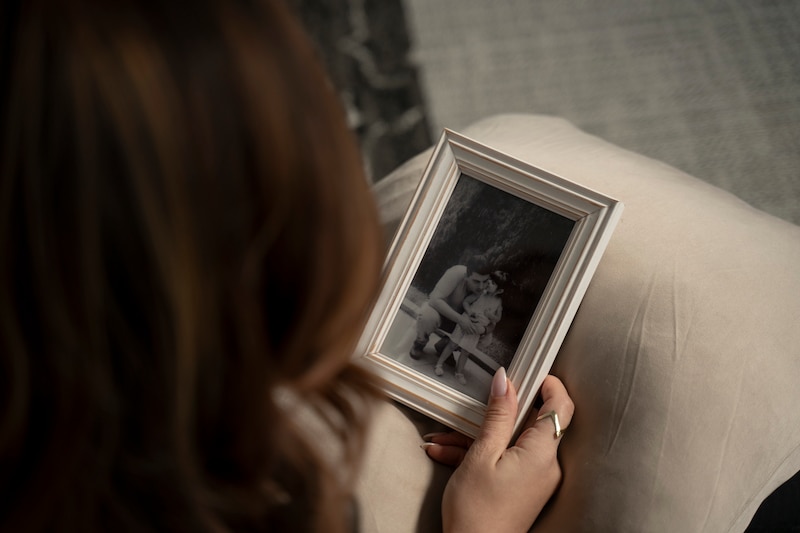
But the work was not easy. Costa watched men share stories of their violent experiences and was buoyed by it. But she knew that if she discussed her firsthand experience of harm, including gender-based violence and suicidal ideation, she could potentially lose credibility.
“Patriarchal structures have such deep roots in the way that we operate,” she said. “There is a feeling that you have to be quiet there, and it’s more prominent than people would lead you to believe.”
By 2018, after suddenly learning how her father died, she often reflected on her time as an intern at the HVIP in Maryland. Costa had spoken to hundreds of people who had shown up in the hospital with gunshot wounds, but she couldn’t hear from the person that she most wanted to.
“I had my memories of my dad, but it caused me to question how much I actually remembered,” said Costa. The images of them dancing playfully together were slowly replaced with imaginings of mental challenges, substance abuse, and suffering. Costa searched for answers and discovered her father’s autopsy report. She began to visualize his death. She had to do a lot of therapy, “to understand that grief process, because I had never really grieved him properly.”
In a letter written before his death, which she read for the first time in 2024, Costa’s father detailed his frustration with the medical system, and he expressed deep disappointment with medical treatments. He wanted his daughter to know that he loved her deeply. The note made her think that, if only he had the support of a program like Richardson’s or access to therapy, he might still be alive.
“I had a male family member who died by suicide in Cuba,” Costa said. “But I also had another male family member here, who was like my father figure, who I’d say also dealt with a lot of suicidal ideation. I think that’s part of a broader issue within our culture, which is that we don’t talk about mental health challenges.”
As a first-generation doctoral student at Rutgers University, starting in 2018, Costa was often one of the only students of color, and also unusual in that she had firsthand experience of firearm violence. A lot of the trauma that Costa had seen in her family, she said, was borne by things they’d repressed since the revolution, particularly losing their homes, their livelihoods, and their freedom.
Graduate school was a trying period for Costa, a self-described nerd, who always loved learning. She lost two prominent family members who had supported her academically. Costa’s dissertation focused on the experience of hospital-based violence interrupters, but as the pandemic rolled on through 2021, hospital restrictions made it difficult for her to complete her analyses, stifling her ability to continue her research and resulting in academic probation.
These events, along with the resurfaced grief of her losing her father, Costa said, exemplified the toll of being a first-generation student. But she persevered, largely due to what she called her “fervent commitment to not allow challenges to stand in the way of my calling.”
“I really do believe that I have been assigned this mountain to show it can be moved,” Costa said, noting how rarely doctoral degrees are awarded to Latinas in the United States. “You have a lot of people who are trying to do transformative work, but not necessarily structurally or emotionally supported through it, and I didn’t want my direct service work to be wiped away because of barriers.”
After seven years of study, Costa received her doctorate in criminal justice from Rutgers in 2025. For her, her title represents a key to rooms where she can open doors for others. Her Ph.D is also a way to help her former clients from her community work, who, like her father, often had no one speaking up for them.
“I want the people I work with to know that I understand them,” said Costa, whose work at Giffords involves amplifying the need for the type of support to violence prevention workers that she saw was missing in the field when she first began. She wants the people to know she comes from a place of understanding.
“People think the worst part of a gunshot wound is the injury itself,” she said.
“And for some it may be, but the psychological aftermath is quite isolating and difficult to move through.”
If you or someone you know may be experiencing a mental health crisis, contact the 988 Suicide & Crisis Lifeline by dialing or texting “988.”