Public health, explained: Sign up to receive Healthbeat’s free national newsletter here.
South Carolina’s state health department faced a significant problem in the critical weeks before the state’s measles outbreak surged in January.
As schoolchildren continued to fall ill with measles in late December, outbreak investigators needed help from schools to get contact information for the classmates, staff, and others who had been exposed. They needed to be warned quickly so they wouldn’t spread the virus to others if they were infected.
But schools were closed for their two-week winter break. Nobody was available at most schools to provide the information health officials needed, according to South Carolina’s state epidemiologist and records obtained by Healthbeat.
This communication gap between the South Carolina Department of Public Health and schools in Spartanburg County – the outbreak’s epicenter – resulted in delays quarantining people who were at risk of unknowingly spreading the highly contagious disease. An infected person is contagious beginning four days before the tell-tale measles rash appears.
At the same time, the state health department was grappling with its own holiday staffing challenges, according to the internal DPH outbreak reports that Healthbeat obtained under South Carolina’s public records law.
While the number of measles cases grew in December, the number of DPH staff assigned to combat the outbreak dropped. The internal DPH reports repeatedly note concerns about holiday staffing, workloads, burnout, the availability of backup staffing, and “limited support due to workforce reduction in April 2025.”
Only after New Year’s Eve did outbreak staffing begin to increase significantly, records show.
Dr. Linda Bell, the state epidemiologist who is leading South Carolina’s outbreak response, said that despite challenges, public health staff “worked diligently throughout the holidays.”
“DPH made many efforts to reach impacted schools over the holidays with limited success because the schools were closed,” Bell said in written responses to Healthbeat’s questions.
By early January, the South Carolina measles outbreak surged to become one of the largest in the United States in decades.
“It’s impossible to know exactly what impact school closures and the resulting delays had on the spike in cases,” Bell told Healthbeat.
However, the delays hampered one of the department’s key strategies for slowing the virus’ spread: Rapid identification and home quarantine of exposed children and adults who were at risk of developing and further spreading the disease because they aren’t vaccinated.
“Our inability to get contact information for potentially exposed students and notify those families resulted in some people being out and about in the community without knowing that they were infectious,” Bell said. “The consequences being new cases due to additional exposures from people who would have otherwise been in quarantine had we been able to make contact.”
This occurred during a time of increased socializing over the holidays, she noted.
It usually takes a week to 12 days, and sometimes as long as three weeks, for people infected with measles to start showing symptoms. The virus spreads through the air when a contagious person breathes, sneezes, or coughs.
Before Spartanburg County schools closed for winter break on Dec. 22, the state health department had logged 144 measles cases since the outbreak began in early October, state data show. In the three weeks after schools reopened during the week of Jan. 5, outbreak investigators were chasing after more than 500 new cases of measles.
The outbreak continues to grow, reaching 950 confirmed cases in South Carolina as of last week, a tally that doesn’t include cases sparked in other states.
School officials with Spartanburg County’s District 2 and District 6, whose elementary schools were among those with delayed exposure investigations during winter break, have declined repeated requests from Healthbeat for interviews or information about their procedures for providing time-sensitive public health information during extended school break closures.
Both districts have had multiple measles exposure incidents in their schools since the outbreak began last fall, requiring dozens of students to be excluded from class due to quarantines.
What happened in South Carolina is a cautionary tale for health departments and schools across the United States – especially as measles makes a resurgence amid declining vaccination rates. So far this year, at least 24 states have reported measles cases to the Centers for Disease Control and Prevention.
In the coming weeks, schools across the country will be closing again for spring break.
“I just want to emphasize how normal Spartanburg is,” said Scott Thorpe, executive director of the nonprofit Southern Alliance for Public Health Leadership, noting that the pockets of low vaccination rates that have fueled the South Carolina measles outbreak are also common in other communities. “I hope that everybody is really preparing for this, because I don’t think it’s going anywhere anytime soon.”
With some communities having multiple school districts plus numerous private schools, Thorpe said that strengthening lines of communication between public health and schools takes time. “To try to figure out how to interact successfully in all these circumstances, in a crisis situation, is really hard,” he said.
School nurses, staff often not paid to work over breaks
Pat Endsley, president-elect of the National Association of School Nurses, said school breaks can pose a special challenge for health departments doing infectious disease contact tracing because school nurses and other staff often aren’t being paid to work during those periods – and they may even be traveling out of town.
With every state operating differently, Endsley said she’s not aware of any national best practice for addressing school contact tracing for measles during extended school break periods. A lot of the best practices were written specifically to address the emergence of the Covid-19 pandemic, she said.
“The gold standard would be to have some kind of person who is at the school, who’s not going anywhere, who could have access to information,” said Endsley, who served as a school nurse in Maine for 23 years and now teaches full time.
“Maybe that’s something that would come out of South Carolina, or Texas, or these other places with measles,” she said. “Based on this information, we could develop some exemplars of communication.”
In at least some communities, health departments have found ways to ensure measles exposure investigations aren’t thwarted by school breaks.
Health officials battling another large measles outbreak along the Utah-Arizona border said they had no difficulties reaching impacted schools over the recent winter break.
“Our epidemiologists report that contact tracing and other issues involving students ran uninterrupted over the winter holidays, mainly due to frequent communication with an established point of contact with our largest school district,” said David Heaton, a spokesperson for the Southwest Utah Public Health Department. The school contact was available to help over the holidays, Heaton said.
Dani Lagana, a spokesperson for the Mohave County Department of Public Health in Arizona, said the department’s measles response activities are not dependent on school calendars.
“Effective contact tracing in school-associated cases relies on established communication protocols and coordination between public health and education partners,” Lagana said by email. “Health departments routinely plan for coverage during holidays and breaks to ensure appropriate notification and follow-up when needed.”
It’s unclear why – before winter break closures began – similar arrangements weren’t put in place between the South Carolina DPH and schools in Spartanburg County.
“DPH cannot direct school employees to come to work to assist with outbreak investigations,” the South Carolina department said in an emailed statement to Healthbeat.
The department said it has contact lists for school administrators, but these administrators may not have access to the detailed information outbreak investigators need when schools are closed.
“Comparisons of response activities from one jurisdiction to the next should be made with caution,” the state health department said. “Each jurisdiction has unique circumstances including differences between centralized vs. autonomous county public health agencies.”
In South Carolina, public health activities are centralized and provided by state DPH employees at offices across the state. Arizona and Utah, have multiple local health departments covering a single county or multi-county region, in addition to state health departments.
Healthbeat asked each of Spartanburg County’s seven public school districts whether they had any policies or procedures that would specifically enable rapid sharing of student contact information during holiday breaks with public health officials who are trying to control infectious disease outbreaks. None of the districts provided answers to these questions.
Schools play an important role in helping public health investigators quickly determine which students, teachers, staff, and visitors may have been exposed to the infected individual. Not only does measles spread through the air, the virus can linger in a room for two hours after the contagious person has left.
School staff can provide health investigators detailed information about the movements of an infected student – and who was around them while they were contagious – by going through class schedules and rosters of those participating in extracurricular activities and riding on school buses. They also know which students lack immunity to measles because school records show which ones have exemptions from vaccine requirements for medical or religious reasons.
Rapid notification of at-risk individuals is critical, health officials say, so they know to quarantine at home and watch for early signs of measles that might otherwise be mistaken for a cold or the flu. In the four days before measles’ hallmark rash appears – and the person is already contagious – their earliest symptoms are typically a fever, cough, runny nose, and red, watery eyes.
“I definitely can see the issue that DPH had during winter break with schools closed two to three weeks, and no way to do that school notification, contact trace, get information from nurses,” said Dawn MacAdams, president of the South Carolina Association of School Nurses. “But then you run into: nurses don’t get paid during that time.”
MacAdams said that during Covid, school nurses faced overwhelming workloads and long hours helping with contact tracing without being paid for the extra work. “Nurses were working Christmas Eve, Christmas Day, New Year’s because the numbers were exploding and the guidance was changing,” she said.
MacAdams said she’s not sure what the solution is for ensuring timely contact tracing of school-associated measles exposures when schools are closed.
“That’s a really good question to think about with DPH on what are the things we can do,” she said. “Most spring breaks are somewhere the first or second week of April this year. So we’re going to be in another desert of the availability of school personnel to provide information.”
Records show quarantine delays at five Spartanburg schools
Internal South Carolina DPH reports show there were delays during winter break notifying and quarantining people who had been exposed to measles at three public schools, one public charter school, and one private Christian school.
For the exposure incidents at these schools, the department’s internal daily outbreak summary reports during winter break repeatedly listed that health officials were reaching out to the facilities or that the status of quarantine actions were still “TBD” – or to be determined.
It’s unclear how many exposed students and staff weren’t contacted quickly because these schools were closed. “Parsing out all those we were working to reach, whether students or others, during that time when cases were surging is not possible,” Bell said.
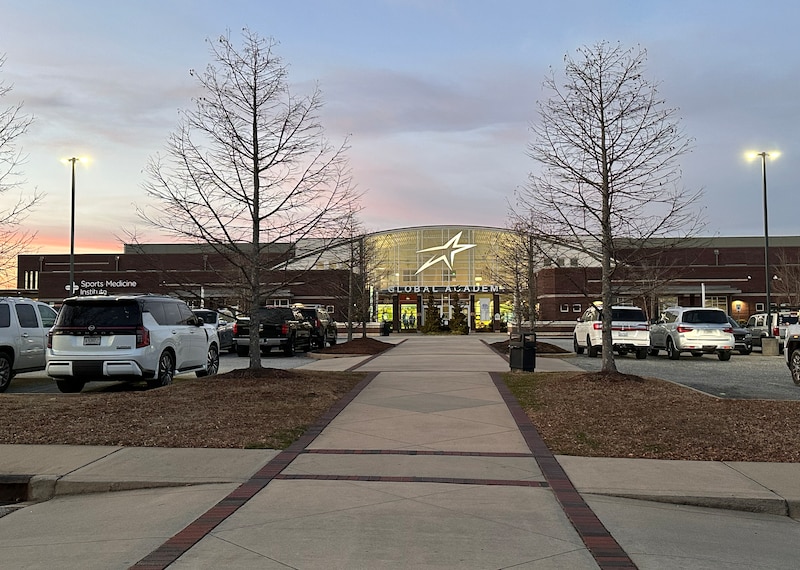
One of the schools where winter break investigation and quarantine delays occurred is Global Academy of South Carolina, a public charter school where only 21% of students are up-to-date on required school vaccines, including the measles, mumps and rubella shot. To prevent measles outbreaks, 95% coverage is needed.
It took Global Academy until Jan. 9 to provide outbreak investigators with a requested “line list” detailing the names and contact information for exposed students and staff, the DPH documents obtained by Healthbeat show. The school’s winter break was Dec. 22-Jan. 2.
“Global Academy finally provided a line list yesterday, and we are going through it,” a DPH official said in a Jan. 10 email updating the South Carolina governor’s office on the outbreak response.
The school’s principal, Mark Robertson, did not answer Healthbeat’s questions and told a reporter to contact DPH.
Global Academy was one of the first two schools to have confirmed measles cases when the outbreak began in early October. The school has had repeated rounds of students being quarantined and excluded from class.
Other schools that had delayed winter break investigations of measles exposure incidents included large public elementary schools in Spartanburg County School Districts 2 and 6, the records show. Throughout the outbreak, the district’s schools have had exposure incidents requiring students to quarantine, state records show.
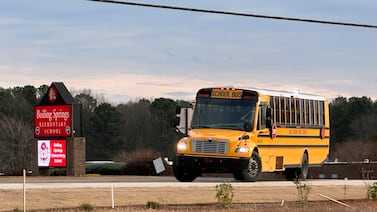
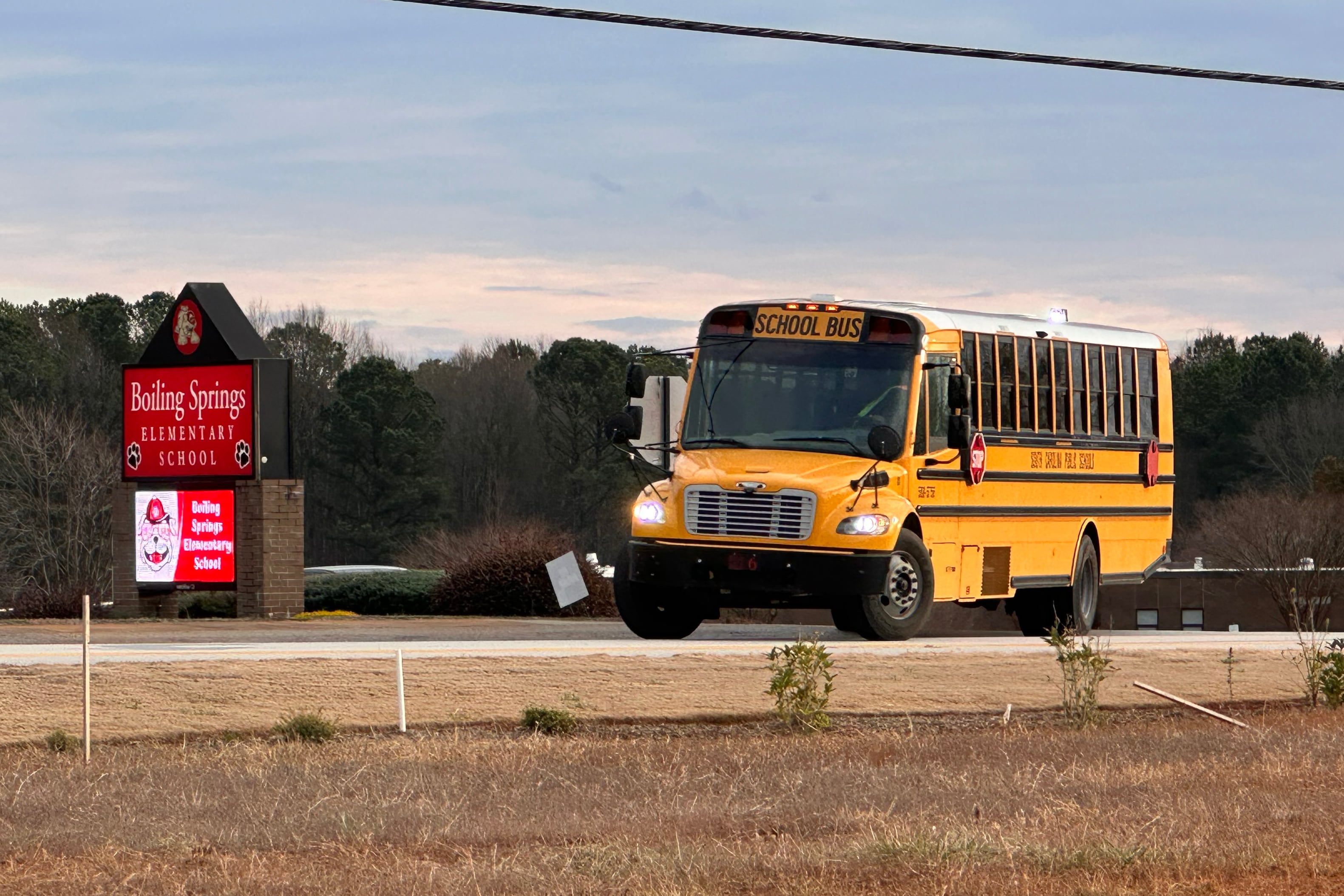
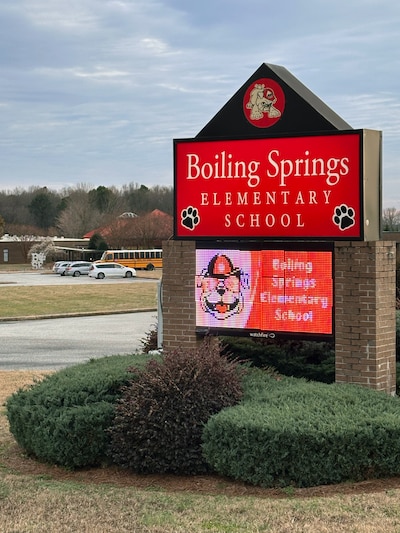
In District 2, winter break delays occurred in investigations of exposures at Sugar Ridge Elementary, where state data show 78% of students are up-to-date on school vaccines, and at Boiling Springs Elementary, where 80% of students are up-to-date on vaccines.
In District 6, the delays also occurred at Jesse S. Bobo Elementary School, where state data show 94% of students are up-to-date on school vaccines.
Officials with both districts have declined repeated requests from Healthbeat since Jan. 9 for interviews or answers to specific questions about the outbreak’s impact on student health, as well as the circumstances surrounding the exposure investigation delays over the winter break.
Health officials’ efforts to get complete exposure contact information from one school were so protracted coming out of the winter break that they were preparing to issue a formal public health order to force compliance. The school says it promptly provided information.
In January, the state health department issued a “final notice letter” to Westgate Christian School in Spartanburg because of the school’s continued “noncompliance,” Healthbeat reported earlier this month. The school was closed for its Christmas break from the afternoon of Dec. 19 through Jan. 2.
Outbreak investigators had been asking for contact information for exposed students and staff since Dec. 29, Bell said. A list that the school provided on New Year’s Eve was deemed “insufficient.”
When Westgate Christian’s break was over and the requested information still hadn’t been provided, Bell said the department issued a “final notice” to the school on Jan. 9. The letter warned that if the information wasn’t received by 1 p.m. on Jan. 10, the department “would issue a Public Health Order pursuant to S.C. Code § 44-1-140 compelling compliance.”
The issue was resolved the next day when the school provided the requested information, Bell said.
Pastor James Wooten, Westgate Christian’s president, said that until the school’s administrator received the “final notice” email – at 5 p.m. on Friday, Jan. 9 – she thought the health department had been provided everything it needed on Dec. 31.
“Other than a thank you acknowledging receipt, she received no further correspondence or request for information until the final notice warning,” Wooten told Healthbeat last week. School officials wonder why, if outbreak investigators needed more information, “they didn’t simply reply to the email and request it,” Wooten said.
Alison Young is Healthbeat’s senior national reporter. You can reach her at ayoung@healthbeat.org or through the messaging app Signal at alisonyoungreports.48