Public health, explained: Sign up to receive Healthbeat’s Global Checkup in your inbox a day early.
Hello from Sydney, Australia.
I arrived on Sunday to spend the holidays with my in-laws. It has been an odd and heavy start. We landed just hours after the attack at Bondi Beach, a short distance from where we are staying. At the same time, this is Australia at Christmas, with its familiar rituals. Shrimp, shorts, and sunburns.
This week, I am finally catching up on a disease I have largely avoided covering: measles. I have tended to see its resurgence in the West as a misinformation problem with American roots. But as we’ll see, that framing falls short.
My name is William Herkewitz, and I’m a journalist (usually) based in Nairobi, Kenya. This is the Global Health Checkup, where I highlight five of the week’s most important stories on outbreaks, medicine, science, and survival from around the world.
With that, as we say in Swahili: karibu katika habari — welcome to the news.
Blaming misinformation isn’t enough to explain measles’ return
Follow measles across the West and you find an uncomfortable trail of resurgence. For example: Europe is seeing record cases, and Canada just officially lost its measles elimination status. For developed countries, this rise is most often blamed on vaccine misinformation. Basically, that widespread distrust and conspiracy-minded thinking (supercharged by a Covid-era backlash) is increasingly hollowing out vulnerable, unvaccinated pockets of people for the virus to spread between.
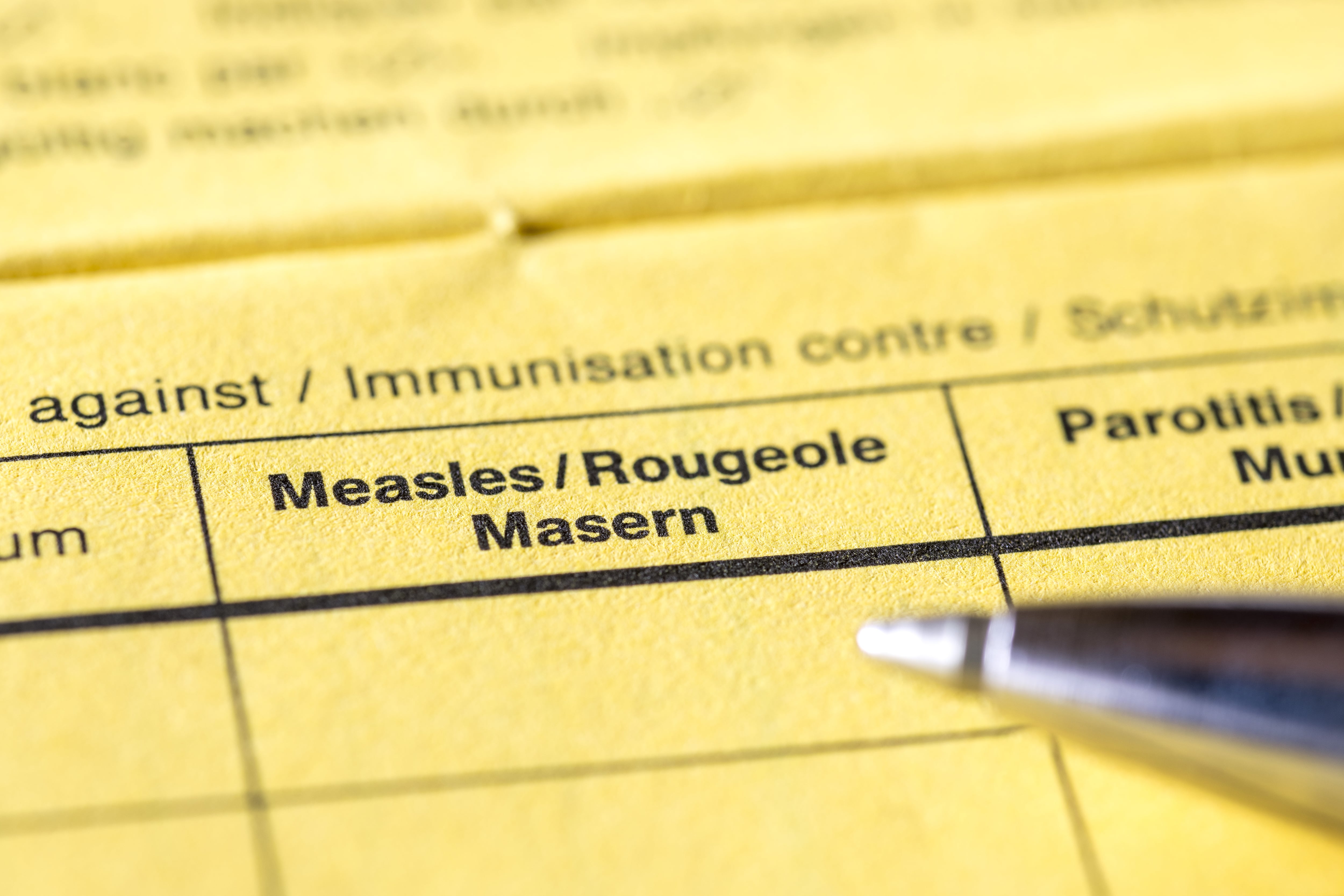
- Disease breakdown: Measles is one of the most contagious viruses on Earth. It spreads through the air when an infected person coughs or breathes. It causes fever, cough, a distinctive rash, and can lead to death, especially in young children. Two doses of the 50-year-old measles vaccine is 97% effective and remains the only viable way to stop the spread of the disease.
In the United States, it is especially easy to believe this explanation right now. As Healthbeat reports, America’s chief public health official and renowned anti-vaxxer Robert F. Kennedy Jr. is actively undermining “the ability of public health officials to prevent and contain outbreaks” of the virus. But is that the full story?
Australia is the strongest test of this explanation (and, conveniently, I’m here). That’s because it’s a country with one of the world’s most robust public health and vaccination systems, free childhood vaccines, and historically high coverage. And measles cases are rising here, as well, Medscape reports.
I reached out to Julie Leask, a professor of public health at the University of Sydney and one of Australia’s leading experts on what people think, feel, and do about vaccination. I asked if vaccine misinformation is simply eroding confidence in the same way here, too.
Leask surprised me. In Australia, she said, while “the clickbaity idea that [measles resurgence] is all about vaccine refusal” absolutely dominates local headlines, the data do not fully support that explanation. She pointed to Australia’s National Vaccination Insights Project, a vaccination surveillance system that tracks the real-world reasons children miss doses. “Vaccine refusal is absolutely a problem,” she told me, “but it’s not the only problem.”
Leask notes that two other forces are doing at least as much work to recirculate the disease in Australia. One is rising measles cases in developing countries like Vietnam, Thailand, and Indonesia, where people may travel and return with an infection. The other is a mix of everyday practical barriers that Leask calls “social determinants of vaccination.” These range from hard-to-reach clinics and staff shortages to families who missed routine shots during the pandemic and never fully caught up, which have left pockets of children without vaccines or only partially vaccinated. Together, she said, those factors can pose as much risk as anti-vaccine sentiment alone.
The larger lesson, she argued, is that across the developed world, measles control depends as much on keeping vaccination easy, accessible, and routine as it does on countering misinformation.
Is misinformation rising, and should we be wary of it? Without question. But focusing on it alone misses where other real gaps are opening.
Kenya court pauses ‘America First’ health deal
Over the weekend, Kenya’s High Court halted the new U.S.-Kenya health aid deal that we discussed last week, Kenya’s The Standard reports. The agreement was meant to lock in $1.6 billion in American funding, and was the first test case of Washington’s new “America First” health aid model.
The issue? Data.
Tucked into the agreement was a provision committing Kenya to share population-wide health data with the United States and U.S. companies for up to 25 years, a scope and timeline that critics say were never clearly explained to the public or debated in parliament.
Last week I wrote that I “initially didn’t read this as a nefarious data grab,” but rather as a clumsy fix for the surveillance gap the United States created by exiting the World Health Organization. (But, as The Standard notes, the agreement “requires Kenya to share extensive medical data, including HIV/AIDS, tuberculosis, malaria, maternal and child health,” in addition to data purely on “disease surveillance,” which frankly makes my more charitable interpretation harder to sustain.)
Certainly, this ruling is an early embarrassment for the Trump administration’s flagship health agreement, though its practical impact on the deal will remain unclear for quite a while. The case isn’t even due in court until Feb. 12.
What’s the takeaway?
Well, it’s worth revisiting my conversation with John Kuehnle, who ran America’s health programs for the U.S. Agency for International Development in Kenya from 2020 to 2024. We discussed the data clause last week, well before the court intervened, and Kuehnle walked through potential rationales for why U.S. negotiators wanted the data in the deal at all.
A generous interpretation is that the information could “be mutually beneficial if it’s used to develop medicines and medical devices that are tailored to the needs for Kenyans and other Africans,” he said. But Kuehnle noted that this business case is thin at best. “What’s the point of making a drug tailored to a population that can only afford it if a donor buys it, when the donor funding runs out in five years?”
Even if the courts allow the data sharing to go through, Kuehnle cautioned that political consent is unlikely to outlast the money. “If no material gains come from Kenyans giving their data to the U.S. in the first five years, I would not be surprised if this fizzles after five years and the funding runs out,” he said. “I don’t see Kenyans continuing to share data for 20 years after the funding runs out simply because a politician in 2025 agreed to do so.”
An HIV surge in Papua New Guinea
Papua New Guinea is facing one of the fastest-growing HIV epidemics in the world*, The Guardian reports. New infections have roughly doubled since 2010, with nearly half occurring among children and young people. This has prompted the government to declare HIV a national crisis, as overstretched health services buckle after the loss of international funding.
Over a third of people living with HIV in Papua New Guinea don’t know they are infected, and mother-to-child transmission of the virus remains “one of the highest globally.” At the same time, prevention and outreach have weakened as international funding has fallen away. The Guardian story notes that hundreds of clinics run by the government and churches have cut back services or shut down entirely.
Luckily, Australia has moved to plug part of the funding gap, increasing its annual HIV funding to about $6.6 million. UNAIDS says this will keep its Papua New Guinea office operating for another two years. But this intervention only buys time. One source in the article says what when U.S. funding stopped this year, there was “no second plan given to us, and we were told to close down the clinic,” said a social worker in the capital, Port Moresby.
The takeaway: Even senior Papua New Guinean officials concede that there is no clear plan for the HIV outbreak if foreign funding doesn’t return. Foreign minister Justin Tkatchenko warned the country needs a “fallback position,” adding: “The long-term strategy is doing it ourselves. We can’t continually rely on other donor partners to help us.”
(*Worth noting: Papua New Guinea’s doubling of HIV cases is still dwarfed by the wild surges currently seen in the Philippines, Fiji, or Madagascar.)
Your lungs on airplane mode
Air travel has a dirty little secret … what passengers are breathing.
A new study in the journal Environmental International finds that airline passengers can be exposed to extremely high levels of ultrafine air pollution while flying, Oman’s The Arabian Stories reports. This is especially true during boarding, taxiing, and landing.
The findings are new here, but so too was the research approach. The researchers basically brought air-quality monitors onto real flights and measured what was in the cabin air at each stage of the trip, instead of relying on estimates or airport data.
The key point is that jet engine pollution can seep into cabin air before the plane reaches cruising altitude, when filtration systems work best. The particles the researchers measured are small enough to reach deep into the lungs and even enter the bloodstream, raising concerns for flight crews and airport workers who face this exposure repeatedly.
So the takeaway … is never fly again?
No, not exactly. While the pollution spikes were striking, the researchers also found that when you average exposure across an entire flight, overall ultrafine particle levels inside planes are actually lower than what people experience in many everyday settings, like sitting in heavy road traffic. The researchers say the risk is less about any single flight than about repeated exposure, and the findings point to specific moments on the ground where pollution is entering the cabin and could, in theory, be reduced.
Yes, we’re ending on poop
Let’s end this week’s edition with some optimistic news somewhere unexpected: the sewer.
Public health officials in the UK are expanding wastewater testing to spot outbreaks by analyzing what people flush away, the Financial Times reports. When people are infected, they shed viruses and bacteria in their waste, often days before symptoms appear. Sewers gather this, uh, trove of data, turning treatment plants into incidental health monitors for entire cities.
What I found striking in the Financial Times reporting isn’t the UK’s plan itself, but how fast wastewater surveillance is proliferating and diversifying worldwide.
The EU launched a Global Consortium for Wastewater and Environmental Surveillance for Public Health last year, while local projects are popping up elsewhere. In Houston, researchers detected measles virus in sewage 10 days before any cases were officially reported, a result that Anthony Maresso of Baylor College said “underscores the high sensitivity of the method.” In Nevada, scientists are using artificial intelligence to scan wastewater for flu, RSV, mpox, measles, gonorrhea, and drug-resistant fungi.
Gross? Absolutely. But incredibly cool? Oh yeah.
It’s a reminder that even as traditional disease surveillance faces challenges, new tools are emerging in unlikely places. And sure, wastewater is messy and unglamorous … but after the flush, the data are hard to spin!
Healthbeat will be on a holiday break for the next two weeks. I’ll see you next year.
William Herkewitz is a reporter covering global public health for Healthbeat. He is based in Nairobi. Contact William at wherkewitz@healthbeat.org.