Public health, explained: Sign up to receive Healthbeat’s free national newsletter here.
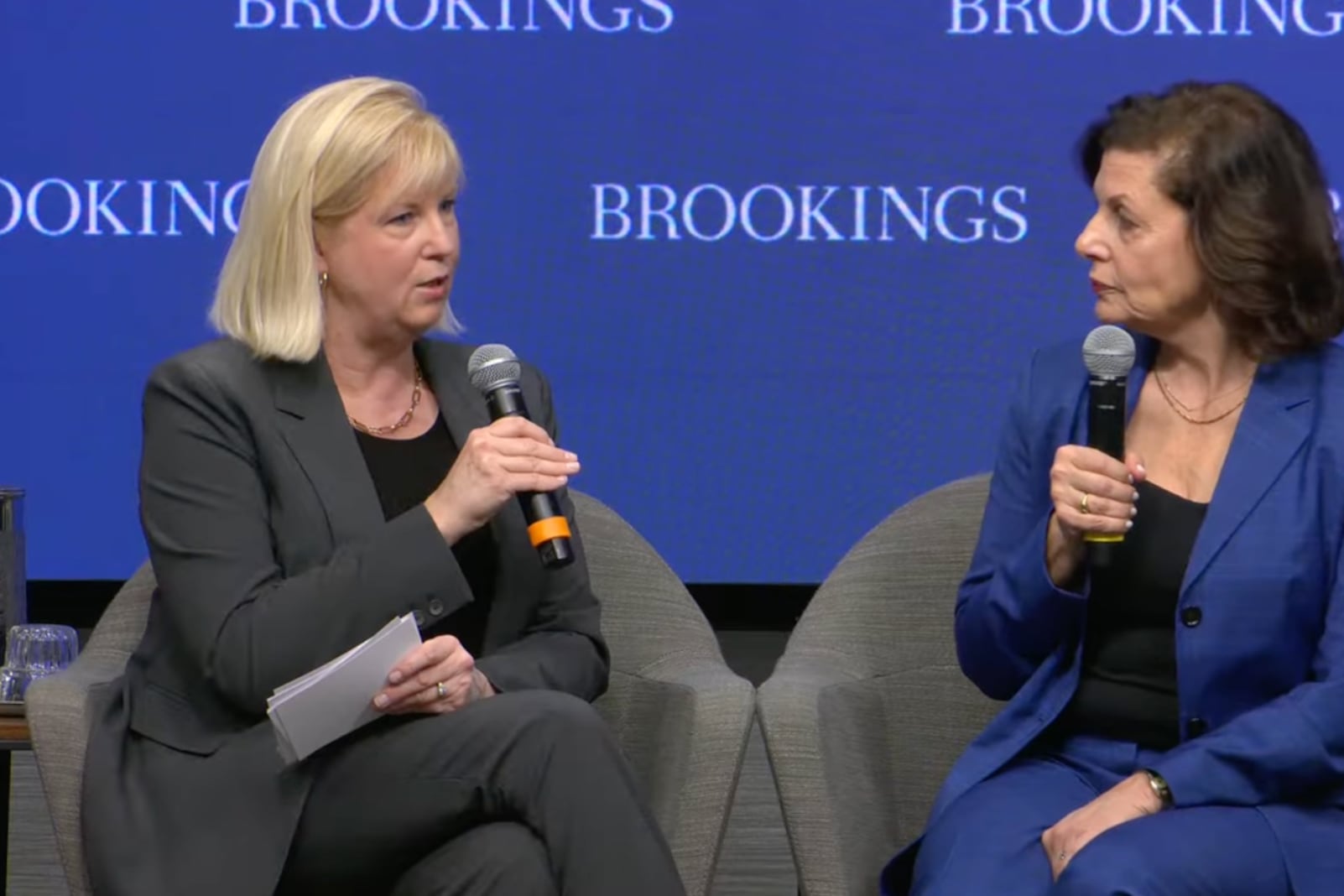
Healthbeat Senior National Reporter Alison Young moderated a discussion this week on the media’s role in investigating the origin of the Covid-19 pandemic: Was it caused by an accident at a lab in Wuhan, China? Or an infected animal at a Wuhan market or in the wild?
The discussion, hosted by the Brookings Institution in Washington, D.C., focused on the media’s role in exploring those two theories – and why they appeared to receive unequal coverage.
The question of the pandemic’s origin has been the subject of controversy and debate.
Government authorities in China have refused to provide international investigators from the World Health Organization with key data that would help solve the origin question. Information being withheld includes hundreds of viral sequences from people sickened earliest in the pandemic, details about animals sold in Wuhan markets, and details about research and biosafety conditions in Wuhan.
“As things stand, all hypotheses must remain on the table, including zoonotic spillover and lab leak,” the WHO’s director general, Tedros Adhanom Ghebreyesus, said in June, when the organization released its latest report on the pandemic’s origin.
Over the years prominent scientists have published research that they have said provides an “extraordinarily clear picture that the pandemic started at the Huanan market” in Wuhan, and that their work “lays to rest the idea that the virus escaped from a laboratory.”
Meanwhile, intelligence agencies remain divided in their assessments of how the pandemic began. The Central Intelligence Agency, the U.S. Department of Energy, and the Federal Bureau of Investigation lean toward a lab-related event being the most likely cause. Other intelligence agencies lean toward a natural origin. All had “low confidence” in their assessments except for the FBI, which had “medium confidence.”
Young is a longtime public health reporter and is author of the 2023 book “Pandora’s Gamble: Lab Leaks, Pandemics, and a World at Risk.”
As part of Brookings’ work on biosafety and pandemic prevention, Young moderated a “fireside chat” with Vanity Fair journalist Katherine Eban, who broke stories on the pandemic’s origin.
Watch the video here.