Public health, explained: Sign up to receive Healthbeat’s free New York City newsletter here.
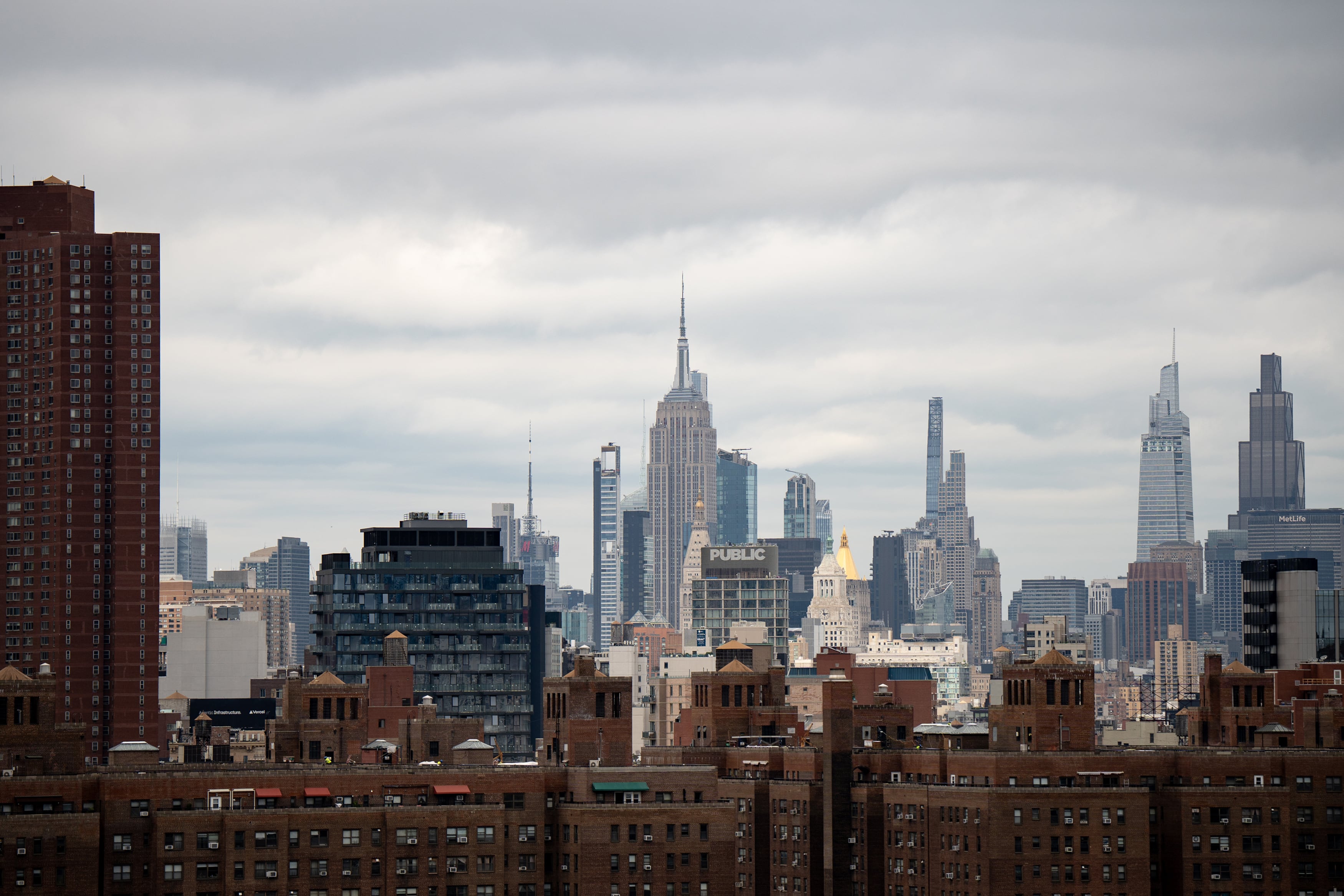
The Mamdani administration and City Council are laying out dueling plans to prevent future Legionnaires’ outbreaks after the pneumonia-like illness left nearly a dozen dead and scores of others sickened on the Upper East Side this summer.
They might not agree on the solutions or the strategy and will likely come head-to-head on Wednesday at an oversight hearing.
Though one thing everyone will agree on: The need for strong laws and enforcement couldn’t be any greater. Public health leaders say Legionnaires’ outbreaks could become worse as summers become hotter and longer and residents increasingly rely on air conditioning — a breeding ground for the bacterium — to stay cool. Legionnaires’ could be largely prevented if officials enforce cooling tower laws, health officials say.
At Wednesday’s hearing, City Council members plan to discuss eight bills they’re proposing, focused on testing requirements, enforcement, communication strategy, and transparency. On Tuesday, the Mamdani administration and New York City Department of Health and Mental Hygiene announced that they would be taking their own measures. Central to this would be finding unregistered cooling towers that host the bacterium that causes the illness, “accelerating” enforcement of violations and convening a scientific panel that studies “emerging cooling tower technology and alternative cooling systems.”
The hearing comes on the heels of Health Commissioner Dr. Alister Martin’s announcement on X early Friday evening, on Aug. 28, of two more deaths related to the Upper East Side outbreak. With a death toll of 11 and 94 confirmed cases, it’s among the largest Legionnaires’ outbreaks in New York City history.
In his post, Martin said there were no longer any Legionnaires’ patients in the hospital. The last patient recovered and was discharged, he said. There was no evidence of ongoing transmission, said Martin. Officials said the source of the exposure was eliminated by July 31, two weeks after the last new infections were reported.
City officials had already grown frustrated with previous Legionnaires’ outbreaks and passed legislation in October to compel building owners citywide to ramp up testing for Legionella in cooling towers on top of buildings. The bacterium generally collects in the towers and then scatters as contaminated mist onto the streets below. The city has some 6,000 registered cooling towers.
The new legislation took effect on May 8, a few weeks before the first pair of cases were confirmed on July 2.
New laws, but concerns about enforcement remain
The spread on the Upper East Side raised concerns that the Health Department wasn’t enforcing the new laws or issuing fines and hadn’t hired the necessary number of water ecologists. Senior health officials blamed short staffing for holding up inspections. The union representing these employees, DC 37 Local 3005, said low pay and poor working conditions led to the staffing shortage, according to The City Reporter. That has limited the city’s ability to “adequately respond to the Legionnaires’ crisis,” a Health Committee report prepared for the oversight hearing said.
The Health Department has filled 43 of the 56 water ecologist positions, officials said.
The report notes that of 58 buildings on the Upper East Side with cooling towers that tested positive for Legionella, only two received violations between Jan. 1 and June 17, the latest inspection date in the dataset. Between June 18 and July 31, 35 of the 58 buildings received a total of 71 summons totaling $65,500.
In all, since the new law took effect in May, the city carried out 800 field inspections citywide, Health Department officials said. Over 460 have resulted in at least one violation and over $80,000 in fines have been paid.
New York State has taken its own steps. On Aug. 5, the legislature enacted a bill requiring building owners to certify twice a year that their cooling tower was inspected, tested, cleaned, disinfected, and maintained. The law also requires building owners to keep inspection and testing records for 10 years instead of the current three-year requirement. It also increases civil penalties from $2,000 to $2,500 for first violations and from $5,000 to $7,000 for subsequent violations.
Legionnaires’ is a perennial concern in New York. Between 200 and 800 cases are reported each year in New York state, including New York City, according to the New York State Department of Health.
Victims of a Harlem outbreak from last summer and their families have filed lawsuits against the city and contractors responsible for maintaining the cooling towers.
Vulnerable populations most at risk of Legionnaires’
Older populations and residents in neighborhoods with higher rates of poverty are especially vulnerable, health officials say. From 2019 to 2022, the city’s highest annual Legionnaires’ disease rates were concentrated in parts of Harlem and the Bronx. Among residents with Legionnaires’ disease in that period, more than 90% had at least one chronic medical condition, and more than 50% were previous or current smokers.
The Upper East Side is particularly at risk because of its high density of cooling towers and relatively older population. City Council Speaker Julie Menin, whose district includes the Upper East Side, was particularly concerned about her constituents. She accused the Health Department of being slow to respond and not “proactively” disinfecting cooling towers. She also said there wasn’t enough communication with residents about the outbreak.
Health Department spokesperson Chantal Gomez said the agency was “fast, aggressive, and strategic” in its response, “which saved lives.”
Gomez said the department had stepped up its enforcement this year, dramatically increasing inspections by 35% compared to the previous year.
The Health Department also held a town hall meeting at a church on the Upper East Side, public meetings online and press briefings.
Sponsored by several council members, the legislation includes:
- A bill that would require the Health Department to create and post online informational materials on Legionnaires’ and notify owners of residential buildings when a tenant in the building has a confirmed case.
- A bill that would require owners of buildings with cooling towers to clean the towers at least three times a year, with at least one of the three cleanings occurring in June or July.
- A bill that would require the Health Department to create a public hotline for information about Legionnaires’ and other outbreaks in New York City and provide callers with referrals to resources and medical services.
- A bill that would require the health commissioner to create and maintain a publicly accessible database and map showing buildings whose residents have been diagnosed with Legionnaires’, buildings for which cooling tower testing results indicate levels of Legionella that are hazardous to human health, and relevant years. The database would keep this information for 10 years.
In a separate announcement, the Mamdani administration said it would be take on measures that include:
- Finding unregistered cooling towers
- Increasing transparency on cooling tower regulations by adding a mapping feature to the Health Department website.
- “Exploring faster culture testing methods and novel testing approaches” to decrease the amount of time between testing and confirming results.
- Accelerating enforcement of cooling tower violations.
- Convening a scientific advisory panel to “evaluate emerging cooling tower technology and alternative cooling systems.”
Bruce Y. Lee, a professor at the CUNY Graduate School of Public Health & Health Policy, said the new legislation was a good step toward avoiding more outbreaks, but city officials needed to be on the offensive.
“You really have to be in a situation where there’s more proactivity in anticipating these threats before they actually happen,” Lee said. “The cost here is that we’ve had deaths, and you can’t bring those people back.”
Trenton Daniel is a reporter covering public health in New York for Healthbeat. Contact Trenton at tdaniel@healthbeat.org or on the messaging app Signal at trentondaniel.88.