This article originally appeared at Your Local Epidemiologist New York. Sign up for the YLE NY newsletter here. Public health, explained: Sign up to receive Healthbeat’s free New York City newsletter here.
Next month, I turn 35. With guidance in the United States saying most women at average risk shouldn’t start routine breast cancer screening until age 40, it honestly hasn’t been top of mind for me. I’ve thought of breast cancer as something to think about for “later me.”

But recently, that has changed.
Last year, a friend of mine was diagnosed with breast cancer. At 34 years old. It was shocking to say the least. Thankfully, chemo worked incredibly well, and her latest test didn’t detect any cancer cells. Hallelujah.
Then, this past week, Amanda Peet, born and raised in New York City, wrote a moving essay in the New Yorker about being diagnosed with breast cancer while also caring for her dying parents. Susie Wiles, White House chief of staff, recently announced her diagnosis. Two years ago, my aunt survived breast cancer. So did a good friend’s wife.
With each of these stories, I started realizing that while “start at 40” sounds simple, it’s really guidance for people with average risk. And not everyone is at average risk.
So, I started reading. Here’s what I’ve learned, and why some women may want to talk to their doctor or a clinic about getting screened earlier than 40.
Breast cancer is common in New York, and early detection matters
Breast cancer is the most common cancer among women in New York state. Every year, about 16,700 women in New York are diagnosed with breast cancer, and about 2,500 women die from it.
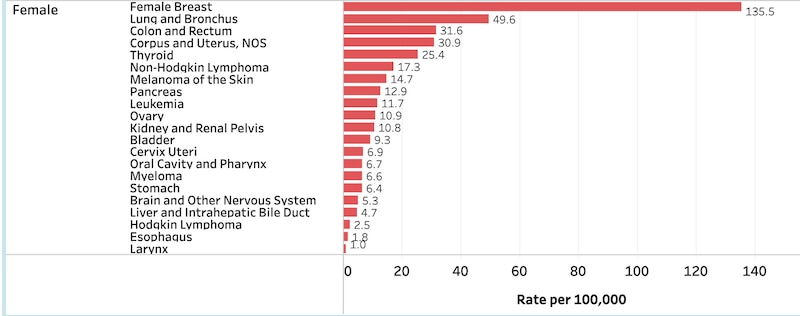
It is estimated that 1 in 8 women will develop breast cancer during her life.
Men also get breast cancer, but it is very rare. About 160 men are diagnosed with breast cancer each year in New York state.
While breast cancer is serious, outcomes and survival are much better than they used to be, thanks to earlier detection and better treatment.
At the same time, breast cancer is not just one disease — outcomes depend on the cancer subtype, its biology, and the stage at diagnosis. That’s why screening matters so much: Earlier detection can mean less aggressive treatment and better odds.
There are important differences in who gets diagnosed, what type of breast cancers are prevalent, and access to treatment. White women are more likely to get breast cancer than Black women, but once they have the disease, Black women are more likely to die from it. Black women are also more likely to be diagnosed with aggressive breast cancers — Black women under 50 have double the rate of triple-negative breast cancer compared to White women. (YLE covered new research into mRNA vaccines for TNBC earlier this year.) Disparities in access to treatment likely also play a role.
This is all to say that breast cancer is common, outcomes are not equal, and early detection matters a lot.
The real question: What makes someone higher risk?
When to start screening hinges on risk level. For women who are at average risk, the U.S. Preventive Services Task Force recommends mammograms every other year from ages 40 to 74. (The age to start screening at 40 instead of 50 was changed in 2024, and YLE covered it here).
But some women really should be screened earlier. Some may need extra screening, like an MRI in addition to mammograms. And for some women, the conversation should start as early as 30 years old.
The following factors can raise risk, and should be used to prompt a conversation about early screening with health care practitioners:
- Family history of breast, ovarian, pancreatic, or prostate cancer in a parent, sibling, aunt, or uncle. (All these cancers have been associated with a higher risk of breast cancer.)
- Known BRCA1, BRCA2, or other inherited gene mutation. (More on these genes below.)
- History of chest radiation at a young age, like radiation therapy for Hodgkin lymphoma.
- Possible dense breasts (more on this below), but this is not always an automatic trigger for early screening. (Should be paired with family history and other of the above risk factors).
Although older age is a major risk factor, we are seeing breast cancer rates increase in younger women.

Hypotheses for why breast cancer is increasing in younger women includes delaying having children (affects hormone levels and breast cells), increasing obesity, less movement and activity, increased alcohol use, and environmental exposures causing endocrine disruption.
Put simply, age alone does not determine risk. It’s also important to know that risk factors don’t explain everything — cancer can occur in a person with no family history, genetic predisposition, or other known risk factors. That means it’s super important for everyone, including those at “average risk,” to stay up to date with screening.
This five-minute risk assessment tool or this more comprehensive tool can help contextualize your personal risk. These aren’t perfect — they can’t tell who will and won’t get cancer. Rather, they should be used as a starting point for a conversation with a health care practitioner.
What about the BRCA genes?
BRCA1 and BRCA2 are genes that produce proteins that suppress tumors. When the genes have a mutation, the mutation prevents proper repair of DNA, significantly increasing the lifetime risk of developing breast, ovarian, and other cancers. Everyone has these genes, but mutations cause them to malfunction. Mutations in these genes can be inherited.
Variation in BRCA1/BRCA2 genes account for 5-10% of all female breast cancers. These variations are rare (about 1/400 women) but higher in some groups, like those with Ashkenazi Jewish heritage.
This is to say that while many cases of breast cancer are a result of BRCA gene mutations, the vast majority are not. Understanding overall risk, beyond these genes, is important.
What is dense breast tissue?
This is one of those things that I’ve heard about, but am only recently understanding.
Dense breast tissue is actually quite common — nearly half of women over 40 who get mammograms have it. Having dense breasts means that there is more glandular and fibrous tissue, and less fatty tissue in the breasts.
The reason it matters for breast cancer is two-fold:
- It slightly increases the risk for breast cancer, and
- It makes it harder to identify tumors on mammography results because dense tissue and tumors both appear white, meaning tumors can be easier to miss.
You can’t tell on your own whether you have dense breasts.
When you start getting mammograms, the facility conducting the exam will tell you if you have dense breasts (they are legally required to). If results are positive for dense breasts, the next step is to discuss with your health care practitioner if follow-up ultrasound or MRI are needed for extra breast cancer screening.
Another common question about screening: mammogram radiation
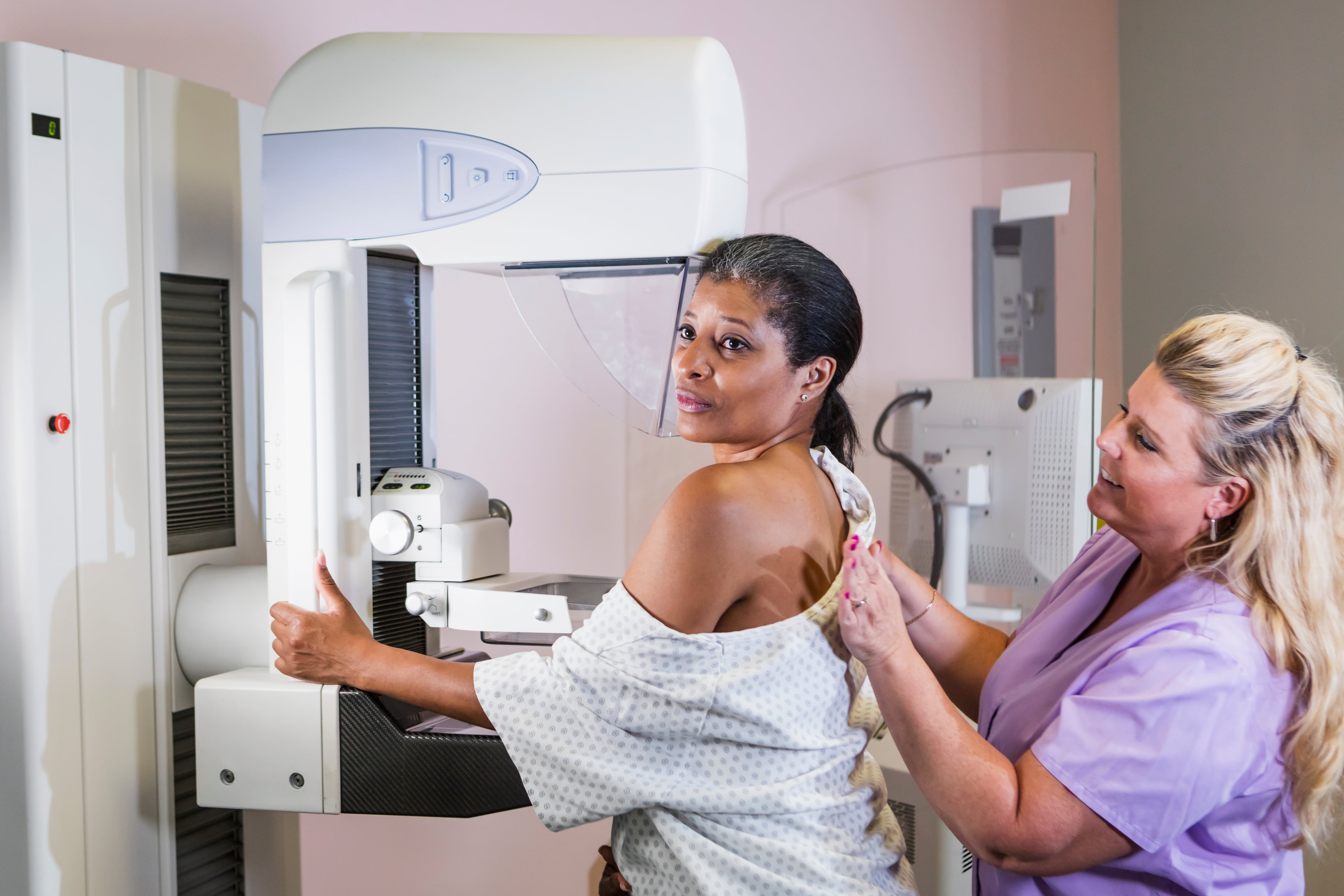
Yes, mammograms use radiation, because they are a type of low-dose X-ray. But the amount is small. A typical mammogram exposes someone to about 0.4 millisieverts (mSv) of radiation, which is about the same amount of natural background radiation a person would get over roughly seven weeks of everyday life.
This is the kind of question a lot of people have but feel almost silly asking. It’s not silly. If we’re asking people to do screening, they deserve honest answers about any trade-offs. For most women who are due for breast cancer screening, the benefit of catching cancer earlier outweighs the small risk from the radiation exposure.
What happens if the mammogram is positive?
If something is seen on a mammogram, that doesn’t automatically mean you have cancer.
In fact, only about 1 in 10 women called back for more testing are diagnosed with breast cancer. Most abnormalities in a mammogram are not cancer, and often result from harmless factors like dense breast tissue or cysts.
Anything that looks suspicious on a mammogram will get further follow-up tests to determine if it’s cancerous. This could be a diagnostic mammogram (in greater depth than a screening mammogram), an ultrasound, an MRI, and in some cases a biopsy.
The American Cancer Society has a good walkthrough on getting called back after a mammogram.
Accessing free screening in New York
If access is a barrier for you, free screening is available through the New York State Health Department. Call 1-866-442-CANCER (2262) to be connected to a Cancer Services Program near you. You can also visit the U.S. Food and Drug Administration’s website to find a mammogram location.
Bottom line
Don’t panic, but don’t assume guidance is one-size-fits-all. Screening and early detection enable the best outcomes.🎗💗
Love,
Your NY Epi
Dr. Marisa Donnelly, PhD, is an epidemiologist, science communicator, and public health advocate. She specializes in infectious diseases, outbreak response, and emerging health threats. She has led multiple outbreak investigations at the California Department of Public Health and served as an Epidemic Intelligence Service Officer at the Centers for Disease Control and Prevention. Donnelly is also an epidemiologist at Biobot Analytics, where she works at the forefront of wastewater-based disease surveillance.