This story was part of Healthbeat’s live storytelling event, “Aha Moments in Public Health,” held Nov. 18 at Powerhouse Arena bookstore in Brooklyn. Watch the full show here. Sign up to receive Healthbeat’s free New York newsletter here.
Prior to joining the NYC Department of Health and Mental Hygiene’s Pest Control Program in August 2023, I wore many hats in my journey. Over the years, I have worked at a supermarket, as an EMT, and at the post office. While all of these are different, they all share one commonality – community engagement.
That’s why when I joined the NYC Health Department, I knew I’d be part of something important. But I didn’t realize just how deeply it would resonate with me.
I work in the neighborhood rat reduction unit, and one of my favorite parts of the job is visiting parks like Jackie Robinson Park, St. Nicholas Park, and Riverside Park during my monthly checks. When I first started, these parks were riddled with rat activity. Burrows were easy to spot, and signs of infestation were everywhere.
But over time, I noticed something remarkable: The rats were disappearing.
Now I sometimes have to search just to find evidence. That shift didn’t happen overnight; it’s the result of a lot of hard work and longstanding partnerships with our sister agencies, such as Sanitation and Parks. From our rat contraceptive pilot study to our community engagement efforts, I get to play a small but meaningful role by collecting field data.
While this may seem like a simple task, the information that is gathered helps my team, and my co-workers and I brainstorm new strategies and refine our approaches to rat mitigation across the city.
This work is not only about reducing the rat sightings but helping New Yorkers reclaim public spaces. It’s incredibly rewarding to know that my contributions are helping to shape real solutions for our city.
One of the most fulfilling parts of this work has been getting to know the people who care for these parks every day, the gardeners and extermination teams. Each month, I’ve had the chance to build relationships with them, learn from their insights, and share updates on our progress. They’ve taught me how to spot subtle signs of rat activity, and I’ve been able to offer data that help guide their on-the-ground efforts. It’s a true partnership, and it’s made every visit feel like a shared mission.
One moment that really stuck with me happened during a check-in at Jackie Robinson Park. A longtime resident approached me and said, “I see you out here every month. Whatever you’re doing — it’s working. My grandkids are back on the swings.”
That was my “aha” moment. I realized that our work isn’t just about controlling rats — it’s about restoring public spaces, rebuilding trust, and protecting the health of New Yorkers.
I’m proud to be part of this team and this mission. Every data point, every park visit, every conversation with a gardener, exterminator, or community member reminds me that public health is about people — and even the smallest actions can lead to big change.
This has led me to pursue my degree in public health – which I hope to use in in order to make an even greater difference in the lives of New Yorkers.
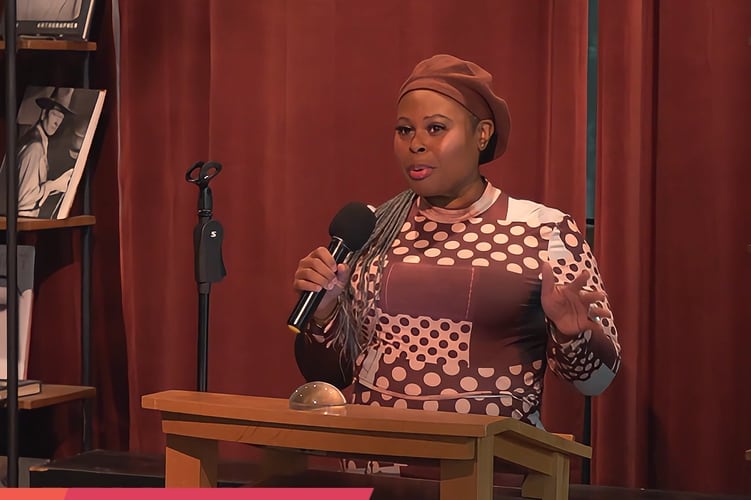
Nadia Shepherd is a community associate at the NYC Department of Health and Mental Hygiene’s Neighborhood Rat Reduction Unit, where she focuses on rat mitigation, zoonotic disease surveillance, and public health outreach. She is also a student, pursuing a bachelor of science degree in public health and plans to continue with a master’s in health policy and management.