This story was originally published at Chalkbeat. Sign up for Chalkbeat New York’s free daily newsletter to get essential news about NYC’s public schools delivered to your inbox. Public health, explained: Sign up to receive Healthbeat’s free New York City newsletter here.
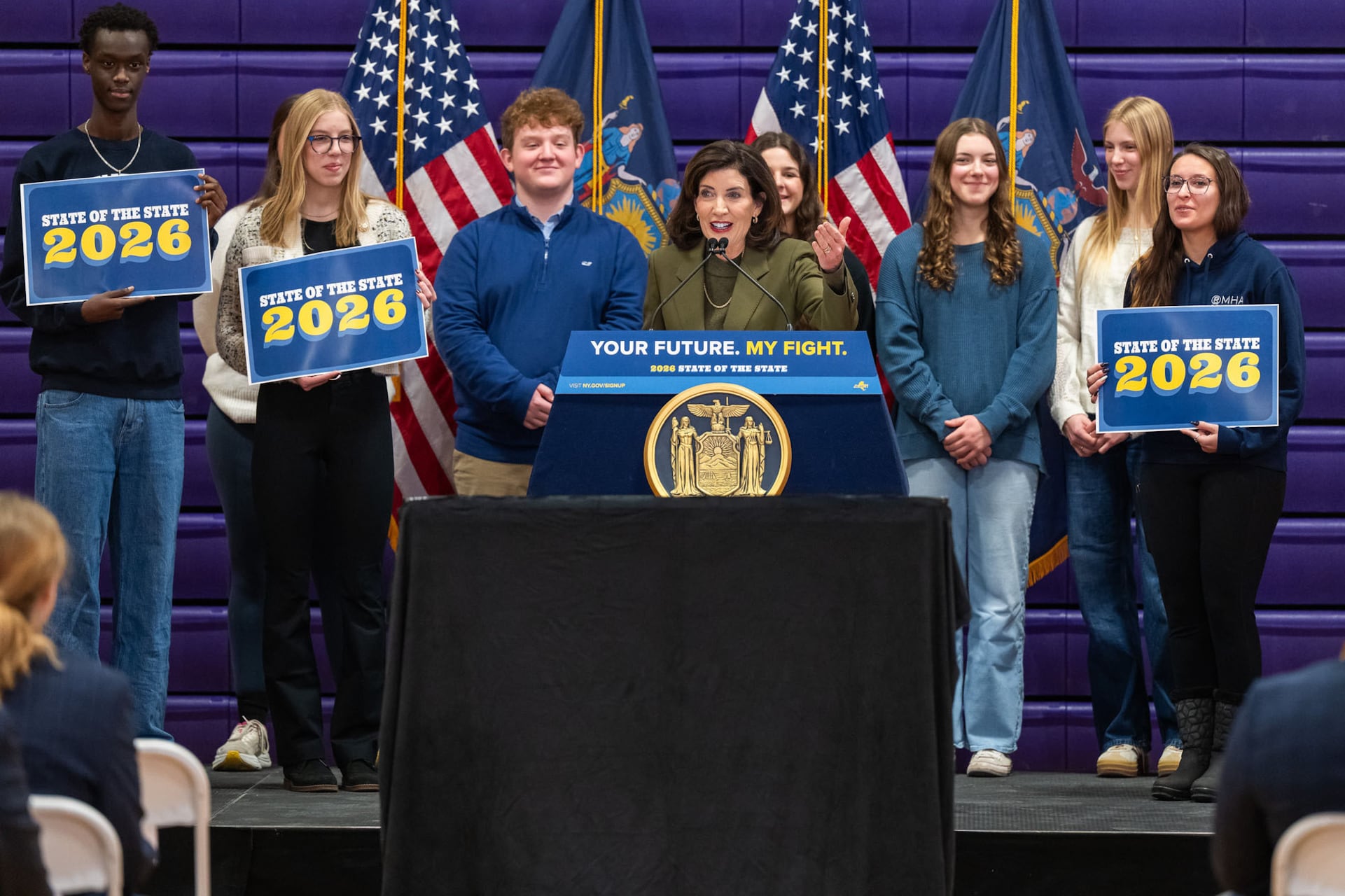
New York Gov. Kathy Hochul wants to make mental health first-aid training available to every 10th grader in the state.
The plan – announced Monday in a preview of the governor’s State of the State proposals – would expand a program that teaches students to recognize and respond to mental health and substance use challenges among friends and peers.
The Teen Mental Health First Aid program is a 4.5-hour course developed by the National Council for Mental Wellbeing, a nonprofit. It teaches teens to identify signs that their peers are struggling, understand the effects of school bullying and violence, and talk with friends and classmates about mental health. The program also gives young people tools to monitor and care for their own well-being.
As Healthbeat reported in September, researchers at Johns Hopkins University found that students who took the first aid training were more likely to intervene appropriately and empathetically with peers facing mental health challenges.
“We hear all the time, ‘Our teens are in crisis, our teens are anxious. But if you empower them with tools to have conversations about mental health, you see the impact right away,” said Katie Oldakowski, senior director of training and programs at Mental Health Association in New York State, which currently administers the first-aid training program in 43 schools.
“When we give teens language to talk about mental health, we build resilience,” Oldakowski said.
New York state invested $10 million in the Teen Mental Health First Aid program in July, reaching close to 4,850 students since then, Oldakowski said. Under the governor’s new proposal, the program would grow to include 180,000 students annually. The governor’s announcement did not say how much the expansion would cost, and her office did not immediately respond to requests for information.
The training initiative is part of Hochul’s ongoing agenda to expand access to mental health support in schools. In the past five years, New York has increased the number of state-supported, school-based mental health clinics by nearly 50%, bringing the total to 1,300 clinics, based in 25% of the state’s public schools. Monday’s announcement did not include a commitment to increase funding for school-based clinics.
Any effort to expand school-based mental health support “is a great step in the right direction,” said Alice Bufkin, an associate executive director at the Citizens’ Committee for Children of New York, an advocacy group calling for increased investment in mental health service for kids and teens.
However, schools and school-based clinics continue to struggle to pay for much of the essential work they do, Bufkin said. For example, clinics typically cannot bill for providing treatment to undocumented students, who are not eligible for Medicaid. Nor can they be reimbursed for work like helping teachers manage students with behavioral challenges, or intervening when students are in emotional crisis.
“Our state has a long way to go to fully support students in schools and communities. We are still facing a behavioral health crisis for children and families throughout New York,” Bufkin said.
In other efforts to tackle the teen mental health crisis, Hochul is trying to keep kids safe from social media-related threats and online gaming platforms by expanding age verification requirements, disabling AI chatbot features, and including “privacy by default” settings, giving parents control over who can connect with young people under the age of 13.
Abigail Kramer is a reporter in New York City. Contact Abigail at akramer@chalkbeat.org.