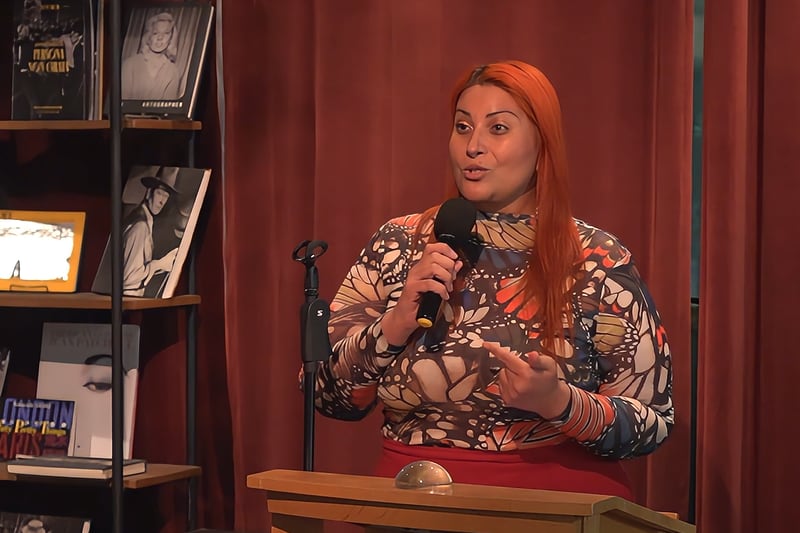
This story was part of Healthbeat’s live storytelling event, “Aha Moments in Public Health,” held Nov. 18 at Powerhouse Arena bookstore in Brooklyn. Watch the full show here. Sign up to receive Healthbeat’s free New York newsletter here.
On the phone, my client was crying so hard from anxiety and the immense physical pain she was in that at first, I couldn’t understand her.
“Take a breath, slow down — I’m here for you,” I told her gently. As a social worker with the VNS Health Gender Affirmation Program, I and my fellow team clinicians are often the first people a client may speak to after they’ve been discharged from the hospital following gender affirmation surgery.
As my client started to calm down, it became clear she was experiencing the wave of emotions and feelings that are part of this life-changing moment. She was beyond happy after her first gender-affirming surgery – something she had dreamed of for so long. But she was also overwhelmed with everything that accompanied the journey, including having to recover alone in New York City, far from her home.
She knew this was the best place she could get care, but that didn’t ease the sense of isolation. She also felt deep fears and stress about her timing. We are living through a time when many people across the country are fighting to prevent the type of care she needed most.
Experiencing every feeling under the sun — from elation to fear — is not unusual in this situation. As a woman of transgender experience myself, I relate deeply. I know the highs and lows that come up during those first hours, days, and months. Finally getting to this amazing moment is something my clients have hoped and dreamed of for so long. The truth is, however, that healing and change can sometimes feel bittersweet.
When I came home after my first gender-affirming surgery, I was unbelievably happy, but I was also scared. I was recovering alone, and some days the physical pain was intense. People in my life I thought would help me were suddenly nowhere to be found. I was on my own: I had to rely only on meals I had prepped myself beforehand. If I needed to go to the bathroom, pick up a dropped pillow, take my medicine on time, it was all on me.
Looking back, I’m proud and grateful for my resilience during those days, because it was all worth it. That surgery saved my life. And that is something I hear often from clients in the GAP program: that without gender-affirming care, they might not be here.
But going it alone doesn’t have to be the norm, and I knew a better kind of care could exist. Transgender and nonbinary people deserve to feel safe, comfortable, and supported as they recover at home, receiving health care that respects their gender identity and makes them feel accepted. Now, years on into my career as a social worker for transgender and nonbinary individuals recovering at home after gender-affirming surgery, it makes me so happy that I can help make that care a reality.
The challenges for our clients include both physical needs — such as getting groceries, setting them up with transportation to appointments, even finding them a bed — as well as emotional needs, such as helping a client out of a domestic violence situation, getting them counseling, connecting them with resources right in their community, or simply providing a listening ear they can trust.
Once my client on the phone was feeling calmer, she shared a harrowing incident. The day before, she’d suffered serious post-surgery complications and, out of necessity, went to the closest ER. There, she encountered clinicians who weren’t knowledgeable about her needs. Whether intentional or not, they made her feel like an “other.”
Trying to connect her to a catheter, the nurses struggled, not understanding her unique needs related to her surgical procedure. The physical pain my client was dealing with was excruciating, but the emotional trauma hit even harder. It’s an experience that would wear down anyone, but for a transgender woman, it felt like yet another knock, another hurtful reminder that she was seen as “different.”
As my client shared her struggles, I listened. And I shared. I reminded her that it’s important to make space for the difficult times alongside the amazing ones. I told her to envision where she would be days, weeks, and years from now as she moved beyond the initial post-op stress. I told her to remember what brought her to this moment, and I told her how much hope I had for her future.
As our call started to wrap up, she told me that knowing I was there for her made her feel less alone. In many ways, the conversation I had with her that day was like many others, but this particular call felt special to me. It was a reminder that having compassionate peer support in health care truly makes a difference — especially for communities that are not just historically underserved, but have been mistreated by the health care community.
As a social worker, I sometimes feel a need to accomplish big “wins” for a client, always going above and beyond. But there is also so much to be gained from these seemingly small moments, when you realize that simply bringing care, understanding, and compassion to this work — and knowing your clients trust you — can heal us all.
Asha Lyons is a trans-woman of Latin and Caribbean descent who works as the Gender Affirmation Program licensed social worker at VNS Health. She holds an MSW from the Silberman School of Social Work at Hunter College. She has worked in the fields of social work, public health, research, anti-violence, and group work for almost 20 years.