This story was part of Healthbeat’s live storytelling event, “Aha Moments in Public Health,” held Nov. 18 at Powerhouse Arena bookstore in Brooklyn. Watch the full show here. Sign up to receive Healthbeat’s free New York newsletter here.
I’m a bachelor-prepared registered nurse, but my work in the New York public school system focuses on guiding students to find, tell, and write their own first-person stories.
When anyone refers to me as “ex-nurse,” it’s so confusing. First, do they really think I don’t pick up a shift or two on weekends? Nurses (especially New York City nurses) are the original jugglers of multiple job types. I remember when we first heard people talk about “side hustles.” That seemed almost like a dare: “Hold my lanyard, here I go.”
Second, is it possible to stop being a nurse in everyday interactions? I can’t imagine not assessing my brother-in-law’s rapid pulse when we hold hands around the family dinner table on holidays. I’d have to be a different person.
But during the week, I swap my stethoscope for composition notebooks and writing prompts, and every day I’m reminded that nearly everything that matters to students is secretly (or not so secretly) health-related.
A kid forgets breakfast and can’t focus on an essay: blood sugar. Another keeps their head down; this isn’t defiance, it’s exhaustion from sleeping approximately 12 minutes the night before, thanks to a crowded apartment, the gentrifying bar next door that makes noise until very, very late, and the pull of watching just once more YouTube short. Someone shares about losing a cousin to gun violence: That’s trauma, grief, community health, and the broken places we’re all trying to live in.
Even grammar sometimes feels like triage: We can’t fix everything at once, but maybe if we get the comma in the right place, we can all feel better for a bit.
Early last semester, a student casually announced, “I think I caught the cortisol.”
“The cortisol?”
He nodded, very serious. “Yeah, I read about it online, I’m nervous all the time, and my stomach hurts.”
So we slowed way down. I started to explain that cortisol isn’t something you catch. And then I realized that’s not true. We talked about what might cause a release of stress hormones, and the student named that he absolutely could inherit a whole ecosystem of anxiety about rent spikes, sirens at 3 a.m., and metal detectors at school.
His shoulders dropped in relief. He wasn’t cured, but he did feel understood. And he understood himself. His reactions made perfect sense given his environment.
One student wrote about an uncle who refused to go to the doctor because “men don’t need checkups.” His last line was: “He didn’t die because he didn’t care. He died because he did what he was taught.” That sentence hit harder than any peer-reviewed article on what we as providers call “non-compliance.” Call it anecdotal evidence if you’d like, but it’s also data with a heartbeat.
And because I’m a nurse in my everyday interactions, the work doesn’t keep school hours. Like the night I got a 12:47 a.m. text from a trans young adult I know from queer kickball (yes, it’s a thing), asking “do I need to go to the emergency room for…”
As a provider, whenever I get a 12.47 a.m. text asking if someone (especially a queer or trans person) needs to go to the ER, they almost always know the answer is yes. They often just need some loving encouragement. Sometimes, firm loving encouragement.
My texting acquaintance hadn’t availed themselves of any health care since they came out as trans, and was worried they wouldn’t be able to advocate successfully, or be able to communicate what the problem was.
There was no way I could reach them to be their ER buddy; classic New York timing means crises always wait until the trains are running “every 28 to 47 minutes.” Or whenever they feel like coming.
“Tell me a story about a time you did stand up for yourself,” I texted.
There was a long pause. A pause long enough for me to consider the possibility that I’d accidentally invented the world’s worst crisis intervention technique. Then:
“Once I told my barber to stop giving me the ‘cute girl fade.’”
There it was. Strength. Humor. Agency. A tiny act of self-definition with a very uneven hairline attached.
“Great,” I texted back. “Use that energy. You don’t need medical jargon. You just need that same ‘nope, not today’ tone. Now go get the care you deserve.”
And they did. Not because I coached them through it, but because telling their own story reminded them that they already knew how to advocate for themselves.
My “aha” moment wasn’t a single beam of light. There wasn’t any celestial chorus singing the takeaway in breathtaking harmony, no brave student holding a metaphorical lantern. It was the slow, steady realization that every time someone tells their story — whether a teenager talking about their grandma’s diabetes medication or a scared queer young adult trying to get urgent care — they locate their own strength.
My job is just to hold the flashlight while they look.
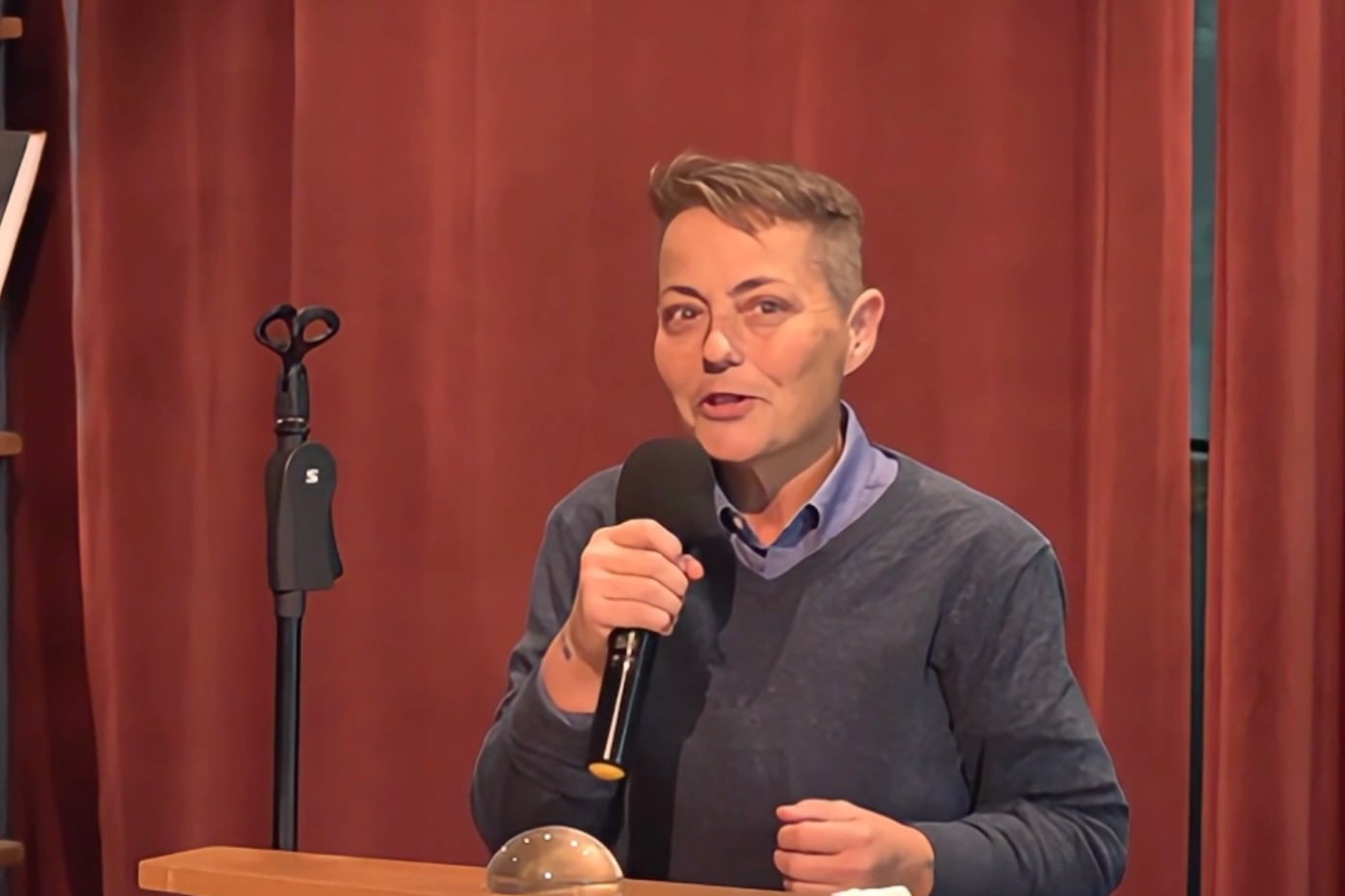
Kelli Dunham is a nurse, a writer, an educator, and a comedian, sometimes all three at once. She is the author of the best-selling guide to puberty, “The Boy’s Body Book,” and host and executive producer of Good Get’s newest podcast, “Cared For.” Former New York City Mayor Bill DeBlasio once called her a showoff. To her face.