Public health, explained: Sign up to receive Healthbeat’s free Atlanta newsletter here.
Georgia nurses who have struggled with – and even overcome – addiction want to see the state adopt a less punitive approach to discipline that would remove some of the obstacles to treatment and employment.
A bill before the state legislature that has broad bipartisan support as well as support from the state nursing board would change how Georgia handles such cases. The bill’s supporters say it’s an important tool to keep nurses in the workforce amid a nursing shortage, and an acknowledgement that addiction is a disease, not “a moral failing.”
Healthbeat spoke to five nurses who have experienced addiction and to representatives of recovery organizations. They described how Georgia’s disciplinary system deterred them from seeking early treatment for fear of losing their licenses and their jobs.
That’s because to get or renew a license, nurses must report treatment for alcohol or substance abuse within the past five years on the application. The acknowledgement triggers a lengthy, public, and costly disciplinary process.
Courtney Robinson, who works at Northeast Georgia Health System, fought an alcohol addiction for years. She wanted to get treatment but worried that doing so would result in losing her license. When she finally got sober, she answered the question honestly during her license renewal, acknowledging a past addiction and stint in rehab.
That started a process of establishing a consent order with the state nursing board. Consent orders are posted in a spreadsheet and in a searchable database on the Board of Nursing’s website, allowing anyone to look up disciplinary actions for a particular nurse.
Robinson’s order requires that she participate in weekly support groups as well as regular and random drug screening for five years. It also requires quarterly reports from employers to the nursing board and restricts Robinson from working in some roles, including assignments through a nursing agency and in-home nursing.
“As far as jobs, it is very difficult, unless you have some connections or know somebody, to find a decent nursing job with a consent order,” Robinson said.
Nurses said the costs of medical evaluations and repeated drug testing can be a heavy burden for those working through a consent order. Ashley Walden, an occupational health nurse in Moultrie, said the annual costs for exams, drug testing, and program fees add up to more than $4,000 a year for her.
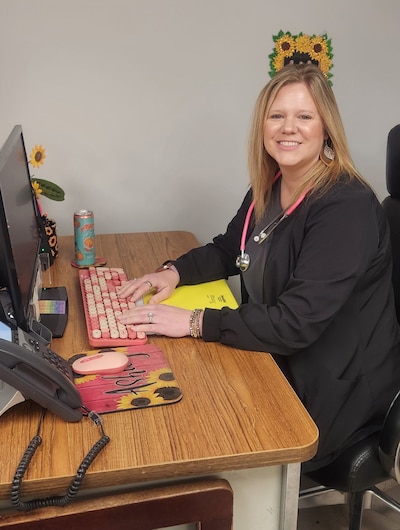
The proposed alternative to discipline program would make it easier and less punitive for nurses to get help with addiction.
Forty-four states have such systems in place, according to the National Council of State Boards of Nursing. The programs involve support and supervision, and they are typically confidential, unlike Georgia’s open process.
“The alternative to the discipline program would enable the nurse to be monitored, to continue to practice, to ensure the public safety, because they are under this specific monitoring contract, but it doesn’t show up as a disciplinary action against the nurse’s license,” explained Jim Cleghorn, deputy chief policy officer at the council and a former executive director of Georgia’s nursing board.
“If they violated any provision of that contract, then it can roll over into the more traditional discipline model,” Cleghorn said.
State nursing board, legislators support alternative to discipline
The Georgia Board of Nursing supports adopting an alternative to discipline program, said Natara Taylor, the board’s executive director.
“An ATD Program helps prevent unsafe practice by encouraging early treatment and monitoring, allowing nurses to recover while protecting the public,” Taylor said. She said the board and nursing organizations have been working “for years” to try to get the legislation and funding to establish such a program.
The nursing board took a total of 238 disciplinary actions in 2024, but it isn’t clear how many of those were related to alcohol or substance use. The Georgia Nursing Association, the state’s largest professional nursing association, sees 200 to 250 nurses in its Peer Assistance Program for addiction at any one time, the program’s Executive Director Felicia Chatman told Healthbeat.
A bill to establish an alternative to discipline program got unanimous approval in the state House last year. But it stalled out in the Senate and didn’t get a floor vote before the session ended.
The bill’s sponsor, Rep. Ron Stephens, a Savannah Republican who is also a pharmacist, said the legislature just ran out of time.
Because this is the second of the state’s two-year legislative session, the bill will start in the Senate, where Stephens expects it will be considered in mid-February. If the Senate approves the bill, it would then head to Gov. Brian Kemp’s desk for his signature.
“I don’t want it to fall by the wayside,” Stephens told Healthbeat on Wednesday.
Stephens said doctors and pharmacists have similar programs that have worked well. He’s not sure why nurses don’t, but he’d like to “close the loop” for them. The bill would also establish a similar program for professional counselors, marriage and family therapists, and licensed social workers, all of whom are governed by a separate board.
“It’s an effort to get somebody that has a problem to come forward, rather than continually hide the problem … so that a patient might get hurt,” Stephens said. The goal is “to get these people back into the workforce and being fruitful contributors.”
Georgia is projected to fall short of its registered nurse need by 25,110 RNs by 2038, according to a December analysis from the National Center for Health Workforce Analysis, leaving the state with 1 in 5 projected positions unfilled.

Stephens said the alternative to discipline program isn’t expected to raise costs for the Board of Nursing because participants will pay for their own drug testing and other services. The board could also outsource the management of the program to another entity under the bill.
Nurses want ‘a safer environment’ for conversations about addiction
States began adopting alternatives to discipline in the early 1980s, starting in Florida, said Timothy Arehart, senior policy adviser at the NCSBN.
“It’s kind of a shift in culture for the U.S. overall, in which you went to more of a compassionate, non-punitive idea,” Arehart said. “It’s due to advances in the perceptions of substance use disorder and alcohol use disorder as a disease, as opposed to more of a moral failing.”
Robert Taylor is a former methamphetamine addict who got sober more than two years before enrolling in nursing school.
Though he passed his nurse licensing exam in January 2025, Taylor hasn’t been able to work as a nurse because of a past arrest for drug possession. The state nursing board required him to attend an intensive outpatient treatment program and complete other requirements before he could start practicing under a three-year consent order.
Taylor said his experience at Georgia Pines, a community service board that provides mental health services and treatment for addiction, inspired him to become a nurse. He’s been employed there as a medical technician while waiting for his license to be sorted out and will finally start work there as an RN in early February.
“I knew there would be some type of barrier, but I had no clue it would be so extensive,” Taylor said.
Like Robinson, he wants to see the system treat nurses in recovery with more leniency.
“Be just a little more lenient on your people like me that have actually shown that they’ve made a change in their lives,” Taylor said.
Cori Fletcher, a licensed practical nurse who works at a recovery center, said she’s grateful for the consequences imposed by the nursing board because they helped her become the nurse she is today. Still, the punitive system has limits, she said.
“The consent order was a no-go, and they didn’t want to hire me because of that,” she said of trying to find work during the disciplinary process. Now she is going back to school to become a registered nurse.
“What I would like to see different is a safer environment for these conversations to be had, a safer environment for nurses to feel like they can discuss these things without losing their job,” Fletcher said.
Rebecca Grapevine is a reporter covering public health in Atlanta for Healthbeat. Contact Rebecca at rgrapevine@healthbeat.org.