Public health, explained: Sign up to receive Healthbeat’s Global Checkup in your inbox a day early.
Hello from Nairobi.
This week’s news has an unexpected but welcome throughline: optimism! From effective outbreak control to promising new research, we have a few stories that suggest key parts of the global health system are still functioning well, even under strain. (For the disappointed masochists out there, don’t worry. I’ll likely be back with some bummer news next week.)
My name is William Herkewitz, and I’m a journalist based in Nairobi, Kenya. This is the Global Health Checkup, where I highlight five of the week’s most important stories on outbreaks, medicine, science, and survival from around the world.
With that, as we say in Swahili: karibu katika habari — welcome to the news.
Marburg virus: Not too early to celebrate
We’ve been covering how Ethiopia is faring during its first-ever outbreak of Marburg virus, an Ebola-like hemorrhagic disease with no vaccine.
How this outbreak unfolds matters beyond this one country and one disease. For me, it’s the second real test after last year’s Ebola flare-up in the Democratic Republic of the Congo of whether the international order still has the muscle to contain deadly outbreaks in an era of austerity.
Oddly, there has been very little sustained reporting on how the outbreak is actually progressing. (And, mea culpa, my cynic’s heart usually assumes no news means bad news!) So as I promised last week, I’ve followed up. I reached out to International Medical Corps, one of the organizations leading the Marburg fight, and spoke with Lawrence Mutharia, its country director for Ethiopia. What’s the state of play?
An unambiguous success.
“We are now at day 36 with no confirmed new cases,” Mutharia told me on Monday. He reports that the focus has shifted from an active response to making sure systems are in place if the virus resurfaces, “while waiting for the outbreak to be officially declared as over.”
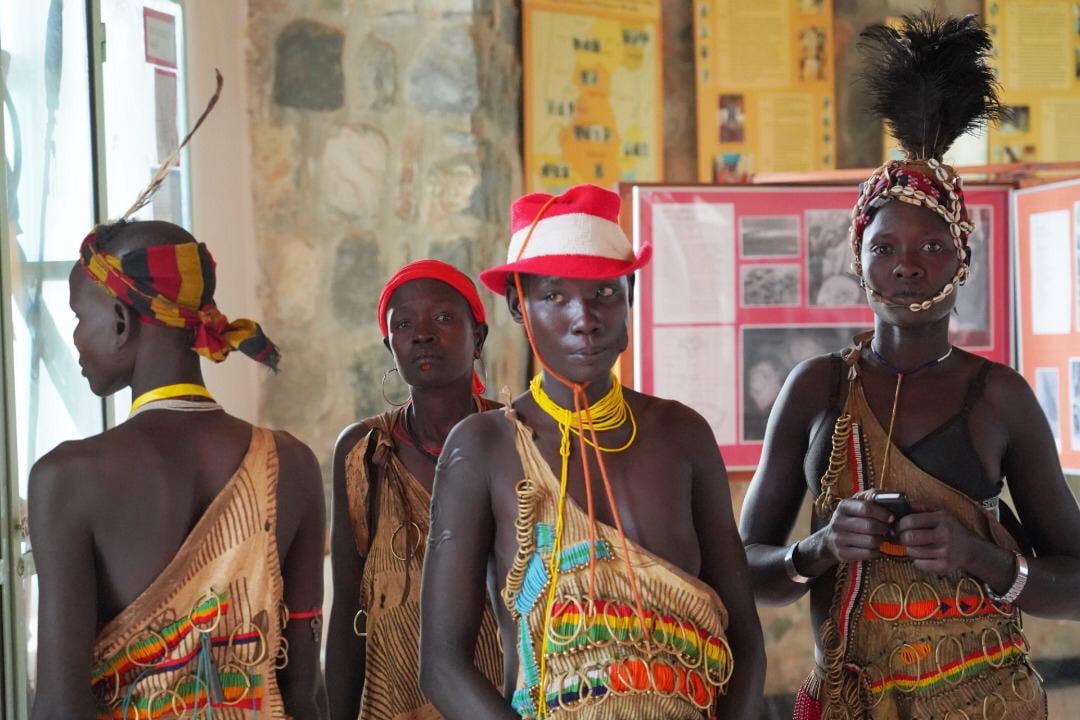
This outcome was not guaranteed. The virus hit the outskirts of Jinka, a remote, under-resourced area with no prior experience handling a disease this lethal. I’ve hesitated to describe that reality too vividly in past updates, partly to avoid sliding into lazy stereotypes or misleading ideas about what “rural Africa” looks like. But the truth is that the communities surrounding Jinka follow culturally and socially traditional ways of life, with Indigenous conceptions of medicine that are far removed from modern biomedical practice. Without putting too fine a point on it: I have attended only one meeting in my life where participants arrived in full body paint, scarification, and feathered headdresses. It was in Jinka.
You could imagine this could be a tough setting for an outbreak response built on community cooperation with foreign medical guidance.
Nevertheless, Mutharia says that early, effective outreach to local communities was actually one of the response’s key strengths. That, a rapid influx of funding, early deployment of medical teams, and clear leadership from Ethiopia’s federal Ministry of Health. “Timely and coordinated efforts are crucial” for stopping fast-moving outbreaks like Marburg, he noted, and in this case they were deployed close to a best-case scenario.
Perhaps more importantly, and beating another one of my nagging fears, Mutharia told me that donor support for the response was “quite adequate.” That support included, to their credit, rapid funding from the U.S. State Department. Given the tightening of purse strings globally and America’s pullback last year, this was all the more striking. As Mutharia put it, “we are currently in a situation of trying to do more with less.”
My takeaway?
First, you have to applaud the responders to this crisis. And taken together with last year’s Ebola response in the DRC, this outbreak offers clear proof that the international community has lost neither the will nor the ability to respond to serious global health risks. For viruses like Marburg and Ebola (truly nightmare diseases) each day of delay makes them exponentially harder and more expensive to contain. At least for now, that lesson has not been unlearned.
Who controls Europe’s medicines?
Two stories out this week focus on Europe’s drug supply problem. (No, not the Ibiza kind.)
First, the Financial Times is reporting that U.S. pharmaceutical companies are openly threatening to withhold new medicines from Europe if governments refuse to pay higher prices.
Speaking at the JPMorgan health care conference, Pfizer CEO Albert Bourla framed the choice starkly: “When [we] do the math, shall we reduce the U.S. price to France’s level or stop supplying France? We [will] stop supplying France.” Other executives said they were considering delaying or skipping European launches altogether as they try to offset revenue lost from Trump-era price cuts in the United States.
At the same time, on Tuesday the European Parliament moved to shore up Europe’s pharmaceutical defenses. Lawmakers adopted proposals to rebuild manufacturing capacity inside the European Union and coordinate national stockpiles. Ultimately, the EU is pushing a “Buy European” approach that prioritizes security of supply and production within the bloc.
The takeaway? Europe is caught in a squeeze. Drugmakers are signaling they are willing to use access as leverage to raise prices, just as European lawmakers are trying to reduce their dependence on those same companies.
How the economics and politics will play out next is unclear, so I’ll be following up on this story.
Antibiotic optimism (with caveats)
A lot of modern medicine rests on a very fragile assumption that our antibiotics will keep working … and, uh, we know they won’t.
Drug-resistant infections kill millions of people globally each year, and new antibiotics are not being developed fast enough to keep up with the spread of resistance. (A large part of the issue is that antibiotics rarely recoup their R&D costs. In fact, biotech companies that specialize in them have a bad track record of going bust.)
But in an essay in the Washington Post, biochemist and antibiotic researcher Andre Hudson argues that the future may be a hopeful one. His case for optimism rests on the idea that (putting aside our laggardly development of new drugs) other scientific advancements may catch up to the threat.
He makes four main points: First, faster and more precise diagnostics are increasingly reducing unnecessary antibiotic use. Second, antibiotics are no longer the only tool in town. Hudson outlines how researchers are developing alternatives, including genetically engineered viruses (!) that hunt bacteria and gene-targeting tools to “disable resistance genes” in bacteria.
Third and fourth, Hudson finds hope in a clearer understanding of how resistance moves through entire systems, and in policy solutions meant to fix the economics behind antibiotic development. (Being frank here: This is where I feel the optimism is less earned.)
On the systems side, Hudson argues that drug resistance is finally being understood as more than a hospital problem. Antibiotics move through farms, food, wastewater, and trade, and that matters. But understanding the problem is not the same as controlling it. On policy, he points to ideas meant to fix the broken economics of antibiotics, including draft U.S. legislation that would pay companies for having lifesaving drugs available rather than selling more of them. It is a sensible fix. It has also been stuck in Congress for three years.
Still, a hopeful take!
American dollars … revisited?
Two stories out this week clarify what last year’s U.S. pullback in global health funding really amounted to, and what may come next this year.
The damage? All told, in 2025 the United States (still the world’s largest funder of global health) slashed its spending by roughly 66%, according to new end-of-year estimates reported in Think Global Health. It took months for this picture to come into focus, and “the cuts are bigger than we expected, not less,” said Joseph Dieleman, who leads financing tracking at the Institute for Health Metrics and Evaluation, a research group that analyzes health spending worldwide.
We’ve reported extensively on earlier data of the pullback, but it’s worth reading this article, particularly for the data visualization on where the cuts landed.
Looking forward, things are murkier … which is better than bad.
Devex is reporting that a draft, bipartisan foreign assistance bill for 2026 would allocate $9.4 billion for global health. That is still well below recent highs (down a quarter from the $12.4 billion in 2024) but far more than many expected after last year’s upheaval. The bill preserves core funding for HIV, malaria, tuberculosis, and polio, and includes unexpected support for the vaccine funding organization GAVI, alongside family planning money, and dollars for several U.N. agencies the administration had tried to zero out.
One takeaway is that this is a signal that the U.S. government is not ready to walk away from global health. Another is that the bill exposes a sharp divide between the majority Republican Congress and the Trump administration on global health funding.
Mitchell Warren, executive director of the HIV nonprofit AVAC (and a friend of the Checkup!) raises the most trenchant questions in the article: “Will both houses of Congress approve the bill? Will the president sign it? And, perhaps more importantly, will the president actually spend congressional appropriations and accept at last that it is Congress, and not him, who has the power of the purse?” he said.
What do these two stories mean together? “Bottom line is that while most programs have been gutted, most of the budgets are being preserved. Where and how those funds get spent remains to be seen,” Dieleman told me.
A ‘dirt cheap’ malaria defense
We’re going all in on optimism today, so why not end on a high note?
A clever new study suggests malaria prevention may already be woven into daily life, The Guardian reports. Researchers found that treating baby-carrying cloth wraps with insecticide cut malaria cases in infants by roughly two-thirds in parts of western Uganda.
The idea is brilliant. In many communities, babies spend much of the day tied to their mothers’ backs in cloth wraps. (I can’t stress enough just how ubiquitous this is in East Africa.) Treating those wraps with permethrin, the same insecticide used in bed nets, adds protection during hours when nets are not in use.
Anecdotal, but as one mother told the researchers: “I’ve had five children. This is the first one that I’ve carried in a treated wrap, and it’s the first time I’ve had a child who has not had malaria.”
The best part? “It’s dirt cheap,” reports one of the researchers.
As mosquitoes increasingly bite outdoors and earlier in the evening, treated wraps could help close one of malaria prevention’s most stubborn gaps. They won’t replace bed nets or vaccines, but they add protection exactly where infants already are, in a way that fits seamlessly into daily life.
I’ll see you next week!
William Herkewitz is a reporter covering global public health for Healthbeat. He is based in Nairobi. Contact William at wherkewitz@healthbeat.org.