Public health, explained: Sign up to receive Healthbeat’s Global Checkup in your inbox a day early.
Hello from Nairobi.
It’s a new year and I’m happy to be back home, where the vanilla orchids in my garden are blooming. (They’re beautiful, but won’t form beans unless I get on a ladder and pollinate them by hand!) This week’s report ranges from a big proposal to remake global health institutions to a very concrete, “cynical” decision shaping health care in a humanitarian disaster.
My name is William Herkewitz, and I’m a journalist based in Nairobi, Kenya. This is the Global Health Checkup, where I highlight five of the week’s most important stories on outbreaks, medicine, science, and survival from around the world.
With that, as we say in Swahili: karibu katika habari — welcome to the news.
Big structural reforms (try not to get too excited!)
Looking ahead to 2026, there are zero signs that last year’s global health cuts will revert. If anything, deeper reductions this year look like the more likely scenario.
And that leads us to the central challenge facing global health right now: Unless the goal is to just do less with less, this winter of austerity is a moment for the largest organizations in global health to reform. Either by slimming/changing their structures, or tightening their mandates. (As we’ve reported, the Global Polio Eradication Initiative deserves credit for being among the first to grapple seriously with this in practice.)
With that in mind, our first story this week is an essay in Think Global Health by Muhammad Ali Pate, Nigeria’s minister of health; Donald Kaberuka, the African Union’s top financing official; and Peter Piot, the former director of UNAIDS. Together, they argue that global health’s largest institutions should make changes that would have seemed unthinkable just a year ago.
Their proposal is deliberately severe.
At the center is a serious overhaul of institutions with overlapping mandates. The authors argue that GAVI and The Global Fund (the two biggest international funding organizations in global health outside the World Health Organization) should be merged into a single entity, writing that “financing institutions should form a holding company with a single governance and secretariat.” Under this model, that body could also absorb various other smaller organizations, including the “Pandemic Fund, Unitaid, and the Global Drug Facility for TB.”
The consolidation would not stop there. Other “single-disease entities that were created at the start of the millennium — such as Roll Back Malaria and Stop TB” could be folded in as offices under the same structure, or potentially into WHO itself. Ultimately, it’s hard to argue with their logic that in a world of shrinking budgets, funding parallel institutions built for an era of expansion is increasingly hard to justify.
Cost cutting is explicitly part of their vision, and the authors note an initial target: “The expensive Geneva presence should be minimized.” (It’s worth noting that Geneva is one of the most expensive cities in the world to house and support international staff.)
To gauge how this idea is landing among policy insiders, I reached out to Pete Baker, deputy director of global health policy and policy fellow at the Center for Global Development, a leading think tank tackling these ideas. Baker welcomed the proposal. “This is an important contribution to the current global health reform debate,” he told me, adding that consolidation could do more than cut costs. In his view, “one institution with a broader mandate could improve efficiency and be better at building health systems.”
But Baker is also clear-eyed about the obstacles. “However, this kind of merger will be very time consuming,” and cautioned that because we are talking about massive staffing redundancy, “each organization’s board and secretariat may resist it.” (I am reading this as a massive understatement.)
He leaves us with a set of open questions that will hang over global health reform throughout the year: “This will also consume a huge amount of effort from global health leaders. Will it be worth it?” he asks. “Or will it be easier to close existing institutions, and set up a new financing mechanism? One that is aligned to the multilateral development banks, broadly supports health system development, funds on-budget and backcountry priorities — and crucially — also provides loans as well as grants as countries get wealthier?”
A ‘cynical’ ban of health aid groups in Gaza
Let’s turn to what, despite a ceasefire, is still one of the world’s worst man-made humanitarian disasters: Gaza.
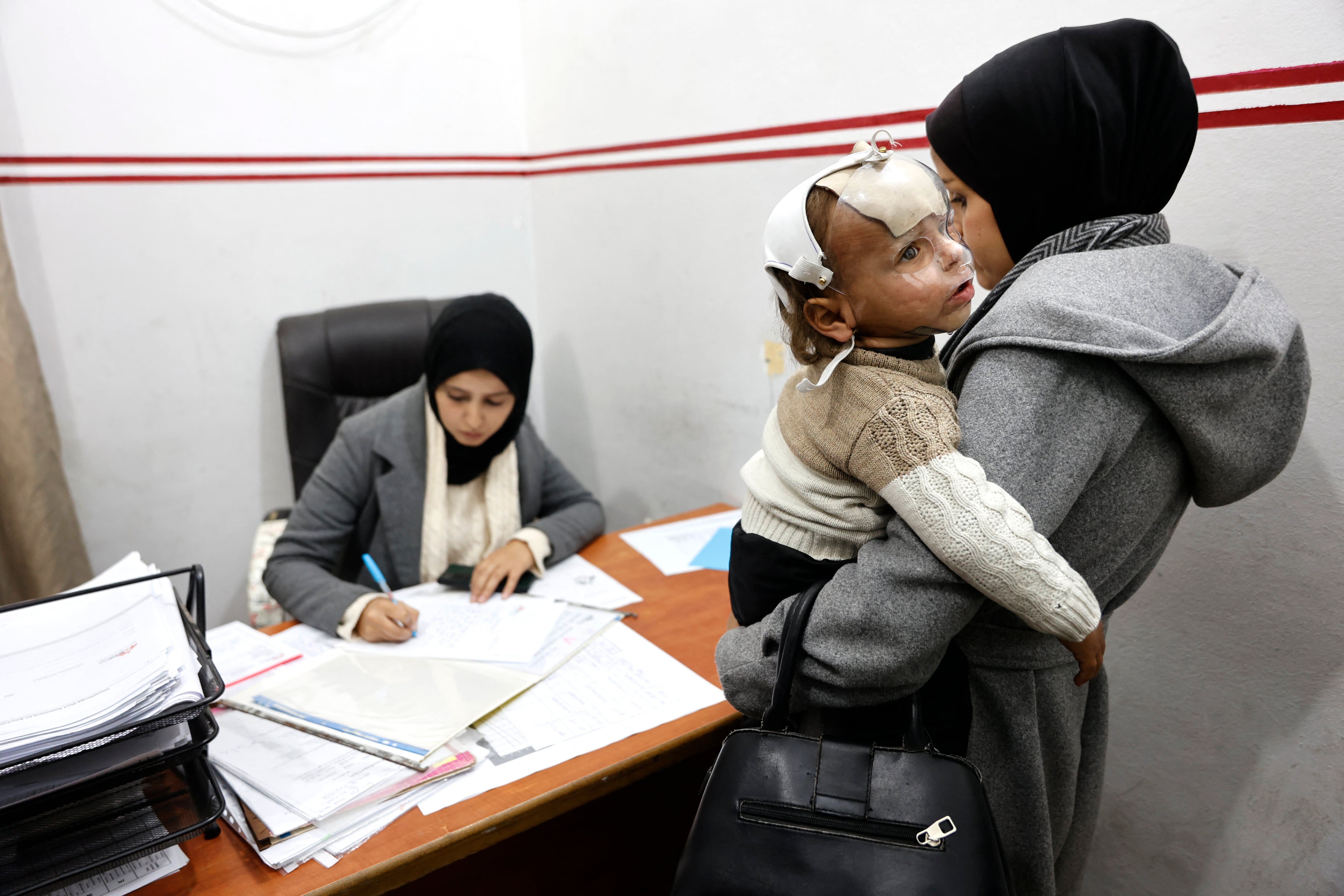
Israel has moved to ban dozens of international aid organizations from Gaza, which the British Medical Journal reports will sharply reduce an already abysmal state of medical care.
Under new registration rules, NGOs must hand over personal information on Palestinian staff to Israeli authorities or lose their ability to operate. Groups including Doctors Without Borders, Oxfam, and the Norwegian Refugee Council say the requirements put workers at risk and violate humanitarian principles. Israel argues the measures are necessary to prevent armed groups from infiltrating aid operations, an accusation the organizations strongly deny.
The potential impact of the bans is severe. “Overall, around 60% of Gaza’s field hospitals are run or supported by such international non-governmental organizations,” and Doctors Without Borders alone backs about a fifth of hospital beds and a third of births.
This is in the context where “more than 500 humanitarian workers [and] at least 1,700 health workers have been killed” in Gaza since October 2023, making demands for staff lists especially fraught.
Doctors Without Borders calls the policy a “cynical and calculated” move that could leave Palestinians without lifesaving care, at a moment when winter conditions, flooding, and aid restrictions are already proving deadly. Taken together with Israel’s earlier ban on UNRWA (the U.N. agency for Palestinian refugees), the decision signals a further, deadly contraction of humanitarian space in Gaza.
I reached out to Elisabeth Mahase, who reported the story, to ask how she sees this move in the context of years of grim news for Gaza’s health system. She emphasized that “considering how inadequate the health care capacity already is compared to the need, any loss in this space will have a devastating impact on Gazans. Palestinians in Gaza desperately need more aid and more health care, not less,” Mahase said.
Burning plastic indoors is surprisingly common
A new study has put numbers on a historically under-reported health risk: burning plastic inside the home for heat or cooking. One in three people in poor urban communities have seen it, and one in six say they have done it, The Guardian reports.
As you probably know: Burning plastic releases a noxious mix of pollutants, including “dioxins, furans, and heavy metals.” These are all chemical classes linked to respiratory disease, heart problems, cancer, and developmental harm.
Researchers have also found these toxins in soil and food near burn sites, raising concerns about longer-term contamination of local food chains. No real surprise here, but the practice is most common where waste collection is weak, and cleaner fuels are unaffordable or unavailable.
What’s the takeaway? The authors argue this is a major blindspot in global health and environmental policy. (On a personal level, I agree. I’ve seen a lot of burning plastic in my decade on the African continent, but even I find this rather surprising. What I’ve seen is usually outside, and done as a way to dispose of trash.)
Household plastic burning rarely shows up in official pollution data, yet plastic waste is expected to nearly triple by 2060. Without investment in basic waste services, cleaner cooking options, and public awareness, this is a health threat that will keep growing.
More funding for Marburg?
The European Union has announced $1.4 million in new funding for the ongoing outbreak of Marburg virus in Jinka, southern Ethiopia (a city I last visited in 2022 for work.) The new funding will be split among the WHO and two of the biggest organizations working on the ground: the International Medical Corps and the Red Cross.
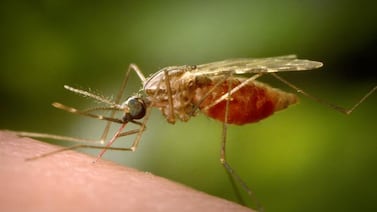
- Disease breakdown: Marburg virus is a high-fatality fever that is similar to Ebola, and often leads to hemorrhaging and organ failure. Untreated, about 9 in 10 people who contract the disease will die. The disease exists endemically in bats, allowing it to spread and occasionally spill over into humans. While this ongoing epidemic is Ethiopia’s first record of the disease, the WHO says the strain matches those seen in past regional flare-ups. There is, unfortunately, no vaccine.
What makes this announcement notable, and a little odd, is the timing. Just last week, the Ethiopian Ministry of Health announced the country had gone 21 days without a new Marburg case, essentially putting the outbreak halfway to epidemic control. That’s the kind of milestone that is usually announced, or at least echoed, by the WHO. Yet an International Medical Corps briefing Friday painted a very different picture, describing a ramping up of the response effort in Jinka.
This matters because, like the Democratic Republic of the Congo’s Ebola outbreak last year, Marburg in Ethiopia is shaping up to be an early test of how well the world can control one of its deadliest viruses in an era of global health austerity. Right now, the funding announcements and official signals don’t fully line up. It’s unclear whether they reflect caution and bureaucratic lag, or if there’s genuine concern that the outbreak is not as contained as it appears. I’ll be following up with independent reporting next week to try to sort out which story is closer to the truth.
Parenthood only needed this 13% tax
Let’s end this week’s report with a story that I’m sharing because, well, it just gets stranger the longer you sit with it. As Reuters reports, China has scrapped “a three decade-old tax exemption on contraceptive drugs and devices … to spur a flagging birth rate.”
Condoms and contraceptive pills are now subject to a 13% tax. Of course, this is not China’s first attempt to centrally engineer fertility decisions, though it may be one of the more delicate nudges. (The country, after all, enforced the one-child policy from 1980 to 2015.)
Yes, this move is just one of several recent efforts aimed at pushing China’s birth rates upward. But … I just can’t fathom how a 13% tax is really meant to nudge would-be parents in the direction of a newborn! A 130% price hike? Maybe at the margins. A 1,300% increase? Sure, I could see that.
But as a parent whose child just entered pre-K this week, let me say: Kids are incomparably expensive to a one-time tax. They’re more of an uncancelable subscription service that has a very aggressive pricing model.
Condoms in China are already extremely cheap by global standards, costing just a few cents at the low end (yes, I looked up a Chinese condom industry report.) So… I’d like to meet the person staring at a half-cent price increase and thinking, “Well, that settles it. Let’s just have the baby.”
William Herkewitz is a reporter covering global public health for Healthbeat. He is based in Nairobi. Contact William at wherkewitz@healthbeat.org.