Public health, explained: Sign up to receive Healthbeat’s free national newsletter here.
An international food standards committee of the United Nations and World Health Organization has called for a scientific risk assessment of botulism spores in powdered infant formulas as a result of the U.S. outbreak linked to ByHeart products.
The action by the Codex Committee on Food Hygiene, supported by attendees from 50 member countries, noted the “global implications” of contaminated baby formula. It was taken as U.S. health agencies have struggled since early November to determine how ByHeart’s formula became contaminated.
Investigations have been ongoing since early November.
At least 51 U.S. babies have been sickened with infant botulism in the outbreak, with no new cases identified in recent weeks; all required hospitalization. The U.S. Food and Drug Administration has said it was first alerted on Nov. 6 to an initial cluster of illnesses linked to ByHeart formula and that its investigation has been underway since then.
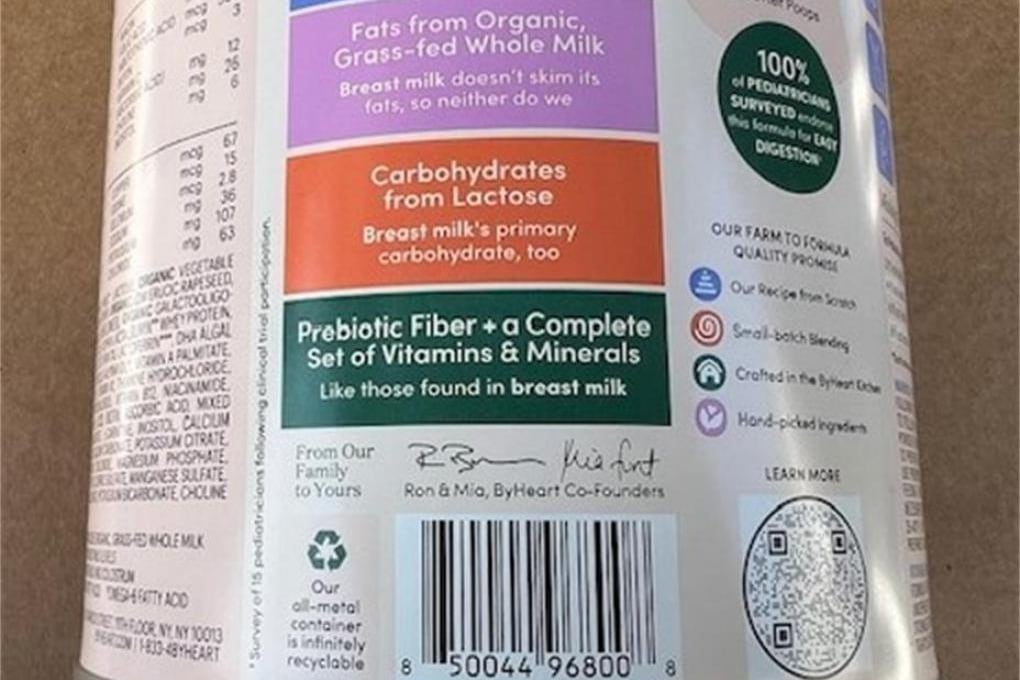
ByHeart has recalled all of its formula products. Federal officials have said they cannot rule out the possibility the company’s formula – which was marketed as a premium, organic formula “closest to breast milk” – has been contaminated with botulism bacteria since it was first put on the market in March 2022.
Food safety advocates said they supported the international risk assessment, but noted it will likely take years to result in any reforms to protect against future outbreaks.
A well-functioning food safety agency would have some answers by now about what caused the outbreak and would be committed to doing widespread product testing to ensure other formula brands are safe.”
— Sarah Sorscher, director of regulatory affairs for the Center for Science in the Public Interest
“It’s a really bad sign for Americans when a slow-moving international scientific agency has now initiated public plans, and yet our own regulators responsible for preventing this outbreak haven’t taken any public action,” said Sarah Sorscher, director of regulatory affairs for the Center for Science in the Public Interest, a consumer advocacy group in Washington, D.C., that focuses on food issues.
“A well-functioning food safety agency would have some answers by now about what caused the outbreak and would be committed to doing widespread product testing to ensure other formula brands are safe,” Sorscher told Healthbeat. “Instead, we have utter silence. It’s a complete failure of leadership.”
Officials with the FDA, Centers for Disease Control and Prevention, and U.S. Department of Health and Human Services said their investigations are ongoing but they did not answer Healthbeat’s questions this week about what challenges may be contributing to delays in finding the cause.
They also didn’t respond to questions about whether it’s surprising that a source of ByHeart’s botulism bacteria contamination hasn’t yet been identified.
Federal regulators haven’t decided whether a U.S. risk assessment is needed
Infant botulism is caused by babies ingesting spores of Clostridium botulinum bacteria, which can take 30 days to start growing in their immature guts and produce a toxin that can cause symptoms ranging from constipation, loss of head control, difficulty swallowing and breathing, and respiratory arrest.
Recent tests by government investigators and ByHeart have detected botulism bacteria in some containers of the company’s formula. The company received a formal warning letter from the FDA in August 2023 about contamination issues with a different type of bacteria and its plants have been cited by FDA inspectors for manufacturing and sanitation issues.
A HHS spokesperson, in an email to Healthbeat, said the FDA advocated for the Codex committee’s request for the international risk assessment. Staff from the FDA and U.S. Department of Agriculture participated in the Codex meeting, the meeting’s report shows.
“We welcome any and all scientific evidence that can inform recommendations on this important public health matter,” HHS said.
When asked whether the FDA or CDC would be doing their own U.S. assessment of risks for infant formula contamination with Clostridium botulinum bacteria, which cause infant botulism, HHS said that has not yet been determined. The FDA will decide the need for any additional risk assessment after more information is gathered about the current outbreak, HHS said.
“Additional testing by ByHeart, FDA, CDC, and state partners is currently underway, and more results are expected in the coming weeks,” HHS said. No details were provided about the types of testing being done.
ByHeart said the ongoing investigation “includes a rigorous audit of every step of our supply chain” and that the company is working closely with regulators to identify the source of the contamination.
HHS Secretary Robert F. Kennedy Jr., in launching Operation Stork Speed last spring, said that “safe, reliable, and nutritious” infant formula is a priority of the administration.
During the Codex Committee on Food Hygiene, which held its multi-national meeting Dec. 15-19 in Nashville, Tenn., members discussed the need for scientific input to inform a potential revision in the international code of hygienic practice for powdered infant formula. The code has sections that need updating, including sections on cleaning and environmental monitoring when producing formula, participants said.
Global review seeks to identify safety gaps in powdered formula manufacturing
“While Members acknowledged that historical data had not always categorized Clostridium botulinum as a major risk in these products, the importance of investigating whether current gaps in [the powdered infant formula code] contributed to the risk was underlined,” according to the report of the meeting.
The committee’s request seeks a risk assessment of spore-forming pathogens in powdered infant formula, and specifically cites Clostridium botulinum, which causes infant botulism, and Bacillus cereus, which can produce a toxin that causes nausea, vomiting and diarrhea.
Nestle is undertaking a global recall of certain infant formulas because of possible contamination with the toxin produced by Bacillus cereus. The company said a potentially contaminated ingredient is the culprit. While the recall involves formula sold in dozens of countries, the company’s recall advisory as of Thursday morning did not list the United States.
The Codex committee also has asked for an update to the existing risk assessment and scientific advice on environmental pathogens, such as Cronobacter and Salmonella, and to provide additional scientific advice to inform recommendations for strengthened pathogen control measures in all stages of the formula manufacturing process.
During last month’s meeting, a representative of the Food and Agriculture Organization of the United Nations, also referred to as the FAO, said that the scientific advice requested by the committee would be provided by an international scientific expert group called JEMRA – the Joint FAO/WHO Expert Meetings on Microbial Risk Assessment. The FAO did not respond to questions from Healthbeat about how long the risk assessment process will take or what it will involve.
Elisabeth Sterken, a nutritionist with the International Baby Food Action Network Global Council, said actions to address infant botulism and other microbial risks in powdered infant formula need to be taken sooner than will occur through this process. IBFAN is an international coalition that advocates for public policies that favor breastfeeding and investigates the marketing of infant formula.
“From JEMRA, which will likely take years, its recommendation will then go back to the Codex Committee on Food Hygiene, and any changes in the Code of Hygienic Practice will take at least another two years,” Sterken told Healthbeat.
“From there the final recommendations go to national regulatory bodies,” she said. “In the meantime, infants will continue to be at risk from the serious health consequences of potentially contaminated powdered infant formula.”
HHS, the FDA, and CDC have not responded to a Dec. 8 letter from the Safe Food Coalition, a group of major food safety organizations, that has called for actions to address “dangerous deficiencies” in the nation’s food inspection and regulatory systems that they say have been highlighted by the ByHeart recall and infant botulism outbreak.
Sorscher, whose organization – the Center for Science in the Public Interest – is a member of the coalition, called the lack of any response to the five-page letter “unacceptable.”
“These agencies owe answers to the public, and the silence at this point speaks volumes about their current ability to protect our food,” she said.
The letter, among many recommendations, has called for the FDA to declare contamination with Clostridium botulinum to be a hazard that requires prevention and must be addressed in manufacturers’ food safety plans. And it urges the FDA to conduct a nationwide sampling program to test infant formula for this type of bacteria, which causes infant botulism.
Other coalition members that signed the letter include the Center for Food Safety, Consumer Federation of America, Consumer Reports, Government Accountability Project, the Institute for Food Safety and Nutrition Security at George Washington University, and Stop Foodborne Illness.
The HHS last month told Healthbeat it has received the letter and will be responding to it.
Alison Young is Healthbeat’s senior national reporter. You can reach her at ayoung@healthbeat.org or through the messaging app Signal at alisonyoungreports.48