Public health, explained: Sign up to receive Healthbeat’s free national newsletter here.
The baby formula company linked to an infant botulism outbreak that has hospitalized children in at least 12 states, was previously cited by federal regulators for contamination issues involving a different type of dangerous bacteria.
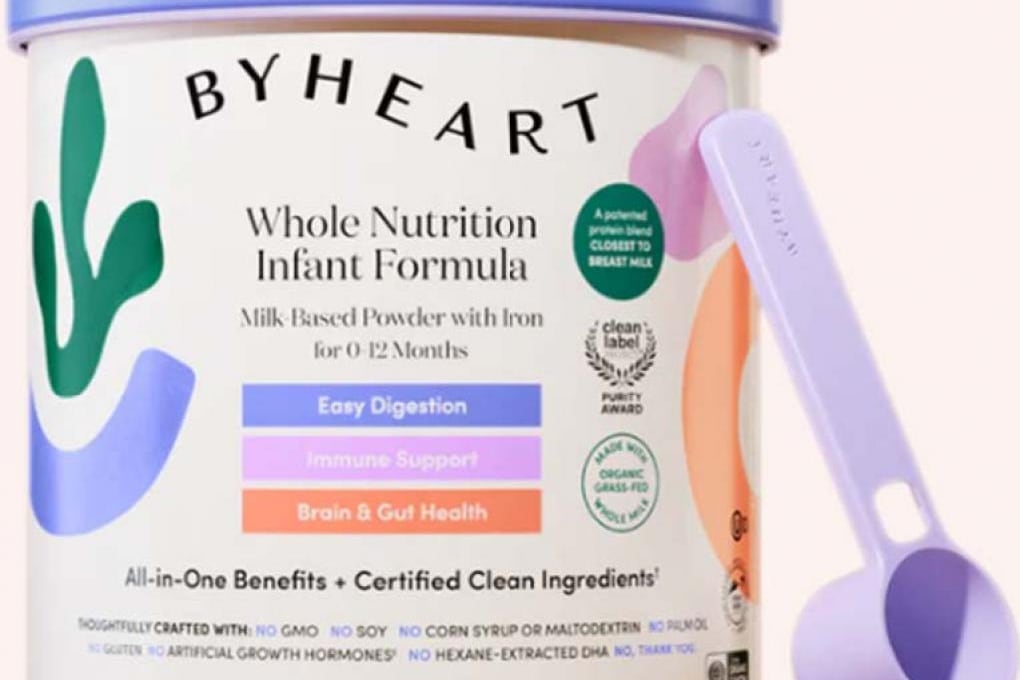
ByHeart Inc. on Tuesday morning expanded its infant formula recall to all batches of ByHeart Whole Nutrition Infant Formula cans and Anywhere Pack amid new warnings from federal health officials that parents and caregivers should immediately stop using any of the company’s products.
“The decision to broaden our recall to all ByHeart products comes after a call with the FDA late last night, informing us that they found two more cases of infant botulism in babies that had also consumed ByHeart at some point,” the company said in a note to customers posted on its website.
ByHeart was involved in another formula recall in December 2022. The company received a formal warning letter in August 2023 from the Food and Drug Administration for failing to have manufacturing processes that ensured its products didn’t become contaminated with microorganisms.
In these earlier safety issues, records show FDA investigators found that ByHeart had failed for months to adequately look into warning signs that infant formula made at its Pennsylvania facility was at risk of contamination with Cronobacter sakazakii, bacteria that can cause life-threatening infections in infants. No illnesses were noted in the 2022 recall.
The current recall of ByHeart Whole Nutrition Infant Formula that began over the weekend involves a different type of bacterium – Clostridium botulinum – that causes infant botulism. And this time the recalled formula was made at ByHeart manufacturing facilities in Portland, Ore., and Allerton, Iowa, the company said in an email to Healthbeat.
The FDA most recently inspected ByHeart’s Oregon facility in March and classified it as “No Action Indicated.” The Iowa facility, however, was cited for issues related to good manufacturing practices on its February inspection, and it was classified as “Voluntary Action Indicated,” the FDA said.
No additional information about these inspections was available Monday. ByHeart officials did not answer Healthbeat’s questions about what the FDA found during the facilities’ inspections. The company said that no products other than infant formula are made at the facilities.
“We adhere to rigorous safety and quality standards and have the utmost confidence in our product, our safety systems, and the people behind them,” Dr. Devon Kuehn, ByHeart’s chief medical officer and chief scientific officer, said in emailed responses to Healthbeat’s questions on Monday night.
Preliminary tests indicate botulism bacteria in one opened formula can
Infant botulism is caused by a baby swallowing spores of Clostridium botulinum bacteria. Once inside the body, the spores activate, then infect the child’s large intestine and produce botulinum toxin. The toxin blocks nerve signals and causes weakness and loss of muscle tone.
Symptoms can take weeks to develop and may include constipation, difficulty suckling or swallowing, loss of head control and decreased facial expression. Without treatment, symptoms will worsen and can lead to breathing difficulties.
The California Department of Public Health, which runs the national infant botulism monitoring program that distributes the only FDA-approved drug to treat children who are sickened by the toxin, noticed an increase in medication requests, then alerted federal officials to the cases involving infants who drank ByHeart powdered infant formula.
“At this time, CDPH is urging families to stop using ByHeart formula immediately, and to report any signs or symptoms of infant botulism to their health care provider or local health department immediately,” the department said in an email to Healthbeat on Monday evening.
ByHeart infant formula is sold online by the company and through major retail stores including Amazon, Kroger, Walmart, Whole Foods, and Target.
As of Tuesday morning, the FDA said the infant botulism outbreak linked to ByHeart’s products involved 15 infants hospitalized in 12 states: Arizona, California, Illinois, Kentucky, Minnesota, North Carolina, New Jersey, Oregon, Pennsylvania, Rhode Island, Texas and Washington state.
The earliest known case linked to ByHeart formula became ill in August, and the most recent case became ill Monday, the FDA said.
The FDA said that among 84 infants treated nationwide for infant botulism since August, those who were fed powdered baby formula disproportionately consumed ByHeart formula. ”Investigations remain ongoing but have not identified any other infant formula brands or shared exposures that pose a risk to infants,” the FDA said.
Nine of the cases linked to ByHeart formula have been confirmed as toxin type A botulism; the others’ tests are still pending, CDPH has previously said.
California health officials on Saturday announced that their preliminary tests on a can of ByHeart powdered infant formula that was fed to one of the hospitalized infants “suggest the presence of the bacteria that produce botulinum toxin.”
ByHeart officials said the company is working with state and federal investigators.
“We are conducting a comprehensive investigation and have offered the FDA and CDC and CA Dept of Public Health full access to our facilities and unopened cans, without restriction,” Kuehn said.
He said that the bacteria that cause infant botulism are found naturally in soil, dust, and some vegetables. “International food safety authorities have concluded that C. botulinum is not a risk in powdered infant formula, and no U.S. or imported formula is currently required to be tested for C. botulinum.”
ByHeart says it launched recall within 24 hours of notification
The FDA was first made aware of a cluster of illnesses on Thursday afternoon. ByHeart officials say they were notified of concerns about their formula on Friday. Then on Saturday, the company announced its voluntary recall and public warnings were put out by state and federal health officials.
ByHeart officials say they were told by the FDA that the infant botulism cases linked to their formula are part of a larger spike in infant botulism cases involving about 83 infant botulism cases since August.
ByHeart’s recall announcement posted on the FDA website Saturday said, “No ByHeart product has tested positive for any contaminants,” even though California health officials in their same-day announcement noted their preliminary tests of ByHeart formula in one opened can indicated the presence of the bacteria that causes botulism.
When asked about the conflicting information, Kuehn told Healthbeat: “We became aware of the CDPH test result on Sunday, November 9 and are treating it with the utmost seriousness.”
But because opened cans could have become contaminated from the environment while they are being used, Kuehn emphasized the importance of testing unopened cans of formula.
“We are working closely with the FDA, as well as a third-party independent testing facility, to test unopened product from the voluntarily recalled lots to conclusively determine causation,” he said.
The Centers for Disease Control and Prevention on its outbreak web page said that officials in several states have collected leftover infant formula for testing. Results “are expected in the coming weeks,” it says. The CDC did not respond to questions on Monday about the outbreak and its role in investigating its source.
The company told Healthbeat on Monday night that there had been no government recommendation to recall any product lots beyond two batches of formula made on April 23 and May 6, which were recommended by the FDA. These batches were distributed primarily in July and August, the company said.
Then Tuesday morning, the company announced it was voluntarily expanding its recall to include all batches of ByHeart Whole Nutrition Infant Formula cans and Anywhere Pack “despite the fact that no unopened ByHeart product has tested positive for Clostridium botulinum spores or toxin.”
The recalled cans have UPC code 85004496800, and Anywhere Packs are marked with UPC code 85004496802.
“The safety and well‑being of every infant who uses our formula is, and always will be, our highest priority,” Mia Funt, ByHeart co‑founder and president, said in the company’s announcement.
The FDA on Tuesday warned parents and caregivers to immediately stop using ByHeart formula and to seek immediate medical attention if their child has consumed the company’s products and is experiencing any symptoms.
Children who are not showing any symptoms should be monitored for signs of infant botulism, the FDA said, which can take weeks to appear. The FDA advises that people who have any leftover ByHeart formula take a photo or record the information on the bottom of the package, then store the product in a safe place after marking it as “DO NOT USE.”
“If your child develops symptoms, your state health department might want to collect your formula container for testing,” the FDA said. “If your child does not develop symptoms after 30 days, throw your containers out.”
This story has been updated with ByHeart voluntarily expanding the recall.
Alison Young is Healthbeat’s senior national reporter. You can reach her at ayoung@healthbeat.org or through the messaging app Signal at alisonyoungreports.48