Public health, explained: Sign up to receive Healthbeat’s free national newsletter here.
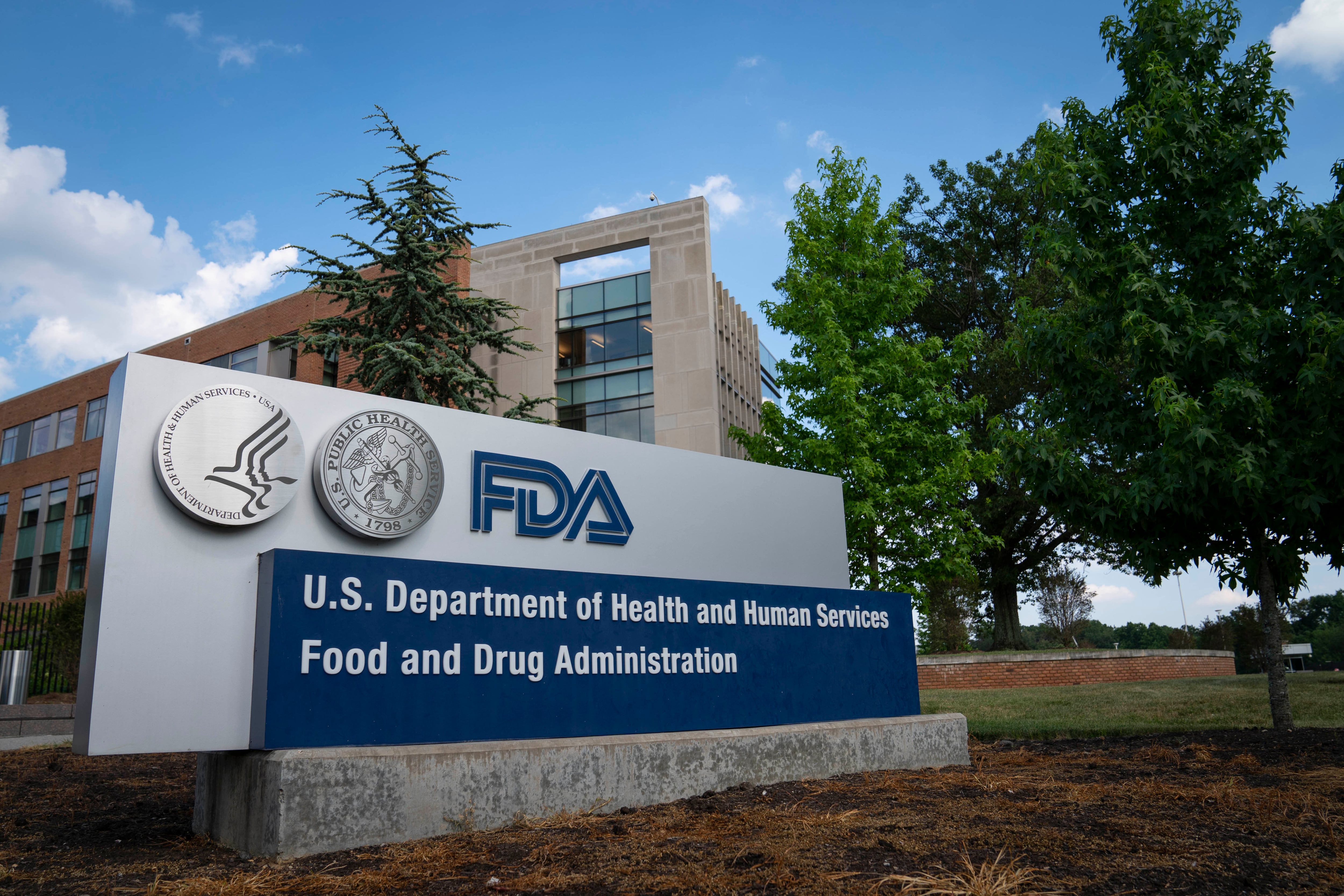
Six days after a senior Food and Drug Administration official sent a sweeping internal email claiming that Covid vaccines had caused the deaths of “at least 10 children,” 12 former FDA commissioners released an extraordinary warning in the Dec. 3 issue of the New England Journal of Medicine.
They wrote that the claims and policy changes in the memo from Vinay Prasad, the head of the FDA’s Center for Biologics Evaluation and Research, pose “a threat to evidence-based vaccine policy and public health security” and break sharply from longstanding scientific norms.
What is unfolding inside the FDA is not a narrow dispute over Covid vaccines. It is an attempt, according to critics and vaccine scientists, to rewrite the rules governing the entire U.S. vaccine system — how risks are weighed, how benefits are proved, and how quickly lifesaving shots reach the public. Former agency leaders warn that if these changes take hold, the consequences could be lasting: fewer vaccines, slower updates, weakened public trust, and more preventable outbreaks.
Prasad made clear he sees the moment as corrective. “Never again will the U.S. FDA commissioner have to himself find deaths in children for staff to identify it,” he wrote, telling employees the agency’s mission, and its “worldview,” would change.
Prasad’s email reopened old arguments about Covid vaccines, using what is generally considered weak and misleading science in the peer-reviewed research community. He claimed that FDA staff had found “at least 10” deaths in children that happened “after and because of” Covid vaccination, using reports from the Vaccine Adverse Event Reporting System.
The VAERS system is notoriously crowdsourced, meaning anyone can contribute, and scientists say it serves only as a clearinghouse for reports. For example, a person could file a report saying that after getting a flu shot, their hair turned purple. Though that report would remain in the database until it was reviewed, it cannot prove the cause of medical events. But Prasad argued that the true number of deaths was likely higher because many cases go unreported.
On Substack, Inside Medicine reported Dec. 11 that Prasad used incomplete information and that a Dec. 5 internal FDA memo set the pediatric death toll from Covid shots somewhere between zero and seven. Department of Health and Human Services spokesperson Emily Hilliard wrote, “The FDA’s investigation into deaths caused by Covid vaccines is still ongoing and there’s no final count yet of those deaths.”
Prasad also accused the FDA and the Centers for Disease Control and Prevention of downplaying the risk of heart inflammation, called myocarditis, in young men; criticized the agency for approving shots for teenagers; and suggested that school and workplace vaccine mandates may have “harmed more children than we saved,” adding that “we do not know if we saved lives on balance.”
By comparison, more than 2,100 American children died of Covid itself since the pandemic began, the CDC reported.
Based on his erroneous and misleading claims about Covid vaccines, Prasad proposed a major overhaul of how vaccines are approved. He said the FDA should stop relying on immune markers to establish the efficacy of shots, such as antibody levels, and instead require large placebo-controlled randomized trials that track hospitalizations and deaths before approving most new vaccines.
Many immunologists and vaccine experts say it’s unethical to test vaccines known to be effective against disease with a control group that would receive a placebo, exposing them to infection.
“There is a rock-solid principle in bioethics that it is unethical to test any drug or vaccine against a placebo if it is known to be safe and effective. The reason is that such placebo-controlled trials would effectively deny patients access to a vaccine that could prevent a dangerous infectious disease,” said Lawrence Gostin, a professor of global health law at Georgetown University.
Prasad called the current flu vaccine system an “evidence-based catastrophe,” questioned the approval of vaccines for pregnant women based on immune response alone, and raised concerns about giving multiple vaccines at once. He told staff to rewrite FDA guidelines to match his new “worldview” and said anyone who disagreed with his “core principles” should resign.
The former FDA leaders expressed alarm in the NEJM article. They said Prasad is exploiting public frustration over the federal response to Covid to spark doubt about the entire childhood vaccine system, which could undo decades of success in protecting children from deadly diseases.
“This is really different. And it’s really dangerous. And people will be hurt, particularly by the vaccine decisions,” former FDA Commissioner Robert Califf said in an interview. He also warned that Prasad’s proposed policies — which he noted echo positions on vaccines held by Health and Human Services Secretary Robert F. Kennedy Jr., a longtime anti-vaccine activist — could shake the entire vaccine market.
“The goal of RFK seems to be to make it impossible for vaccines to be available in the U.S.,” he said. If the proposals advance, he added, “it won’t be a viable business.”
Hilliard pushed back sharply on those concerns, writing: “The American people deserve evidence-based science. Prasad’s email lays out a philosophical framework that points us toward that higher standard. We will soon release documents laying out that framework and data confirming how the Covid vaccine resulted in children’s deaths that previous leadership failed to properly investigate.”
For generations, the childhood vaccine program has depended on clear rules, strong safety systems, and public trust. Experts say Prasad’s ideas, based on claims they argue are not supported by real evidence, could make it much harder to test, approve, and deliver vaccines to families.
Prasad’s framework could fuel parental doubt
Prasad’s memo indicates he considers VAERS reports as proof that vaccines caused children’s deaths. The system, though, is designed to be only an “early warning system” for potential safety issues with vaccines that can be investigated further.
“VAERS signals should never be taken as proof of true vaccine risks without careful, confirmatory studies,” said Katherine Yih, an epidemiologist and longtime investigator with the Vaccine Safety Datalink, a CDC program.
Doing so, scientists say, directly feeds public fear at a time when many parents are already unsure whom to trust.
“Causation requires converging evidence, not just one report or coincidence,” said Robert Hopkins, medical director of the National Foundation for Infectious Diseases.
Prasad’s framework, however, treats uncertainty as a reason to halt development entirely.
Experts fear this doubt won’t stay limited to Covid vaccines. Once parents start to question the FDA’s honesty, they may begin doubting longstanding vaccines for measles, polio, or whooping cough — shots that have protected children for decades.
“Science must be transparent,” Gostin said. If families believe the FDA is misusing data or silencing experts, confidence in the entire vaccine system can collapse, he said. “There’s a public narrative that people have lost trust in science, but that’s not true. The vast majority want the FDA to make decisions based on the best scientific evidence. Once they believe that the agency is marginalizing scientists and cherry-picking evidence, their trust will plummet.”
Vaccine pipeline is delicate
Prasad’s new framework will likely make it far harder for companies to produce or update vaccines. The 12 former FDA commissioners warned that requiring clinical trials for all new or updated shots would slow vaccine improvements and leave people unprotected. His plan, they wrote, “would impede the ability to update vaccines in a timely fashion, especially for respiratory viruses.”
For fast-changing viruses like flu and Covid, this could be disastrous. There’s simply not enough time to run full clinical trials every time a virus mutates.
There are also major business effects. Vaccine development is costly, and companies may decide the United States is no longer worth the risk. If companies slow down or leave the market, families could face shortages, fewer innovations, and fewer protections for their kids.
Science depends on ‘checks and balances’
Science depends on open and public debate. Prasad’s memo warned his employees against it. In addition to demanding that FDA staff members who disagree with him resign, he said their disputes should stay private and called leaks “unethical” and “illegal.”
Susan Ellenberg, a former director of the FDA’s Office of Biostatistics and Epidemiology, warned that Prasad risks destroying the process that makes science credible. “If disagreement is treated as disloyalty, you lose the only mechanism that keeps science honest,” she said.
Without strong internal debate, safety reviews become weaker. “You lose the checks and balances that make vaccine safety science credible,” said Kathryn Edwards, a pediatric infectious disease specialist at Vanderbilt University Medical Center who served on the Clinical Immunization Safety Assessment Network during the Covid pandemic.
This story was originally published at KFF Health News, Healthbeat’s national reporting partner.