Public health, explained: Sign up to receive Healthbeat’s free national newsletter here.
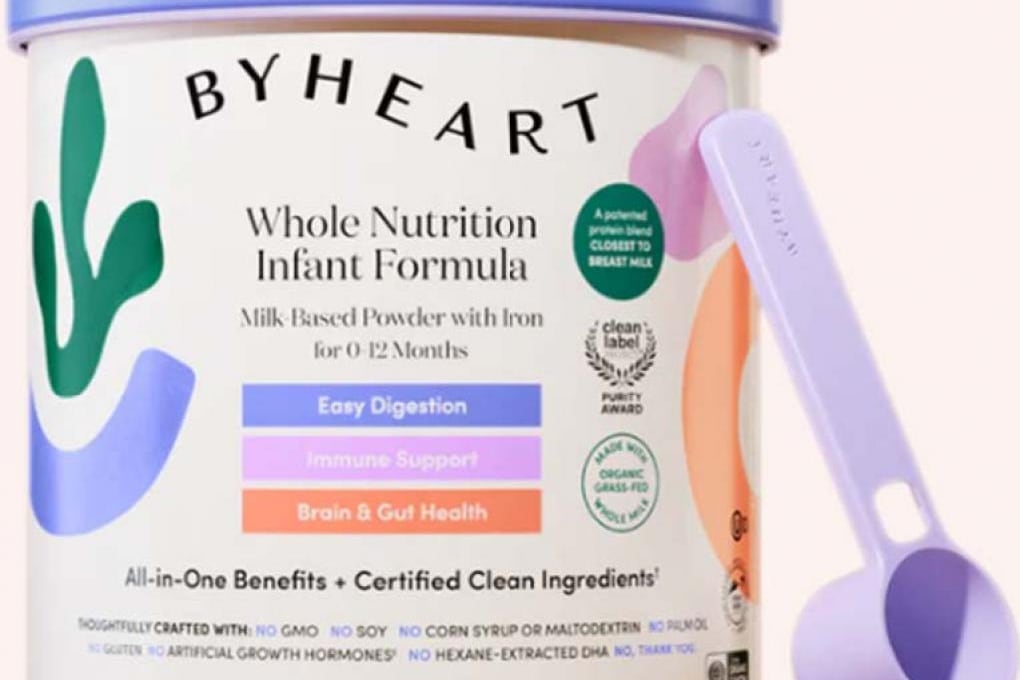
It’s been six weeks since ByHeart Inc. began recalling its popular organic baby formula amid a nationwide outbreak of infant botulism – and nearly two years since children started becoming infected across the country.
Here are four things to know about the latest developments in the outbreak investigation and formula recall.
Some good news: No new cases of sick infants discovered in the past week
The U.S. Food and Drug Administration announced this week that the identification of new infant botulism cases linked to ByHeart infant formula has slowed, with none identified during the past week.
The number of infants known to have been sickened in the outbreak remains at 51 – and all of them required hospitalization. The infants live in 19 states. There have been no deaths.
The most recent date a child started showing signs of illness was Dec. 1, according to the FDA.
The lack of new cases is an encouraging sign. ByHeart did an initial, limited recall of its formula products on Nov. 8, followed by a recall of all of its products on Nov. 11.
But it can take up to 30 days after an infant ingests botulism spores for the bacteria to start growing in the child’s immature gut and produce a toxin that causes symptoms, such as constipation, poor eating, loss of head control, difficulty swallowing and breathing, and potentially respiratory arrest. And ByHeart formula remained on the shelves of some stores for weeks after the recall. (More on this below.)
Some bad news: The discovery that babies started being sickened two years ago
Until recently, federal health officials had said the earliest outbreak illnesses began in August. But they’ve now identified children who were fed ByHeart formula who were hospitalized with infant botulism as far back as December 2023.
The Centers for Disease Control and Prevention has expanded its outbreak case definition to include any infant with botulism who was exposed to ByHeart baby formula at any time since the product first went on the market in March 2022.
Initially, investigators were focused only on infants sickened since Aug. 1, 2025. When they looked at earlier infant botulism cases, they identified 10 additional children who consumed ByHeart products and fell ill from December 2023 through July 2025. Those cases are included in the 51 total outbreak cases.
While no cases have been identified before December 2023, the investigation is ongoing, and the FDA said it “cannot rule out the possibility that contamination might have affected all ByHeart formula products.”
Federal officials and ByHeart say they are still investigating how botulism bacteria spores got into ByHeart formula.
FDA issues warning letters to retailers that kept selling recalled ByHeart formula
Retailers across the country continued to sell ByHeart infant formula for weeks after the recall began on Nov. 8 and was expanded to include all products on Nov. 11.
State and local food safety officials along with FDA inspectors performed more than 4,000 spot-checks of retail stores across the country to ensure recalled ByHeart’s formula was no longer being sold. Yet they continued to find ByHeart products on store shelves at more than 175 locations in 36 states, the FDA said.
However, those checks of retail stores, Healthbeat reported last month, were slowed by FDA delays in sharing ByHeart product distribution lists with state and local officials.
The FDA says it hasn’t received any reports of recalled ByHeart formula still being on store shelves since Nov. 26.
This week the FDA called on food industry officials across the country to improve their compliance with protecting the public from recalled products.
The FDA also announced it sent formal warning letters on Dec. 12 to corporate officials at Target, Walmart, Kroger, and Albertsons Companies for failing to remove ByHeart products from their store shelves.
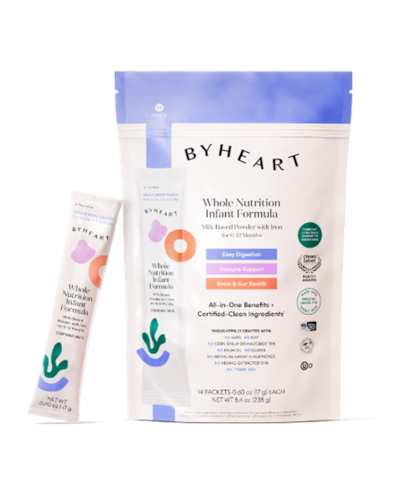
At a Target store in Arkansas, state inspectors on Nov. 20 discovered a promotional “Sale!” sign offering a $2 discount off recalled ByHeart single-serve “anywhere pack” sticks from Nov. 16 to Nov. 22, according to the FDA’s warning letter to the company.
Investigators found recalled ByHeart formula on Target store shelves across 20 states from Nov. 12 to Nov. 20, the FDA’s letter said.
Workers at Target stores – as well as those at Walmart stores in 21 states, Kroger stores in 10 states, Albertsons Companies’ stores operated under various names in 11 states – gave state and local inspectors a variety of explanations for the presence of ByHeart formula in stores after the recalls were launched, the letters say.
Explanations included that store associates weren’t aware of the recall and that there was confusion over which specific lots were recalled. Workers also told investigators that there were failures to remove all of the recalled products from shelves and that stocking of shelves occurred when recalled products arrived after the recall notification, the warning letters say.
The four companies have 15 days to respond to the FDA warning letters with steps they are taking to address violations or provide information supporting why they believe they haven’t violated the law.
In a statement to Healthbeat, Walmart said: “We take all reports of inaction seriously and will respond to the letter.” The company said it “moved swiftly” to issue a sales restriction and remove the product from its stores and online platform.
Albertsons Companies said they have procedures to address product recalls and that ByHeart products have been removed from their stores. Target and Kroger did not immediately respond to Healthbeat’s requests for comment on their warning letters.
Food safety groups call for botulism testing, investigation of recall delays
The ByHeart formula recall and outbreak has “exposed dangerous deficiencies” in the nation’s food inspection and regulatory systems, according to a letter sent to the heads of the FDA, CDC and Department of Health and Human Services by the Safe Food Coalition, whose members are national food safety advocacy groups.
The five-page letter calls for a range of reforms to strengthen food safety inspections and regulations and improve the speed of recalls. It also urges fully funding food safety work and illness surveillance systems at the CDC’s National Center for Emerging and Zoonotic Infectious Diseases.
Citing Healthbeat’s reporting, the coalition is calling for the FDA to investigate bureaucratic delays in releasing to state food safety regulators the names of retailers that received ByHeart’s recalled products. It’s a lengthy process “that can and must be streamlined not just with respect to recall communication, but for all communication with state regulators,” the Dec. 8 letter said.
The Safe Food Coalition letter, among its many recommendations, also calls for the FDA to declare contamination with Clostridium botulinum to be a hazard that requires prevention and must be addressed in manufacturers’ food safety plans. And it urges the FDA to conduct a nationwide sampling program to test infant formula for this type of bacteria, which causes infant botulism.
“I think it’s critically important that the agency go out there in the field and do a survey of all the infant formula out there to reassure consumers and to understand whether this is a broader problem,” Sarah Sorscher, director of regulatory affairs at the Center for Science in the Public Interest, told Healthbeat.
Other groups in the Safe Food Coalition that signed the letter include the Center for Food Safety, Consumer Federation of America, Consumer Reports, Government Accountability Project, the Institute for Food Safety and Nutrition Security at George Washington University, and Stop Foodborne Illness.
Federal officials have not yet replied to the coalition’s letter. “HHS is in receipt of the letter and will respond directly to the requestors,” HHS said Friday in an email to Healthbeat.
“FDA acted quickly to protect the public, issuing multiple warnings alongside the firm’s initial and expanded recall,” HHS said in its email.
The FDA has previously not responded to Healthbeat’s questions about delays in sharing ByHeart’s product distribution lists with local and state food safety regulators.
HHS said Friday that the FDA began conducting its own recall effectiveness checks “at the corporate level of large retailers” on Nov. 10 – two days after ByHeart announced its initial recall of two batches of formula.
The FDA didn’t receive ByHeart’s product distribution lists from the company until Nov. 12, the day after the company expanded the recall to all products, HHS said. The list was shared the same day with a subset of state food safety regulators who had information-sharing agreements on file with the FDA, the HHS said.
HHS acknowledged that the FDA had to go through a process to obtain exceptions for local and state regulators that lacked information agreements and “where such sharing of commercial confidential information would be otherwise prohibited under the Trade Secrets Act.”
Healthbeat reported last month that according to the Association of Food and Drug Officials – whose members are state and local regulators – the FDA didn’t start fully sharing ByHeart’s product distribution lists with all state and local officials until a teleconference held at 6 p.m. on Nov. 14 – nearly a week after the formula was linked to the outbreak and the company had launched its initial recall on Nov. 8.
HHS did not say how many states had information sharing agreements with FDA that allowed them to receive the distribution lists on Nov. 12. The department only said a “majority” of the 50 states and the District of Columbia have the agreements.
Alison Young is Healthbeat’s senior national reporter. You can reach her at ayoung@healthbeat.org or through the messaging app Signal at alisonyoungreports.48