Public health, explained: Sign up to receive Healthbeat’s free New York City newsletter here.
The first major public health project announced under New York City Mayor Zohran Mamdani is a $20 million effort that includes strengthening a program that sends nurses into the homes of mothers struggling to make ends meet.
The money would be transferred to the Department of Health and Mental Hygiene from the city’s Administration for Children’s Services under the preliminary 2027 budget to fund more home visits in the Nurse-Family Partnership, which pairs registered nurses with expecting parents who receive Medicaid or WIC.
In the home, the nurses take into consideration the surrounding environment while working one-on-one with clients to develop strong parenting skills in the areas of diet and nutrition, with the aim of supporting a healthy pregnancy and a healthy baby.
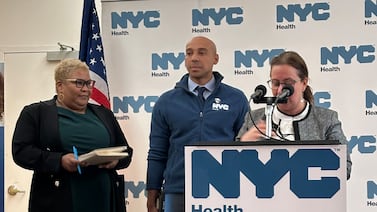
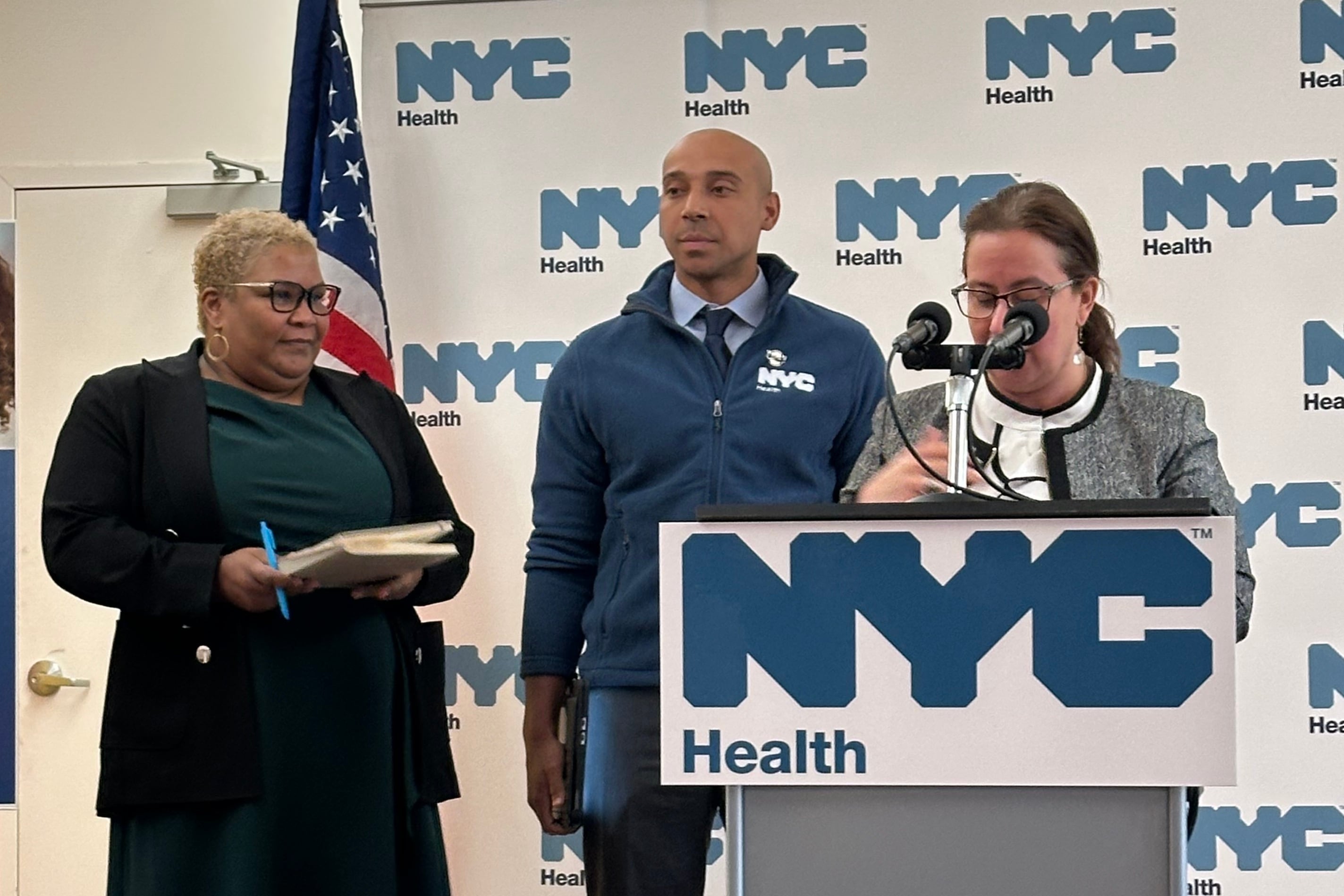
“This program is putting families first and those that are in need the most,” Deputy Mayor Helen Arteaga Landaverde said Feb. 27 in announcing the funding at a community health center in East Harlem. She oversees ACS and the health department. “We will use this program to help increase higher rates of breastfeeding, childhood immunization, and, more importantly, making sure that our families keep growing nice and healthy.”
The announcement comes at a critical time. Health officials over the years have wrestled with trying to stem the city’s high maternal mortality rates, especially among Black women, which are some of the highest in the United States. New York City sees about two dozen deaths tied to pregnancy or childbirth each year. Three in four Black maternal deaths are ruled preventable by the health department’s Maternal Mortality Review Committee. For white women, it’s about half.
Mamdani mentioned the disparity last week at a private reception honoring Black History Month. Under the gigantic blue whale model suspended at the American Museum of Natural History, the mayor noted that Black mothers suffer mortality rates much higher than white mothers. Mamdani’s predecessor, Eric Adams, had also raised concerns over high maternal mortality rates, launching a citywide doula program.
City officials see bolstering the NFP program as a potential remedy.
Officials from ACS, the city’s child welfare agency, the health department, and a local nonprofit focusing on childhood mental health services met in late January at the ACS office in Manhattan to present the Strong Foundations initiative to expand the NFP service. They had been researching the program since early 2024 and developing a proposal through last May, according to literature circulated at the presentation.
At last week’s announcement, the city’s new health commissioner, Dr. Alister Martin, introduced his mother, a registered nurse seated in the front row, as an example of how an NFP nurse builds connections.
“She was a year-round Santa Claus, delivering things to each family she met with,” Martin said. “But it went beyond the gifts. She delivered connection. She delivered health education. She delivered compassion.”
NFP has helped 25,000 expecting parents in NYC
The $20 million initiative will help expand NFP eligibility over a three-year period by allowing clients who already have a child to register instead of limiting it to first-time parents. They will also be able to enroll later in pregnancy, after 28 weeks. The program aims to double the number of families it serves to 3,000, according to documents from the presentation.
The program will also provide training for early childhood mental health professionals by creating a three-year fellowship program that develops a “pipeline of clinicians with perinatal and early childhood experience,” according to a press release.
NFP has supported more than 25,000 expecting parents in New York City since the program was adopted in Jamaica, Queens, in 2003, officials said. The original Nurse-Family Partnership was created by David Olds, a professor of pediatrics at the University of Colorado, in the 1970s and was later expanded as a nationwide program, hailed for curbing high maternal and child mortality rates.
Sascha James-Conterelli is a “full supporter” of the NFP program and has spent considerable time collaborating with NFP nurses since she came across the program in 2007 while working as a perinatal director at a hospital on Long Island. A member of the New York State Maternal Mortality Review Board, she said she was struck by how NYP nurses provide a true public service, because they understand the nuances and health needs of the community.
“They’re not blindly going in and giving some prescriptive type of advice, like, ‘oh, eat healthy or eat better,’” said James-Conterelli, director of the nurse-midwifery program at New York University, where she’s also a clinical associate professor. “They already have nurses that reside in the area and know what foods are available to them, where their markets are, what religious practices are common in the area.”
In 2023, the Montefiore Health System in the Bronx threatened to cut its $800,000 NFP program until the New York State Nurses Association compelled the health system to salvage it during negotiations related to a nurses strike, said Vanessa Weldon, a NYSNA member and Montefiore RN.
The funds transfer, included in the fiscal 2027 preliminary budget, comes as the city faces a potential budget shortfall of $5.4 billion. The preliminary budget will go to the City Council this spring for public hearings, followed by rounds of revisions and negotiations. The finalized budget is due at the end of June, to take effect July 1.
Luisa Linares, deputy commissioner of the Family Services Division at ACS, told Healthbeat the $20 million had been budgeted for an infant program that ended last year, so the funds were available. The agency’s research suggested there was no need for “traditional procurement,” she said.
“When we knew that that program was going to end, we began doing research to think about what do we do with the funding?” she said.
Community trust essential to NFP’s success
Some advocates raised concerns about any ACS connection to NFP, saying parents could be deterred from signing up if they fear a nurse’s visit could lead to their children being taken away.
“What they’re doing is buying a doorway for reports,” said Joyce McMillan, founder and executive director of Just Making A Change for Families, a local nonprofit known as JMACforFamilies that works to improve the foster care system by keeping families together. “If people are coming in [homes] — because this is for mental health help — they’re going to talk about the things [the parents] struggle with, and then those struggles are going to be turned into cases against the family, separating more kids from their home.”
Mimi Bhatt, a midwife and assistant professor at NYU Rory Meyers College of Nursing, said the faith built between the nurse and a client is critical for the success of the NFP program.
“The ethos of NFP is trust. The nurse develops such a trusting relationship with this family over time and is able to really realize the opportunities for a family and realize their health goals,” she said. “If you say to people that ACS is involved in this expansion, to me, that implicitly communicates that ACS now has a greater hand in people’s homes. And that is a problem.”
An ACS spokesperson said in a statement to Healthbeat that ACS “will not play a direct role in NFP.” The spokesperson added that “by expanding eligibility, NYC is providing more support to families upfront BEFORE child protection intervention is needed.”
“The goal of this partnership is to move resources from ACS to DOHMH to specifically expand DOHMH’s ability to provide services to people in need, without ACS being involved with families — thereby addressing the deterrent that some in the community are concerned about.”
A health department spokesperson wrote separately that the NFP program is a preventive measure:
“ACS does not have a role in the administration of Nurse Family Partnership or the Perinatal Early Childhood Mental Health Clinic Network. This is an upstream approach to prevent ACS involvement and support New Yorkers by connecting at-risk families to long-term support from home visiting nurses and mental health resources.”
ACS has drawn criticism over the years, with Black families accusing the child welfare agency of bias against them. Caseworkers have been accused of showing up unannounced, rummaging through personal belongings and looking for signs of bad parenting, confusing symptoms of poverty for signs of neglect and then seeking to separate families. A year ago, a state appellate court ruled that the ACS practice of requiring child welfare investigations of parents who are victims of domestic violence is illegal.
“If the true goal is to help the citizens of New York, especially the Black citizens and Black mothers in order to reduce the rates of maternal mortality and severe maternal morbidity in our city, and we’re intentional about that, then this should thrive,” said James-Conterelli of NYU. “If there’s a hidden alternative agenda that is not being publicized, then our rates are just going to stay the same, or get worse.”
Trenton Daniel is a reporter covering public health in New York for Healthbeat. Contact Trenton at tdaniel@healthbeat.org or on the messaging app Signal at trentondaniel.88.