This story was part of Healthbeat’s live storytelling event, “Aha Moments in Public Health,” held Nov. 18 at Powerhouse Arena bookstore in Brooklyn. Watch the full show here. Sign up to receive Healthbeat’s free New York newsletter here.
I’m going to share with you two “aha” moments – both revolving around the lifesaving toolkits that we at Saving Mothers distribute to pregnant women. It’s a story that highlights both the shared experiences of giving birth, no matter where on Earth you live, but also the wide discrepancies in available birth care.
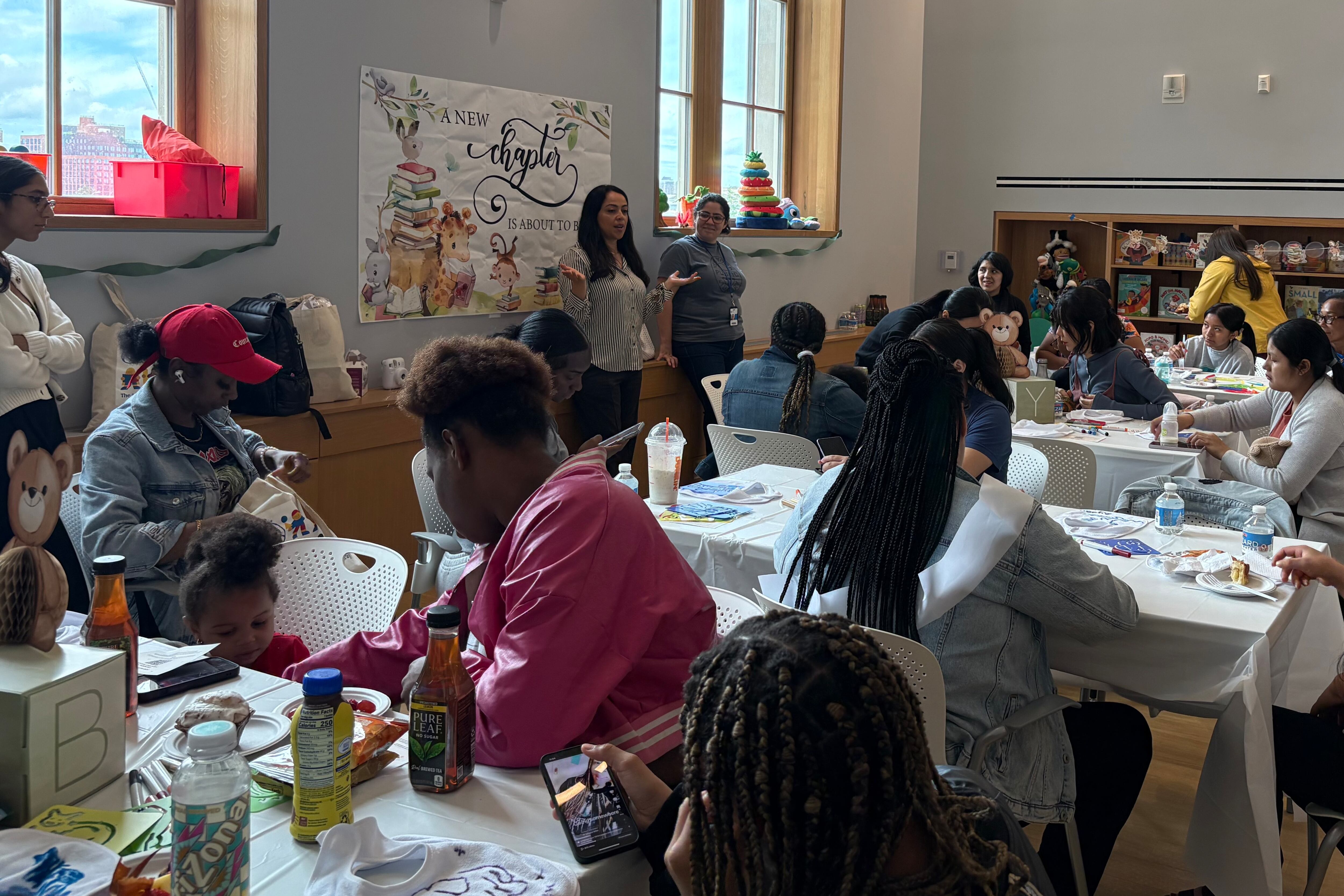
I’ll start here at home in New York City, where Saving Mothers has been giving out “mPOWHER” kits.
These are maternal health kits that contain resources that women need to take charge of their maternal health care and understand their health risks in pregnancy. They also contain cards that are meant to help them talk to their doctors and nurses in the hospitals and clinics so they can make sure that they are seen and heard.
We know that racial disparity in maternal health is very high here in New York City. So these kits are specifically aimed toward addressing racism and disparity, making sure women can advocate for themselves, get their needs met, and frame their questions in a way that they can get quick answers and thorough answers.
The kits have these resources, including a blood-pressure cuff, a Fitbit, some venodyne stockings to address blood clots. They target the top causes of maternal death here in New York City, that’s where we focused the kit.
These kits cost about $125 because they include a lot of nice resources, like the Fitbit, the blood-pressure cuff, a beautiful diaper bag for the mother, and some other giveaways. They are nice kits that we put together, that we do by hand, that we have our teams pack.
The goal of the kit was to improve maternal health and improve their odds in pregnancy. We give it out to the women, and we asked for feedback. And one mom I remember, and this was an “aha” moment for me: She opened the kit, she looked at all the resources, and we asked her about her feedback, like, how did she think that the kit was helpful? And she said, “When I opened this kit, I just started crying, because no one has ever given me anything so beautiful and so valuable. And I never thought that I deserve something so valuable.”
That was her feedback. It was an “aha” moment for me as a doctor, as an OB-GYN, because I’m thinking she’s going to give me feedback about how she used the blood-pressure cuff, or how she used the resources. But she was so touched by the fact that someone packed this kit for her and that it had valuable contents – it had a Fitbit, it had things that she knew had some value – and she just loved it so much.
She said, “I brought my mPOWHER kit everywhere. I brought it to every appointment. I did everything that was in it. I felt so lucky to have such a valuable kit.” I thought that was really, really interesting and really telling about how mothers, especially underserved mothers, those who live in shelters, or in areas of the city where they don’t have a lot of access, how much they truly do value this. She could see that we put a lot of thought and effort into it, too. We put little handwritten notes in it, like “You can do this.” We have a lot of inspirational messaging that we include.
Through the feedback that the mothers in New York have given us, we’ve also added a mental health component to the kit. Now the kit has a journal, and that journal has inspirational words and stories for mothers along the lines of “You are valuable. You are important. You are amazing. You can complete this pregnancy, have a baby.” We have inspirational words to get them through pregnancy and postpartum, as well.
That one helped us understand the mental health piece, which I think is something that needs more attention. Now our $125 kit includes that. It includes a mental health card and a wellness card and a journal, and it actually incorporates a lot of the feedback that we got from our mothers and the focus groups.
I’ve learned other things from those focus groups, too, like that blood-pressure cuff that we give women – the woman doesn’t just use it for herself in pregnancy. It’s actually become a family unifying thing. They do everyone’s blood pressure, the in-laws come over, the parents come over. Everyone’s getting their blood pressure checked now, and a lot of these families are larger. That’s also a really great downstream effect of habit, giving people resources and making sure they know how to use them.
These are low-cost, high-impact kits, the “mPOWHER” kits that we’ve used in New York. But we have another kit, probably our longest-standing kit that we created when we started Saving Mothers in 2009 – the clean, safe birth kit.
In Africa, women must bring own birthing supplies to hospital
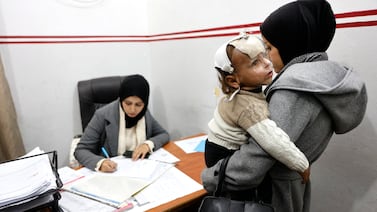
What I have learned about birth in many of our countries that we’ve served in many parts of Africa, specifically many of the hospitals there, is that mothers, when they want to deliver, they cannot come into the hospital, even a major hospital in a big city, like in rural West Pokot, Kenya, without bringing their own birth supplies.
A laboring woman will come to the hospital, and she will be turned away for delivery because she doesn’t have her clean birth supplies, like cord clamps, scissors to cut the umbilical cord, gloves for the doctor or nurse, a clean surface, soap – some of these basic tools that women and their families in very poor, very underserved regions of the world, have to go and find and purchase and come back with.
I didn’t realize when we first created the clean birth kit that the hospitals also needed the resources, that women were actually being asked to bring their own clean birth kit. That was an “aha” moment.
The clean birth kit was meant for the over 80% of women that deliver babies at home in most regions of the world. In most of the world, there aren’t a lot of trained OB-GYNs. There are whole countries that have a handful of trained OB-GYNs. Back when we were working in Liberia years ago, 2009, 2010, there were like three. The vast majority of women around the world are being delivered by birth attendants or midwives with varying levels of training. Some places they have some training; other places, not as much.
They’re called anything from traditional birth attendants to midwives. But they lack training, and obviously they’re not surgically trained – any of them – to be able to deal with urgent, emergent and C-section type delivery. So these clean birth kits were meant to be a resource for women at home, so that we could promote sanitary birth, so we could lower the risk of infection to the newborn. So that the mother had a provider that was using gloves. So that there was a clean surface. So that the attendant washes their hands, at least with Purell, even if there was no running water.
Our safe birth kit cost $15, and we’ve sent tens of thousands of these kits around the world since we started. They go everywhere, from clinics, directly to community health workers and birth attendants, especially in the areas where we train them, like Guatemala and Kenya. Then we empower them with the kits, as well. It’s been really amazing to see how much these kits are needed everywhere.
The $15 includes shipping. We bundle that into the cost because we want them to be accessible and low cost. Our big goal is always to make all of our things low cost. It’s about creating things and streamlining programming so that the highest number of women have access, so the cost is always important.
People need our kits everywhere. They need them, based on the culture, the circumstance, the issues that bring the highest risk of maternal death. Those causes are different in different communities. But the need is the same: for all women, everywhere, to have a safe, clean birth.
Dr. Taraneh Shirazian is the founder and president of Saving Mothers, a 501(c)3 non-profit organization founded in 2009. Saving Mothers is dedicated to eradicating preventable maternal deaths and birth-related complications in the developing world. She is also a practicing gynecologic surgeon and associate professor at NYU Langone Medical Center and director of NYU Langone’s Center for Fibroid Care.
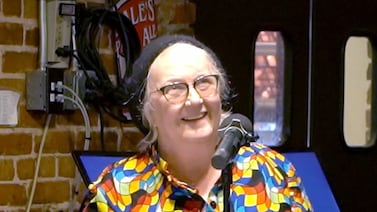
Her story was told at Healthbeat’s event by Re Perry, program coordinator for Saving Mothers who earned her MPH at NYU.