This story was part of Healthbeat’s live storytelling event, “Aha Moments in Public Health,” held Nov. 3 at Manuel’s Tavern in Atlanta. Watch the full show here. Sign up to receive Healthbeat’s free Atlanta newsletter here.
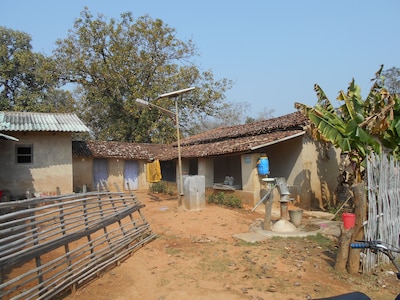
In 2016 and 2017, I worked at a hospital and community health program in rural eastern India. That revolutionized my view of what health care could be like.
Everything in the system was geared to serve the patient: Signs over offices and paperwork included pictograms for the mostly illiterate people we served. This proved so effective that many of our village health workers successfully completed their work without ever learning to read.
We economized on everything, using mosquito nets for hernia repairs and washing gloves with bleach so they could be reused.
We didn’t have much – and it was by no means perfect – but what we did have was care; respect; compassion – all built into a community health system that actually served its community.
When I came back to Atlanta, I worked in hospital emergency rooms. Here, we had state-of-the-art equipment, highly trained staff, air-conditioning, and gloves galore. But something felt different to me. Patients and doctors spoke English, but talked right past one another. Doctors were scolded for taking too long with patients. Psychiatric patients and others lingered for days because we could find no place to send them.
And worst of all, we were all rowing in different directions. The doctors answered to one authority; the nurses to another; social workers and chaplains appeared and then disappeared; and no one seemed to care about the environmental services team, who worked so hard to keep the hospital clean.
I was disheartened that my hometown, a public health capital, couldn’t provide the kind of compassionate care I saw being provided in rural India. Yes, our patients were sick, but so was our system. For more than a year, I took all this in and bottled up my emotions, mostly, my anger and sadness.
Finally, I had an aha moment: I put down those bitter emotions and picked up my pen, pledging to write about what I knew. That was more than five years ago, and while I can’t claim to have fixed our broken system, I am proud to to be here, still writing about health in my hometown, learning from all of you, and carrying with me the compassion and can-do spirit that I learned thousands of miles away in rural India.
Born and raised in Atlanta, Rebecca Grapevine is back home as a Healthbeat local reporter. She has a Ph.D. in history from the University of Michigan and in her travels learned to speak Hindi (nearly) fluently. Read her Healthbeat work here. Contact Rebecca at rgrapevine@healthbeat.org.