This story was part of Healthbeat’s live storytelling event, “Aha Moments in Public Health,” held Nov. 3 at Manuel’s Tavern in Atlanta. Watch the full show here. Sign up to receive Healthbeat’s free Atlanta newsletter here.
My story is about health care deserts in the heart of the Balkans. It involves periods, toilets, and a mobile clinic.
Health care desert number one: menstruation.
It was 2019, and I was serving as the British Ambassador to North Macedonia. The country’s Institute of Public Health had released a survey that showed over 90% of girls in rural areas in North Macedonia miss school during their period due to poor menstrual hygiene facilities at schools.
Girls were missing school not just because they couldn’t afford sanitary products, but also because the school toilets didn’t have doors. Doors! It was frankly eye opening to see that in a European country.
After this survey was released, we, the United Kingdom, partnered with a regional government to fix a small number of toilets and fund free menstrual products in school bathrooms. We talked to some journalists about the project, and that helped get information out about the problem and the impact on education.
It was a small campaign. It was not expensive to the UK. But the ripple effect was amazing. Here’s what happened next:
- The World Bank supported a project to refurbish toilets across primary schools.
- The central government offered free menstrual products for high school girls.
- The government dropped the value-added tax from period products nationwide.
Because of all of these steps, girls in rural areas were able to go to school when they had their periods. That moment — watching a policy shift born from a box of pads and a few well-placed headlines — it was stunning. And it made me think, what else can the UK do here?
Which brings me to health care desert number two: mammograms and pap smears.
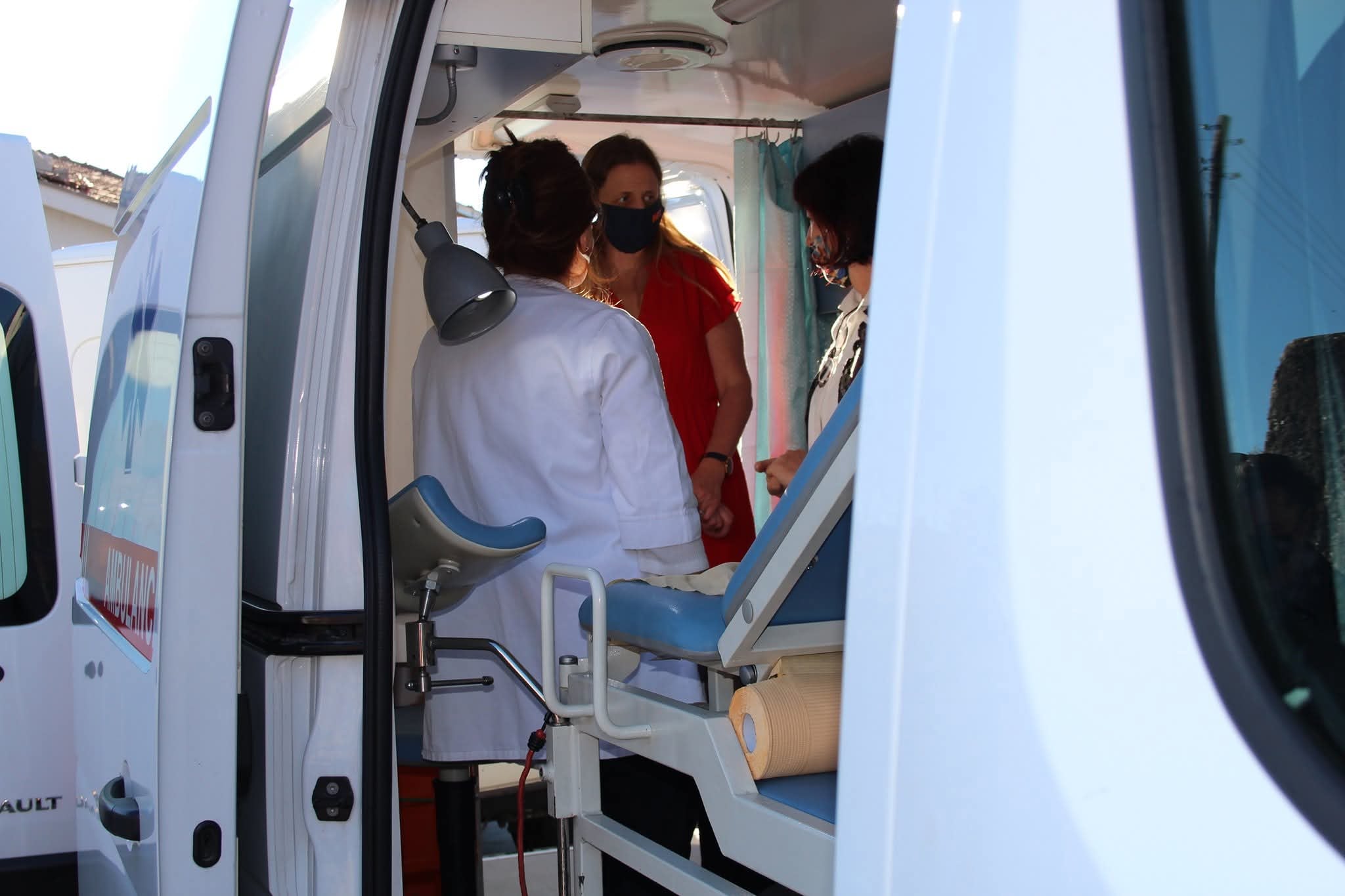
The UK funded a mobile gynecology unit — an ambulance retrofitted to deliver exams in rural villages. It was a lifeline, especially during 2020 pandemic lockdowns, when women were trapped at home, often in unsafe situations.
The unit reached Roma communities and others who had never seen a doctor. It was a fantastic program. I was really proud of it. But something gnawed at me.
There were no records. No continuity. The nurses remembered faces, the doctors remembered stories, but the system remembered nothing. It was health care by memory, not by data. And in a pandemic, memory isn’t enough.
Local health care workers spoke about the challenge of serving a community without having background knowledge of who people were, what they needed, and even what they understood.
Both of these examples highlight the problem of health care deserts, which are a global problem. And as our mobile clinic demonstrates, it’s not just about providing direct access, but also about the need for better tools. Maybe this is where artificial intelligence could be useful.
An AI future does seem a little scary at times. But when it comes to health care, AI could change lives for the better. It is an area that the UK and the United States are collaborating on through our new technology partnership.
Imagine mobile units equipped not just with medical tools, but with smart systems that build records, track needs, and flag risks. Imagine AI helping us understand those farflung communities in rural locations. It could go a long way in predicting future outbreaks, tailoring care, and building trust.
It won’t replace the nurse who remembers every patient’s story. But it could mean that the next time we roll into a village, we’re not starting from scratch. We’re building on knowledge, not just goodwill.
And maybe we’ll remember that sometimes diplomacy starts with a door on a toilet — and ends with a country changing its laws.
Rachel Galloway is the British Consul General to the Southeast United States. She arrived in July 2022 having previously served as the UK’s Ambassador to the Republic of North Macedonia where she played a pivotal role in strengthening diplomatic relations in the region, including the country’s accession to NATO. Her career spans various positions, from working in Brussels at the EU, to leading a team working on Darfur policy, to a posting in Helmand Province in Afghanistan to a stint at the British Embassy in Washington.