Public health, explained: Sign up to receive Healthbeat’s free Atlanta newsletter here.
Heading into the fifth U.S. winter of Covid-19, an Emory University lab has found the presence — or absence — of a particular antibody in the nose of patients can predict how severe their illness would be.
The presence of the antibody, called anti-interferon alpha, indicated the infection would likely be limited to mild symptoms like coughing or sore throats, according to a study published earlier this month in Science Translational Medicine. Those without the antibodies in their nostrils often experienced shortness of breath, indicative of a more severe case of Covid.
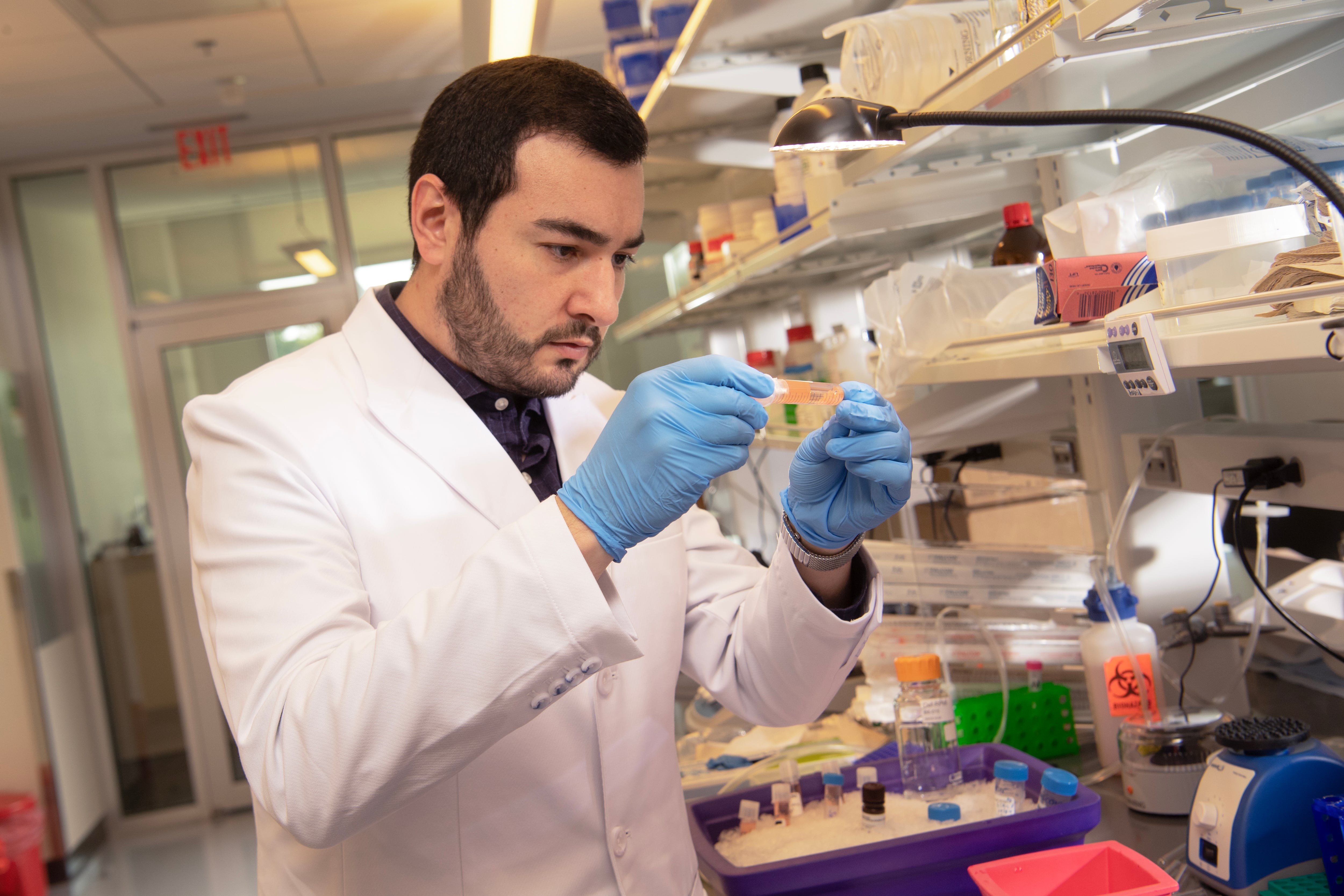
Emory and University of California San Francisco researchers developed diagnostic technology to test for the antibodies in nasal swabs for the disease, like those found in over-the-counter tests. Eliver Ghosn, an Emory Vaccine Center researcher and the study’s senior author, said if clinicians could use a commercialized version of this technology with the standard tubular tests, they may be able to determine which patients need more care.
“You have a lot of biological waste,” he said. “Because those tubes that we collect [and] the nasal swab, they go as biological waste. Our proposal is, why not collect that waste?”
Previous research suggested the presence of anti-interferon alpha antibodies could have the opposite effect, predicting that someone’s Covid infection symptoms would be severe or fatal. But those studies examined the biomarkers in blood samples — not mucus samples like Ghosn and his colleagues tested.
To Ghosn, the study results resolve a contradiction of what scientists know these antibodies can do and how they interact with Covid.
“We never looked at the nose,” he said. “And the nose was the key, right? That’s where the virus goes first.”
The antibodies keep the virus from flourishing in petri-dish tests, Ghosn said. But his team doesn’t claim the association between the nasal antibodies and quick infection recovery is causal, and he said more research is needed to better determine that relationship.
If in the next two to three months his lab finds a pharmaceutical company that could develop a commercial product using this technology, Ghosn said clinicians might be able to use such tests by this winter. But it has not yet signed an agreement to bring a product to market.
Dr. Greg Martin, Emory’s director of pulmonary and critical care medicine, said the technology Ghosn’s lab developed and their research could bring clinicians insights beyond general risk factors as to what someone’s Covid-19 infection will be like. With that knowledge, health care workers can make better decisions as to who should be prescribed treatments like Paxlovid and how quickly they should be connected to care.
“This you could easily see as an important next step for particularly all these people in the gray zone, where you’re not sure the likelihood of them having a more severe course of disease,” he said.
Although the virus’ death rate has decreased significantly since 2020, it has contributed to the death of about 43,000 Americans and over 1,200 Georgians in 2024. That’s why Martin said innovations like those developed in Ghosn’s lab and new over-the-counter tests that can detect both flu and Covid-19 are important for keeping families healthy.
Last week at the Georgia Department of Public Health’s board meeting, the state’s epidemiologist said she expected the risk of Covid-19 death to be lower this winter than previous seasons. But that risk could be exacerbated if hundreds of thousands of uninsured Georgians don’t have access to updated vaccines.
Martin noted that recent seasonal data from the Southern Hemisphere can help scientists estimate what the U.S. flu season will be like. Because countries in South America and Oceania had mild respiratory disease winters, that may indicate Georgia could expect a similar situation.
But that could change if people let their guard down and forgo testing and vaccination, especially as families gather for the winter holidays.
“Which is why we still advocate for people to be attentive,” Martin said.
Allen Siegler is a reporter covering public health in Atlanta for Healthbeat. Contact Allen at asiegler@healthbeat.org.