Public health, explained: Sign up to receive Healthbeat’s free national newsletter here.
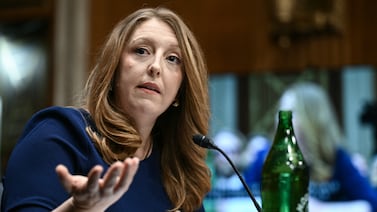
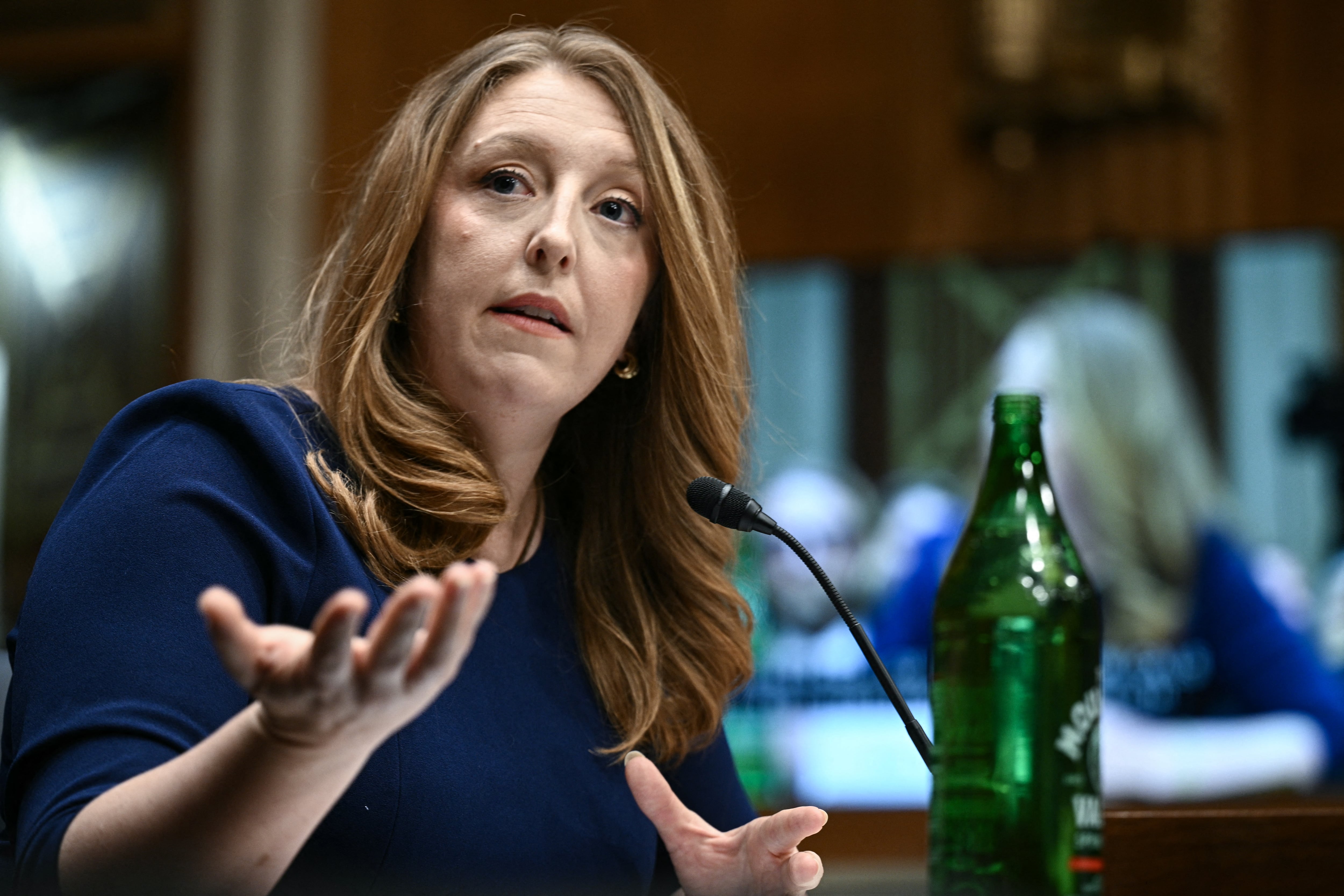
President Donald Trump’s pick for U.S. surgeon general defended her credentials to serve as the nation’s next top doctor during a Senate committee hearing last week.
Dr. Casey Means, a wellness entrepreneur and best-selling author, received her bachelor’s degree in human biology and her medical degree from Stanford University. She then began her residency in otolaryngology, which involves head and neck surgery, at the Oregon Health and Science University in Portland.
But Means quit her medical residency training in the final year of the five-year program. Her medical license is listed as inactive.
A Healthbeat review of the medical backgrounds of every surgeon general confirmed during the past 50 years shows all completed a medical residency and many also had significant leadership experience in academia or government service before becoming surgeon general.
Some have been confirmed despite questions about their credentials. They include the nation’s 17th surgeon general, Dr. Richard Carmona, who took eight years to become board certified for general surgery. Dr. C. Everett Koop, the nation’s high-profile 13th surgeon general, was technically too old for the role, until the rules were changed for him.
As surgeon general, Means would lead the U.S. Public Health Service Commissioned Corps, whose 6,500 members provide health and medical services throughout the federal government. It is one of the nation’s eight uniformed services.
Means has said she resigned her residency “to focus on reforming the ‘sick care’ paradigm in American health care.” The chairman of the otolaryngology department, where Means quit her residency, told Vanity Fair last year that Means left because she found surgical work “too stressful.”
According to the American Medical Association, a residency is a “crucial phase in a physician’s training.” The length of a residency program’s supervised, on-the-job clinical training can range from three to seven years, depending on the medical specialty.
Means has noted she would bring other experiences to the job of surgeon general, including her work as an entrepreneur and health communicator
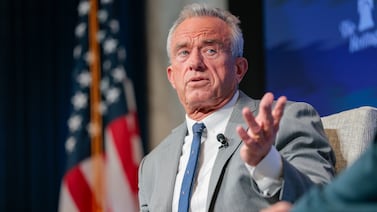
In 2019, Means co-founded the wellness company Levels, which sells health improvement memberships that include the use of continuous glucose monitors. In 2024, she published the book “Good Energy: The Surprising Connection Between Metabolism and Limitless Health” with her brother, Calley Means, who is an adviser to Health and Human Services Secretary Robert F. Kennedy Jr.
“My professional history is a feature, it’s not a bug,” Means told senators during last week’s hearing. “I have had a unique history that has merged entrepreneurship, public health advocacy, faculty course direction at Stanford University, as well as being an editor of a medical journal and a biomedical researcher. And in these complex times for American health care, that type of multidisciplinary history is going to be extremely valuable for the American people.”
She compared her credentials to past surgeons general.
“I practiced medicine. I owned my own medical practice, and I’ve seen thousands of patients, and I did over four years of surgical training, which is more than many of our past surgeon generals completed who did medical specialties,” she testified.
Here is the medical background for each of the 10 surgeon generals whose nominations have been confirmed during the past 50 years:
Julius B. Richmond – 12th surgeon general
Service: 1977-81
Nominated by: President Jimmy Carter
Education: B.S., University of Illinois at Urbana; M.S. in physiology and MD, Illinois’s College of Medicine in Chicago
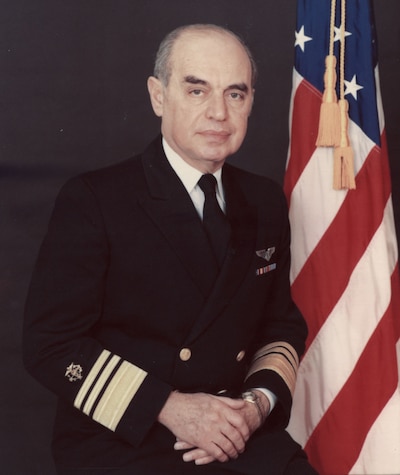
Medical background before nomination: After medical school, Richmond had a rotating internship at Cook County Hospital in Chicago, according to his official surgeon general biography. He then began two pediatrics residencies, with the first at Chicago’s Municipal Contagious Disease Hospital and the second – which was interrupted by World War II – at Cook County Hospital. During World War II, he served as a flight surgeon with the Air Force’s Flying Training Command. After the war, he completed his residency and became a professor, holding various academic positions at the State University of New York Upstate Medical Center in Syracuse, where he became the dean. Over the years, he examined how poverty impacted the psychosocial development of children, becoming the first director of Head Start in 1965. At the time Carter nominated Richmond for surgeon general, he was a professor at Harvard Medical School, where he held multiple leadership positions, including serving as chief of psychiatry at Children’s Hospital Medical Center in Boston.
C. Everett Koop – 13th surgeon general
Service: 1982-89
Nominated by: President Ronald Reagan
Education: B.A., Dartmouth College; MD, Cornell Medical School; D.Sc., University of Pennsylvania Graduate School of Medicine
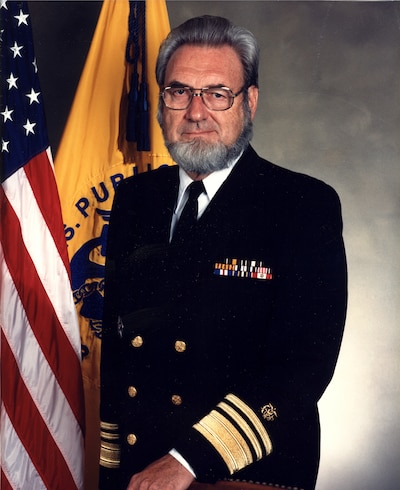
Medical background before nomination: After a one-year internship at Pennsylvania Hospital in Philadelphia, Koop did further postgraduate training at the University of Pennsylvania School of Medicine, Boston Children’s Hospital, and the University of Pennsylvania Graduate School of Medicine. Koop’s surgical residency training at the University of Pennsylvania Hospital, which began in 1942, was allowed to be completed in half the usual nine years because of the demand for surgeons during World War II and his skill, according to his National Library of Medicine biography. He was surgeon-in-chief at the Children’s Hospital of Philadelphia from 1948 to 1981, where he established the nation’s first neonatal intensive care nursery and helped establish the American Academy of Pediatric Surgeons, according to his official surgeon general biography. In 1981, Reagan initially appointed Koop as deputy assistant secretary of health “with the promise that he would be nominated as surgeon general.”
Of note: Koop’s nomination was delayed because of rules that required the surgeon general to be younger than 64 – and he was 64 at the time. The rules were eventually changed, according to a 1981 article in CQ Almanac. He then faced significant opposition for his anti-abortion views and opposition to certain birth control methods. The American Public Health Association and the National Organization for Women were among groups opposing his nomination, CQ Almanac reported.
Antonia C. Novello – 14th surgeon general
Service: 1990-93
Nominated by: President George H.W. Bush
Education: B.S., University of Puerto Rico at Rio Piedras; MD, University of Puerto Rico School of Medicine at San Juan; MPH, Johns Hopkins University
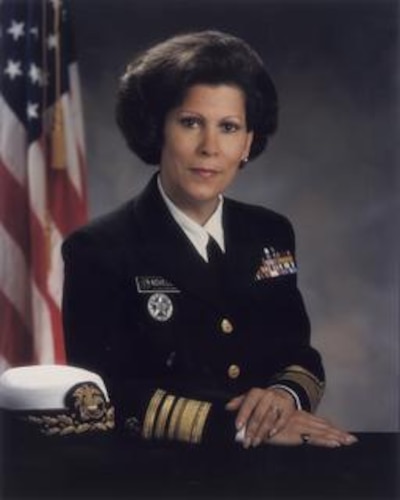
Medical background before nomination: After medical school, Novello completed an internship and residency in nephrology at the University of Michigan Medical Center in Ann Arbor, where she also did a fellowship in the Department of Internal Medicine, according to her official surgeon general biography. She did an additional fellowship in the Department of Pediatrics at Georgetown University before working in a private pediatrics practice for a few years. In 1978, she joined the U.S. Public Health Service Commissioned Corps and held various positions at the National Institutes of Health. By 1986, she had become deputy director of the National Institute of Child Health and Human Development and began working on pediatric AIDS.
Of note: Novello was the first woman and first Hispanic surgeon general.
M. Joycelyn Elders – 15th surgeon general
Service: 1993-94
Nominated by: President Bill Clinton
Education: B.A. in biology, Philander Smith College; MD, University of Arkansas Medical School; M.S. in biochemistry, University of Arkansas
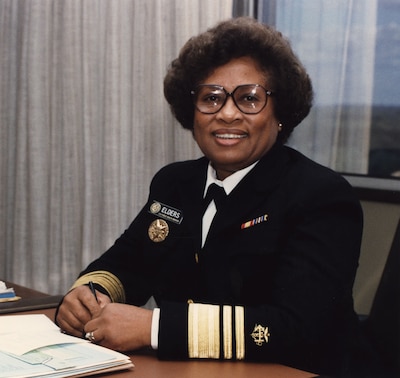
Medical background before nomination: Before going to medical school, Elders worked as a nurse’s aid in a Veterans Administration hospital, then spent three years in the Army, where she received training as a physical therapist. She then got her medical degree, completed an internship at the University of Minnesota Hospital and a pediatrics residency at the University of Arkansas Medical Center, where she went on to serve as a professor with a focus on childhood sexual development. In 1987, Clinton – then governor of Arkansas – appointed Elders to be director of the Arkansas Department of Health. The year before she became surgeon general, she was elected president of the Association of State and Territorial Health Officers.
Of note: Elders, who was the first Black surgeon general, advocated for sex education in schools. She was forced to resign because of comments she made relating to masturbation being a less risky form of sex that “perhaps should be taught.” She made the comments following a World AIDS Day speech.
David Satcher – 16th surgeon general
Service: 1998-2002
Nominated by: President Bill Clinton
Education: BS, Morehouse College; MD, PhD, Case Western Reserve University
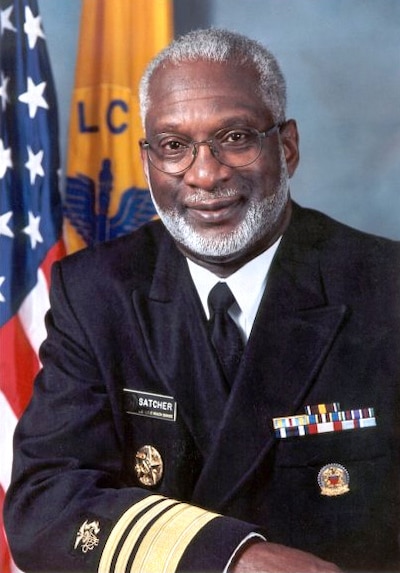
Medical background before nomination: After receiving his medical degree, Satcher received his residency and fellowship training at Strong Memorial Hospital, University of Rochester, UCLA, and King-Drew Medical Center in Los Angeles, according to his official surgeon general biography. Satcher was a professor and chairman of the Department of Community Medicine and Family Practice at the Morehouse School of Medicine in Atlanta, then served as president of Meharry Medical College from 1982 to 1993 before becoming director of the Centers for Disease Control and Prevention in November 1993. Satcher was CDC director when Clinton announced his nomination for surgeon general in September 1997. Before becoming surgeon general, Satcher had received high-profile professional honors, including being elected to the Institute of Medicine of the National Academy of Sciences in 1986.
Of note: Although initially nominated by Clinton, Satcher served out a four-year term that ended during the administration of President George W. Bush.
Richard H. Carmona – 17th surgeon general
Service: 2002-06
Nominated by: President George W. Bush
Education: Associate of arts degree, City University of New York; B.S. and MD University of California, San Francisco; MPH, University of Arizona
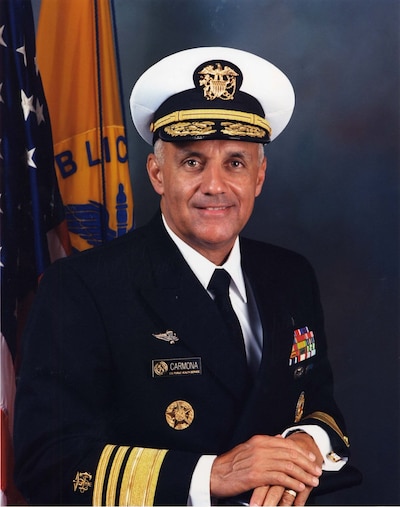
Medical background before nomination: After medical school, Carmona completed a surgical residency at the University of California, San Francisco, and also a National Institutes of Health-sponsored fellowship in trauma, burns, and critical care, according to his official surgeon general biography. He had served as chairman of the State of Arizona Southern Regional Emergency Medical System; as a surgeon and deputy sheriff for the Pima County Sheriff’s Department; and as a professor of surgery, public health and family, and community medicine at the University of Arizona.
Of note: After his nomination, the Los Angeles Times reported that it took Carmona eight years to receive his board certification for general surgery after he twice failed the exam. During Carmona’s Senate confirmation hearing in July 2002, U.S. Sen. Edward Kennedy, the committee’s chair, questioned Carmona about this. “There was never any issue with my competence,” Carmona testified. “I passed the required test for the American Board of Surgery in the time allotted by the American Board of Surgery. That is a voluntary process. No one has to undergo these testing. Most of us do it on a voluntary basis. The Board of Surgery has a window of opportunity that you can apply and take the test. I did so, and passed within the time.” And Carmona added: “As far as my competency or the capacity as a medical professional, a single test is probably not a very good indication of anybody’s specific knowledge. I would say that probably my couple of decades of practice would be a far better indicator of my level of competence.” At the conclusion of the hearing, Kennedy told Carmona: “I am confident you will be confirmed.”
Regina M. Benjamin – 18th surgeon general
Service: 2009-13
Nominated by: President Barack Obama
Education: B.S., Xavier University of Louisiana; MD, University of Alabama at Birmingham; MBA, Tulane University
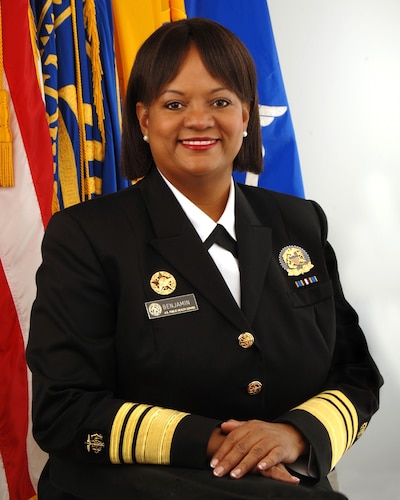
Medical background before nomination: After receiving her medical degree, Benjamin completed her residency in family medicine at the Medical Center of Central Georgia in Macon. In 1990, she founded the Bayou La Batre Rural Health Clinic in Bayou La Batre, Ala., where her work received national attention and awards for continuing to treat patients in the aftermath of Hurricanes Georges in 1998 and Katrina in 2005. In 2008, the year before her nomination, Benjamin was the recipient of a MacArthur Foundation Fellowship, a prestigious honor sometimes referred to as the “genius grant.” The foundation cited her work as “a rural family physician forging an inspiring model of compassionate and effective medical care in one of the most underserved regions of the United States.” When she became president of Alabama’s state medical association in 2002, she also became the first Black woman to be president of a state medical society, according to her official surgeon general biography. She also had served as associate dean for rural health at the University of South Alabama College of Medicine and was a past-chair of the Federation of State Medical Boards of the United States.
Of note: While the Senate confirmed Benjamin’s nomination on a voice vote, some raised concerns about her paid service on an advisory board for the fast food company Burger King, which said her work involved nutrition advice. Other critics focused on her weight.
Vivek H. Murthy – 19th and 21st surgeon general
Service as 19th Surgeon General: 2014-17
Nominated by: President Barack Obama
Service as 21st Surgeon General: 2021-25
Nominated by: President Joe Biden
Education: B.A., Harvard University; MD, MBA, Yale University
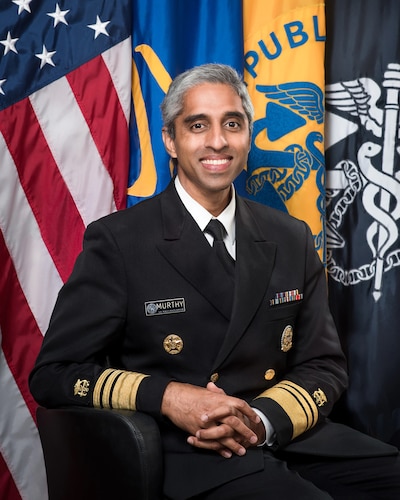
Medical background before nomination: After finishing his medical degree and master’s in business administration, Murthy completed his internal medicine residency training at Brigham and Women’s Hospital and Harvard Medical School, then joined the school’s faculty as an internal medicine clinician-educator, according to his official surgeon general biography and personal website. He was a co-founder of VISIONS, an HIV/AIDS education program in India and the United States; and he also was a co-founder of the Swasthya project, which trained women in rural India to be health providers and trainers. He was the co-founder and chair of a software technology company, TrialNetworks, that provides tools for clinical trials.
Of note: Murthy’s confirmation was delayed for more than a year after the National Rifle Association and others promoted posts by Murthy on social media in which he said guns were a health issue. Murthy also drew opposition from Republicans, who cast him as a politically connected supporter of Obama and the administration’s Affordable Care Act. Murthy’s experience prior to his first confirmation hearing included being a co-founder of a nonprofit group called Doctors for Obama, which later became Doctors for America. When he was confirmed for his first term as surgeon general in December 2014, Murthy, who was then 37, became the youngest person appointed to the position and the first person of Indian descent to hold the position.
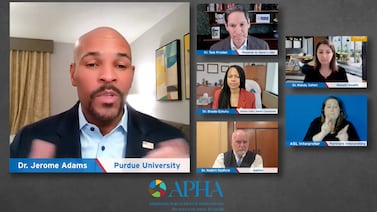
Jerome M. Adams – 20th surgeon general
Service: 2017–21
Nominated by: President Donald Trump (first term)
Education: Bachelor’s degrees in biochemistry and psychology, University of Maryland, Baltimore County; MPH, University of California at Berkeley; MD, Indiana University School of Medicine
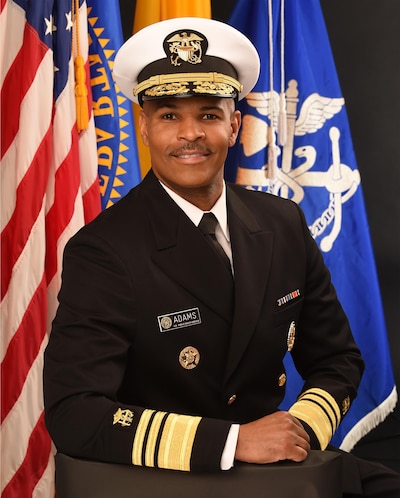
Medical background before nomination: After receiving his medical degree, Adams completed an internship at St. Vincent’s Hospital in Indianapolis and a residency in anesthesiology at Indiana University. His past experience included working as a general anesthesiologist at Ball Memorial Hospital in Muncie, Ind., as a physician rapid responder at Indianapolis Orthopaedic Hospital, as an assistant professor of clinical anesthesiology at Indiana University School of Medicine, and as a staff anesthesiologist at Eskenazi Health. In 2014, then Indiana Gov. Mike Pence, who would later become Trump’s first vice president, named Adams to be commissioner of the Indiana State Department of Health.
Of note: Unlike Trump’s current surgeon general nominee’s hearing last week, Adams’ confirmation hearing in 2017 was described in media accounts as being “mostly collegial” and “largely friendly.”
Alison Young is Healthbeat’s senior national reporter. You can reach her at ayoung@healthbeat.org or through the messaging app Signal at alisonyoungreports.48