Public health, explained: Sign up to receive Healthbeat’s Global Checkup in your inbox a day early.
Hello from Nairobi.
This week we’ve got interesting news about AI therapy, new gene-editing medicines, and other topics … but before that, I have to mention that TIME magazine just published its 100 most influential people in global health. It’s great for a laugh!
The list includes Chris Hemsworth, for being exceptionally good looking while talking about Alzheimer’s, and some very stilted wordsmithing around Robert F. Kennedy Jr., who is labeled a “Titan of Health.” Conspicuously absent are any of the heroes who responded to last year’s Ebola outbreak. But hey, there’s always next year.
My name is William Herkewitz, and I’m a journalist based in Nairobi, Kenya. This is the Global Health Checkup, where I highlight some of the week’s most important stories on outbreaks, medicine, science, and survival from around the world.
With that, as we say in Swahili: karibu katika habari — welcome to the news.
Your therapist, ChatGPT
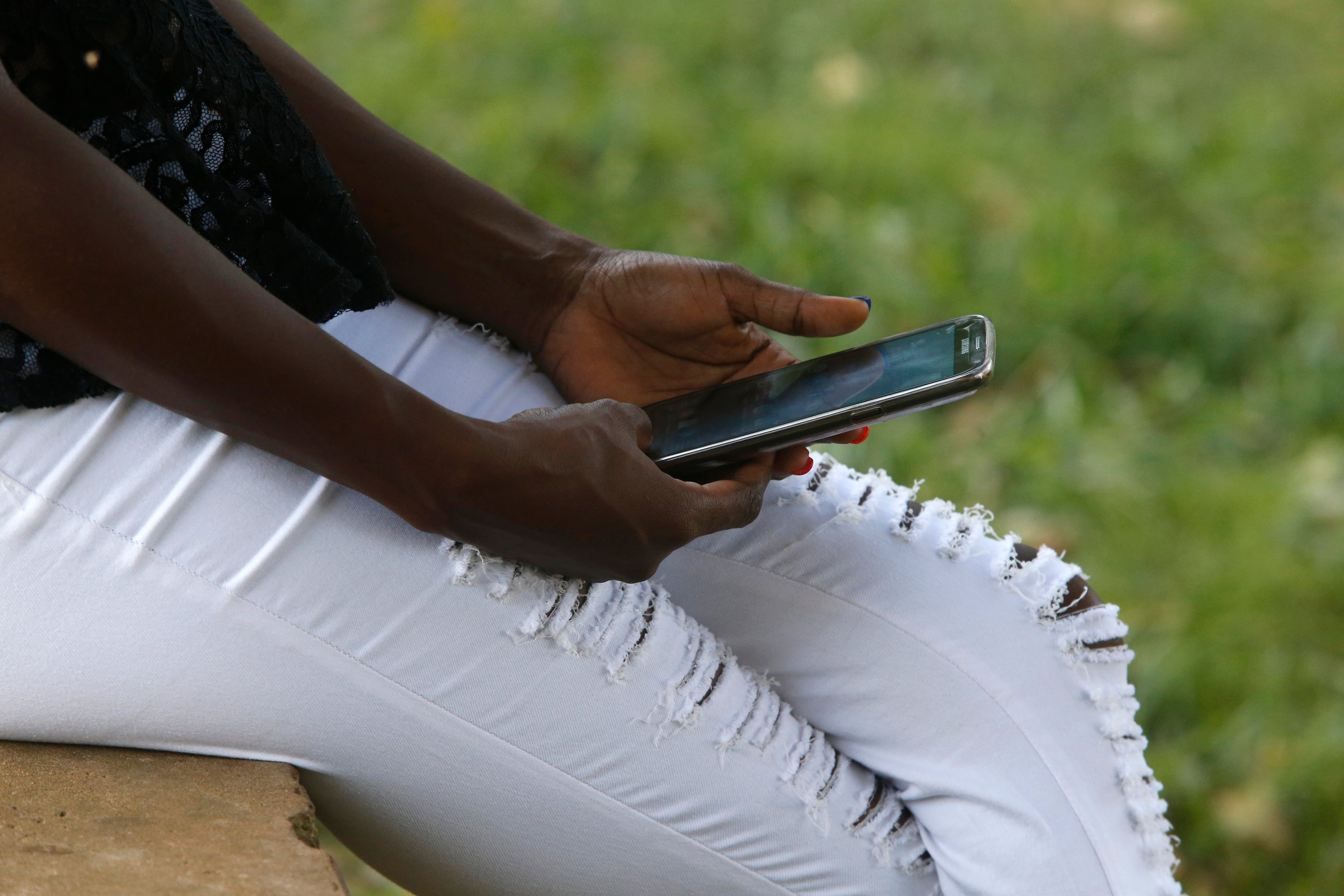
The Guardian just published a fascinating article on the global use of artificial intelligence chatbots as therapy tools, featuring vignettes from Nigeria.
As the story states, “AI platforms offering first-line mental health support have proliferated over the past year.” And for Nigeria in particular, there is an obvious appeal in easing access to mental health care in a country with just “262 psychiatrists for 240 million people” (!).
The article starts with a very compelling story about a woman named Joy Adeboye in the capital, Abuja, who turns to an AI chatbot out of desperation and need. The result? “For the first time in months, Adeboye says, she felt less alone.”
Still, in most countries regulation on this use of AI is basically nonexistent, and that makes several basic, open questions all the more pertinent: Do these tools actually work as therapy, are they safe, and should they be trusted with vulnerable people?
I reached out to Briana Vecchione, a researcher who studies this topic at the Data & Society Research Institute, a nonprofit focused on social implications of automation and AI. Vecchione provided some striking insight on both the history of chatbots for therapy (which, surprisingly, dates back to the 1960s), and how to think about the tension between potential harm and help.
We covered much more than I can fit here, but luckily for you, she’s moderating a talk on this very topic on Feb. 26.
On how or if these tools actually work: Vecchione was careful to balance where the research stands (it’s such a new technology that the data are still unclear on “whether chatbots are as effective as talk therapy,” she said) with what many users report their lived experience to be. “We have definitely seen that people feel some sort of relief after using these systems,” she said.
“But you need to really be careful about what forms of other care you’re displacing,” and ultimately, she says, “I do not think it’s a replacement for therapy."
When it comes to potential harms, she points to the incentive structures of many of the companies making these AI systems. “These [tools] are typically optimized for engagement. They’re not typically optimized for helping you close the loop and step away, which is actually bad for the companies. They want you to come back,” she said. In Vecchione’s research, she hears users frequently say they “feel unsure when to stop,” or at worse, “feel overly dependent on these systems,” and feel significant shame about that dependence.
Another potential harm is privacy, which I acknowledged to Vecchione I’ve always thought of as an abstract or general concern. But Vecchione points out that the risk here is extremely acute. “These things have no fiduciary duty in the same way that therapists do. They are not protected by HIPAA,” the U.S. Health Insurance Portability and Accountability Act, which protects a patient’s sensitive information, or patient confidentiality, she said. This means that in many countries (the United States included) there is nothing stopping an AI therapy tool from immediately selling your data to a prospective health insurer.
Still, with the prospect of AI therapy filling what would otherwise be an incredible void in many developing countries, Vecchione is clear that “these kinds of supplements to care can be useful,” she said. “Is it better than nothing? Maybe, if it’s being used responsibly.”
What’s the takeaway? At least in the United States, Vecchione and her colleagues have authored a detailed public comment to the U.S. Food and Drug Administration on their recommendations for the future of these technologies. They argue that relevant AI systems should fall within the FDA’s “medical-device” definition for mental health, should be treated as such, and regulated as such.
Diet, exercise, and… gene editing?
We cover a lot of tropical diseases on the Checkup. But zoom out to the global picture, and the biggest threat to health is far less exotic. Heart disease remains the top killer.
As a disease, it’s a bit of a catch-all. A range of factors like high blood pressure, diet, and smoking can damage the heart in different ways. But all told, the major risk for heart disease lies in high LDL cholesterol, which is made by your liver. With too much of this waxy fat, it can build up in blood vessels and block blood flow.
But in what feels like a glimpse of science fiction, clinicians are increasingly experimenting with new gene-editing techniques to reduce LDL cholesterol production, the AP reports. These trials are early, but are showing shocking improvements in patients who did not respond to regular medicines.
How does it work? Basically, a patient is injected with an IV of microscopic fat bubbles, which the liver naturally absorbs from the bloodstream. The trick is that these bubbles are carrying a clever DNA-cutting protein (part of the gene-editing tool CRISPR) along with a short RNA “instruction” that tells it exactly what piece of DNA to cut out.
The clinicians are specifically targeting a gene called ANGPTL3 to edit away, and only in specific cases. In some people this gene goes haywire, and causes an overproduction of “LDL cholesterol and another bad fat, triglycerides.”
It’s a one-time therapy, because when the edited liver cells reproduce … the deleted gene can’t carry onward. These are of course early trials, and the article does a great job couching the caveats.
There are major safety questions to be answered, cautioned Dr. Joseph Wu of Stanford University, who wasn’t involved in either study. CRISPR-based therapies for any disease haven’t been used enough to know long-term safety — and the particles carrying the gene-editing tool can irritate or inflame the liver, he said. Another unknown is whether gene-editing hits only the intended target. That’s why for now, studies largely target people at very high risk.
The who’s who of the next WHO
The World Health Organization director-general’s term does not expire until August 2027, but the race to succeed Tedros Ghebreyesus is already heating up. Nominations formally open in April, and Health Policy Watch is tracking the top contenders circulating in the “rumor mill.”
These include would-bes from the reform-minded Budi Gunadi Sadikin, Indonesia’s minister of health, all the way to Sania Nishtar, the CEO of Gavi.
I’ll be honest, seeing this much speculation so early is a little funny. (The article has some strong “The Bachelor” season premiere vibes.) Still, this is a five-year term that often turns into 10, and is the most important job in global health. So, if we’re being fair, the early speculation is more a la papal conclave than reality TV.
Jokes aside, the job earnestly matters more now than ever. Even beyond the global funding shortfall, the article paints a rough picture of the current state of affairs inside the WHO:
“Internally, the organization is struggling with a 25% cut in staff following the loss of United States support, leading to a low in staff morale. The layoffs, a lack of transparency, sexual abuse scandals, and a fear of retaliation among staff who have raised claims of harassment and damaged trust in the organization’s leadership.”
The real question is, who can right the ship? We will see.
(One last note on the incumbent: It’s too early to assess Ghebreyesus’ tenure. He will be remembered for steering the WHO through Covid and the 2025 wave of austerity. How well did he do? Hard to say. Still, credit where it is due. This week he publicly condemned a controversial U.S.-funded hepatitis drug trial involving newborns in Guinea-Bissau. It is hard to imagine a similar trial within the United States surviving legal/ethical challenges.)
A new polio vaccine
The WHO has cleared a new polio vaccine for global use, Reuters reports.
- Disease breakdown: Polio, or poliomyelitis, is a gut virus that spreads largely through feces. While most infections pass without symptoms, the worst cases can wither limbs or invade the spinal cord to cause paralysis or death. Importantly, the disease can’t hide in animals, and vaccines stop it cold. Although polio is ancient enough to have been carved into Egyptian hieroglyphs, two strains of the virus were eliminated in 1999 and 2020, and only two more remain.
We covered this back in October. Despite a 30% cut to the effort, humanity is on the verge of eliminating this disease altogether. (That would make it only the second disease eradication, after smallpox in 1980.)
As I wrote then, “the last wild strain of the virus (still hanging on in Afghanistan and Pakistan) is now expected to be stopped by 2027,” and a second “strain of the virus that bubbled up from earlier vaccine drives, and which is largely pocketed across the African continent,” is on track for elimination by 2029.
What’s the focus of this new, oral drug? It targets that second variant, the vaccine-derived strain behind the African outbreaks. The key upgrade here is that this new vaccine is far more stable, so it’s less likely to mutate and accidentally seed new outbreaks while we work to stop existing ones.
And it can’t come fast enough.
Last week, Malawi launched a new campaign with about 1.7 million doses of the older oral vaccine, after the second variant showed up in sewage in the country’s second largest city, Blantyre, ABC News reports. (You have to love sewage sampling for both its grossness … and its effectiveness at monitoring hundreds of thousands of people to catch diseases early.)
I’ll see you next week.
William
William Herkewitz is a reporter covering global public health for Healthbeat. He is based in Nairobi. Contact William at wherkewitz@healthbeat.org.