Public health, explained: Sign up to receive Dr. Jay K. Varma’s reports in your inbox a day early.
Hello and welcome to Healthbeat’s weekly report on the stories shaping public health in the United States.
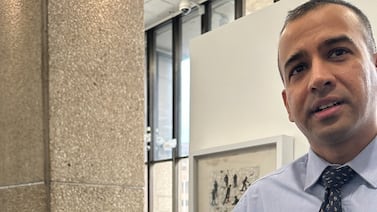
I am Dr. Jay K. Varma, a physician, epidemiologist, and public health expert currently serving as chief medical officer at Fedcap, a national nonprofit focused on economic mobility and well-being for vulnerable communities. The views expressed here are my own.
This week, I’m focusing on one of the hottest topics in U.S. health care: longevity. Much of today’s longevity industry focuses on expensive medical interventions, even though the largest gains in life expectancy have come from public health and social conditions.
Longevity is now a big business
I am increasingly bombarded with advertisements for pills, scans, and tests that can help me live a longer and healthier life. The way these are marketed and the absence of high-quality evidence for their benefit indicate that these ventures are, fundamentally, about creating new lines of business, rather than helping people live longer.
Take a look at the news that the founder of Spotify, Daniel Ek, has founded a new company focused on full-body imaging and will be opening his first clinic for this near my home in New York City. While the price has not yet been announced for this “health check for your future self” (Ek’s words), this company will be competing against other start-ups that charge nearly $4,000 for similar scans.
In the food sector, it seems as if every grocery store, restaurant, or even coffee shop I visit sells items “packed with protein.” Cardiologist Eric Topol and ex-National Institutes of Health nutrition researcher Kevin Hall have written extensively about the lack of evidence for a high-protein diet, arguing that the average American already consumes all the protein that their body can safely use.
One of the people they both have pushed back against is Peter Attia, a physician and best-selling author of a book about longevity. Attia argues that Americans should consume roughly double the standard recommended daily allowance of protein, 1.6 grams per kilogram of body weight rather than 0.8. To help Americans up their protein intake, Attia has been serving as an investor in and chief science adviser to David Protein, a company that sells a popular high-protein, low-sugar supplement bar.
If you want more than just generic recommendations about protein intake, you can also pay for personalized advice. Attia says he is “neither a primary care physician nor a provider of concierge care,” yet charges between $100,000 and $500,000 per year for personalized longevity advice.
One of the people Attia appears to have been advising was human trafficker and convicted pedophile Jeffrey Epstein. Attia’s correspondence with Epstein provides a small window into the type of services wealthy clients pay for, such as blood tests for a wide range of analytes that no primary care physician would routinely order, as well as prescriptions for metformin, a first-line treatment for diabetes that some believe may have anti-aging properties.
Many other physicians and prominent practitioners in the longevity field appear to have the ear of the current federal government, despite extensive, inter-locking financial interests in companies that market supplements, tests, and other longevity and wellness products.
For example, according to a report from the consumer advocacy group Public Citizen, the nominee to be surgeon general, Dr. Casey Means, has extensive financial connections, many of which have not been fully disclosed by her. Means — who, like Attia, never completed residency training — is connected to companies that market basil seeds, algae, and a protein powder that has been found to have extensive lead contamination.
The real longevity experts work in public health
When I think about experts in longevity, I think first of my field: public health. In clinical medicine, we measure vital signs such as temperature, heart rate, respiratory rate, and blood pressure in an individual. In public health, we measure vital statistics: births, deaths, and causes of death in a community. Public health agencies count who lives and who dies, support analyses on why people die, and implement programs to avert those deaths.
Given all the public and commercial interest in longevity, I was dismayed that my news and social media feeds weren’t overflowing with the most important recent news about longevity: Americans are living longer than they’ve ever lived before. In the Centers for Disease Control and Prevention’s annual report on longevity, life expectancy for the U.S. population in 2024 rose 0.6 years to 79 years.
The top three causes of death remained the same as in previous years: heart disease, cancer, and unintentional injuries. There was a substantial decline in overdose deaths, and Covid-19 was no longer among the 10 leading causes of death.
From a public health perspective, the main reason humans live longer than they did a century ago have only partly to do with medical care. The biggest gains came from improvements in water, sanitation, and hygiene, which were then followed by medical interventions, such as vaccines and antibiotics.
Even today, the best estimates suggest that medical care accounts for only 5%-15% of improvements in life expectancy, with most of the rest driven by social, behavioral, and environmental factors.
My advice on longevity
So what does this mean for individuals? I don’t want to be too dismissive of the importance of health care. For people with underlying diseases, health care can be life-saving. Too many Americans still die from inadequate care for diabetes, high blood pressure, asthma, HIV, and many other conditions. I screen adults for breast, cervical, and colon cancer because strong evidence shows that early detection improves both length and quality of life.
That said, my advice to my friends and family about longevity is based on what we know from the public health and medical literature. Keep your BMI between 18.5-24.9. Exercise every day. Do not smoke cigarettes. Limit the amount of alcohol you drink.
And, if you have the means, get a good education, and find a career where you make a decent income and live in an area with lower air pollution and fewer traffic accidents.
Wishing you a long life,
Jay
Dr. Jay K. Varma, who is recognized globally for his leadership in the prevention and control of infectious disease, writes about public health for Healthbeat. He has guided epidemic responses, developed policies, and implemented programs that have saved lives across Asia, Africa, and the United States. He is based in New York. Contact Jay at jvarma@healthbeat.org.