Public health, explained: Sign up to receive Healthbeat’s free national newsletter here.
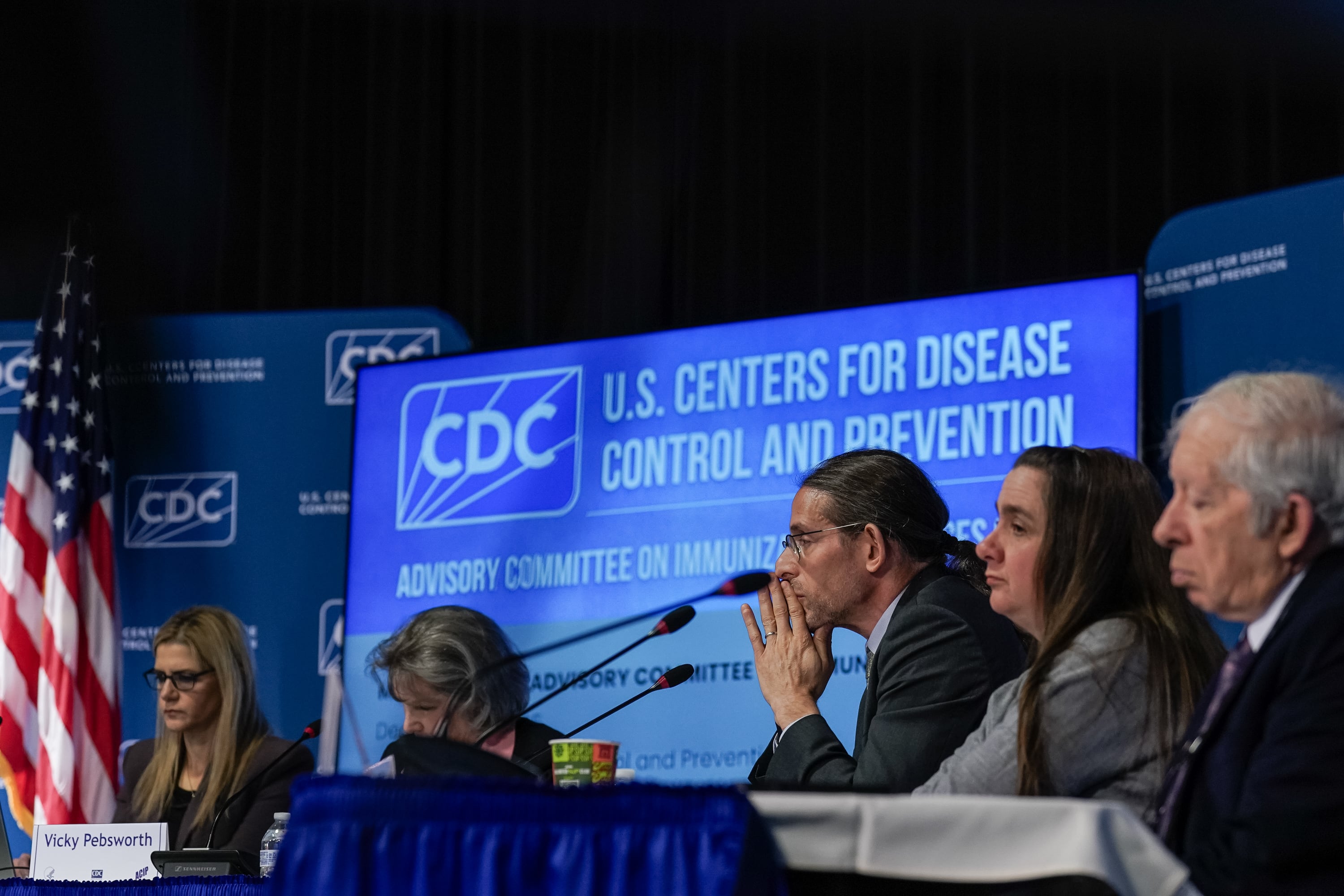
A longstanding recommendation that all babies be vaccinated at birth against hepatitis B was abandoned in a divided vote Friday by a federal advisory panel at the Centers for Disease Control and Prevention.
Members of the committee who voted in favor of the change hailed it as supporting informed vaccine choice by parents, who they say have been abandoned and marginalized by pediatricians when refusing or delaying immunizations.
“True choice has not been existing in practice,” said committee member Hillary Blackburn, a doctor of pharmacy. “No child should lose their medical home because their parents are engaging in the very individually based decision making we’re encouraging.”
Those who voted against the change said parents always have the final say in what vaccines their children receive, and that the new recommendations lacked scientific evidence and will result in children suffering needless infections and serious liver damage.
“We know that three doses given according to the existing schedule are safe and effective in preventing hepatitis B,” said Dr. Cody Meissner, a professor of pediatrics at Dartmouth’s Geisel School of Medicine. “We are doing harm by changing this wording, and I vote no.”
All of the committee’s members were chosen by Health and Human Services Secretary Robert F. Kennedy Jr., who has long been critical of vaccine safety. Kennedy dismissed the panel’s previous members during the summer, then fired Trump administration CDC Director Susan Monarez for what she told Congress was her refusal to rubber stamp future recommendations of the committee.
The CDC Advisory Committee for Immunization Practices voted 8-3 that women who test negative for the hepatitis B virus should consult with health care providers to “decide when or if“ their child should be vaccinated against the virus, with any initial dose “suggested” to be administered “no earlier than 2 months of age.”
The committee did not change the current recommendation that a birth-dose of the vaccine be given to infants born to women who test positive for the hepatitis B virus.
U.S. Sen. Bill Cassidy, the Republican chairman of the Senate Health Education, Labor, and Pensions Committee urged acting CDC Director Jim O’Neill to not sign the recommendations and maintain the current standards.
“As a liver doctor who has treated patients with hepatitis B for decades, this change to the vaccine schedule is a mistake,” Cassidy, whose vote was instrumental in Kennedy’s confirmation as HHS secretary, said on the social media platform X.
“The hepatitis B vaccine is safe and effective. The birth dose is a recommendation, NOT a mandate,” Cassidy said, noting that before the birth dose was recommended, 20,000 newborns a year were infected with hepatitis B. “Now, it’s fewer than 20. Ending the recommendation for newborns makes it more likely the number of cases will begin to increase again. This makes America sicker.”
The committee makes recommendations to the CDC director, who can accept or reject them. O’Neill is a deputy secretary at HHS in addition to serving as acting CDC director. CDC and HHS did not immediately respond to questions from Healthbeat about O’Neill’s timeframe for making a decision on the recommendations.
Major medical and public health associations – including the American Academy of Pediatrics, the American Medical Association, the Infectious Diseases Society of America and the National Association of City and County Health Officials – had urged the committee not to change the recommendation that all babies receive the birth dose.
The American Academy of Pediatrics has said it is not going to change its recommendation to pediatricians that all babies should receive a first dose of hepatitis B vaccine shortly after they are born.
The associations noted that babies born to mothers who test negative for hepatitis B virus remain at risk of infection early in life from families, caregivers, and other close contacts who may be infected but often do not know it.
The hepatitis B virus is highly contagious and spreads through contact with blood and body fluids. It can cause severe liver damage and cancer. The virus can spread from person to person through sharing of personal items such as razors, toothbrushes, and nail clippers, as well as through sexual contact and use of unsterile needles.
Universal infant and childhood vaccination against hepatitis B, recommended since 1991, has reduced by 99% the number of reported cases among U.S. children, adolescents, and young adults.
“Recommendations are not mandates,” Dr. Flor Muñoz, representing the Infectious Disease Society of America at Friday’s meeting, told the committee as it prepared to vote. “The issue of consent is not being solved with these changes … 30 years of information regarding the safety and efficacy of these vaccines are very strong to continue to support the existing recommendation.”
Committee members Meissner and Dr. Joseph Hibbeln, a psychiatrist and neuroscientist, objected throughout the meeting to what they said was a lack of evidence supporting the new recommendations. No data were presented to the committee to support recommending a two-month delay before babies born to hepatitis B negative moms get their first vaccine, they said.
“We have no basis for saying that. That’s been kind of pulled out of the air,” Meissner said.
“I am hopeful that pediatricians will continue to administer the birth dose within the first 24 hours of delivery and before discharge from the hospital. I think to follow any other course is not in the interest of the infant,” Meissner said.
Added Hibbeln: “This specific point is the reason why we tabled this issue for three months to more fully discuss it. However, we have still not had any information or science presented or discussed with regards to this issue of [giving the first dose of hepatitis B vaccine ] before or after 2 months of age. This is unconscionable.”
The committee also voted to recommend parents consider antibody testing to evaluate the hepatitis B vaccine’s effectiveness before getting subsequent doses. The vote passed with six members in favor, four opposed, and one abstaining.
This blood testing, the recommendation says, should be used to determine whether adequate protection against hepatitis B has been achieved. The recommendation says the cost of the testing should be covered by insurance.
Hibbeln objected to this testing recommendation being added to what had been a changing series of proposed recommendations shared with the committee with little time for advance consideration. “This fourth iteration of votes in 96 hours is still incredibly problematic,” he said.
“There is an absolutely novel concept being put forth here to vote, that a serology test should be offered” after the first dose, he said. “There has been no data presented that this plan would actually work.”
Dr. Raymond Pollak, a transplant immunobiologist, expressed similar concerns. “We have no data whether monitoring serology actually implies immunity,” he said.
Dr. Kirk Milhoan, a pediatric cardiologist who recently was appointed the committee’s chairman, said the tests could help parents decide how many vaccines their child needs.
“I would be very happy if we were to vote to simply recommend that this needs to be studied. That would also serve the purpose,” said Milhoan, noting “there is a paucity of data.”
But none of the committee’s members made a motion to do this.
This story has been updated with more details from Friday’s meeting.
Alison Young is Healthbeat’s senior national reporter. You can reach her at ayoung@healthbeat.org or through the messaging app Signal at alisonyoungreports.48