Public health, explained: Sign up to receive Healthbeat’s free national newsletter here.
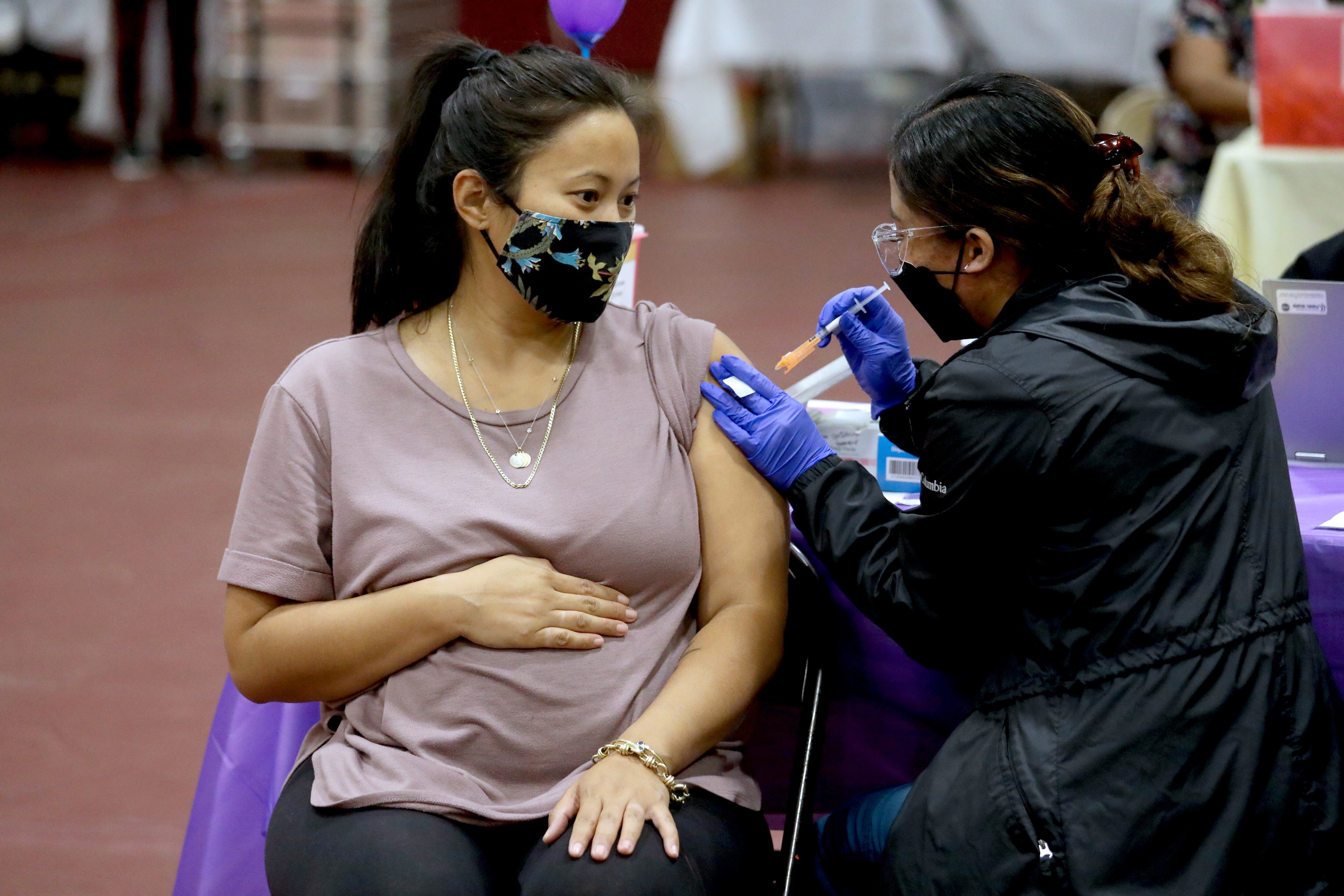
Nearly 90% of babies who had to be hospitalized with Covid-19 had mothers who didn’t get the vaccine while they were pregnant, according to new data released by the Centers for Disease Control and Prevention. The findings appear in the agency’s Morbidity and Mortality Weekly Report.
Babies too young to be vaccinated had the highest Covid hospitalization rate of any age group except people over 75.
The study looked at infant medical data from October 2022 to April 2024 in 12 states and underscores the critical importance of vaccinating pregnant people. It also echoes what physicians have anecdotally reported for more than three years — that people are still skeptical of Covid vaccines due to persistent misinformation.
Of the 1,470 infants sick enough to be hospitalized due to Covid, severe outcomes occurred “frequently,” according to the report. Excluding newborns hospitalized at birth, about 1 in 5 infants hospitalized with Covid required intensive care, and nearly 1 in 20 required a ventilator.
“These aren’t necessarily high-risk, ill newborns. These are just regular, full-term, healthy newborn kids who happen to get Covid and wind up on a ventilator in the hospital,” said Neil Silverman, a professor of clinical obstetrics and gynecology and the director of the Infectious Diseases in Pregnancy Program at the David Geffen School of Medicine at UCLA.
Babies can’t get the Covid vaccination until they are at least 6 months old. That leaves a “huge window” when infants are most vulnerable, Silverman said. Vaccinating pregnant women so they pass the antibodies on to their newborns is an effective way of protecting babies during that time. Vaccination during pregnancy also protects pregnant people from severe disease.
But persistent vaccine misinformation online has led to skepticism among Silverman’s pregnant patients.
“The most frustrating response that I get from folks is that they need to do more research before they think about getting the Covid vaccine,” Silverman said. “We have dozens and dozens of studies showing the safety of the mRNA vaccine. I don’t know how much more research we can provide to skeptics.”
Among the 1,000-plus babies hospitalized with Covid, the median age was just 2 months old, according to the report. Nine of the infants died.
South Carolina pediatrician Deborah Greenhouse said she plans to share the study with families she cares for. “There absolutely is a proportion of the population who will look at this and say, ‘Hey, wow, I should get that vaccine. It could protect my baby,’” she said.
Greenhouse believes the new data could solidify the risk of skipping the vaccine when she speaks to families.
“I think that it might help to convince some parents when you can actually show them hospitalization numbers and you can show them intensive care numbers and you can show them mechanical ventilation numbers,” Greenhouse said. “Those things are a big deal.”
Often, Greenhouse waits to be informed that a person is pregnant before bringing up the updated Covid shot. Now she’s rethinking that strategy. “As pediatricians we do get moms in our office who are pregnant and we have an opportunity to intervene and to do some education and make them understand how important this is,” she said.
Physicians can encourage vaccination by making it as easy and simple as possible, Silverman said. He encouraged fellow doctors to offer the shots in their offices, rather than sending patients to pharmacies or other providers.
“We lose probably 30 to 40% of vaccination opportunities once someone has to leave the office to get a vaccine,” Silverman said.
But offering Covid shots in their clinics leaves some doctors with a difficult calculation. They are struggling to predict how many patients will be interested in the vaccine and may not be able to return all their excess doses. Many providers can’t afford to lose money on doses that won’t be used, but they still need to order enough to vaccinate vulnerable patients who want the shot.
Jackie Fortiér is a reporter for KFF Health News, Healthbeat’s national reporting partner.