This story was originally published by THE CITY. Sign up to get the latest New York City news delivered to you each morning. Public health, explained: Sign up to receive Healthbeat’s free New York City newsletter here.
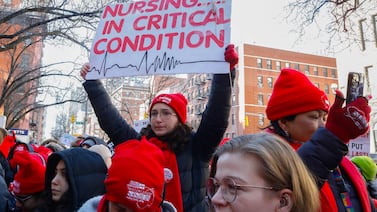
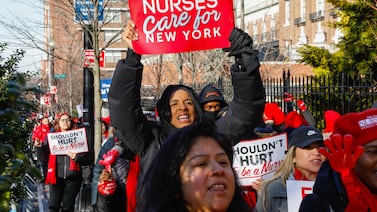
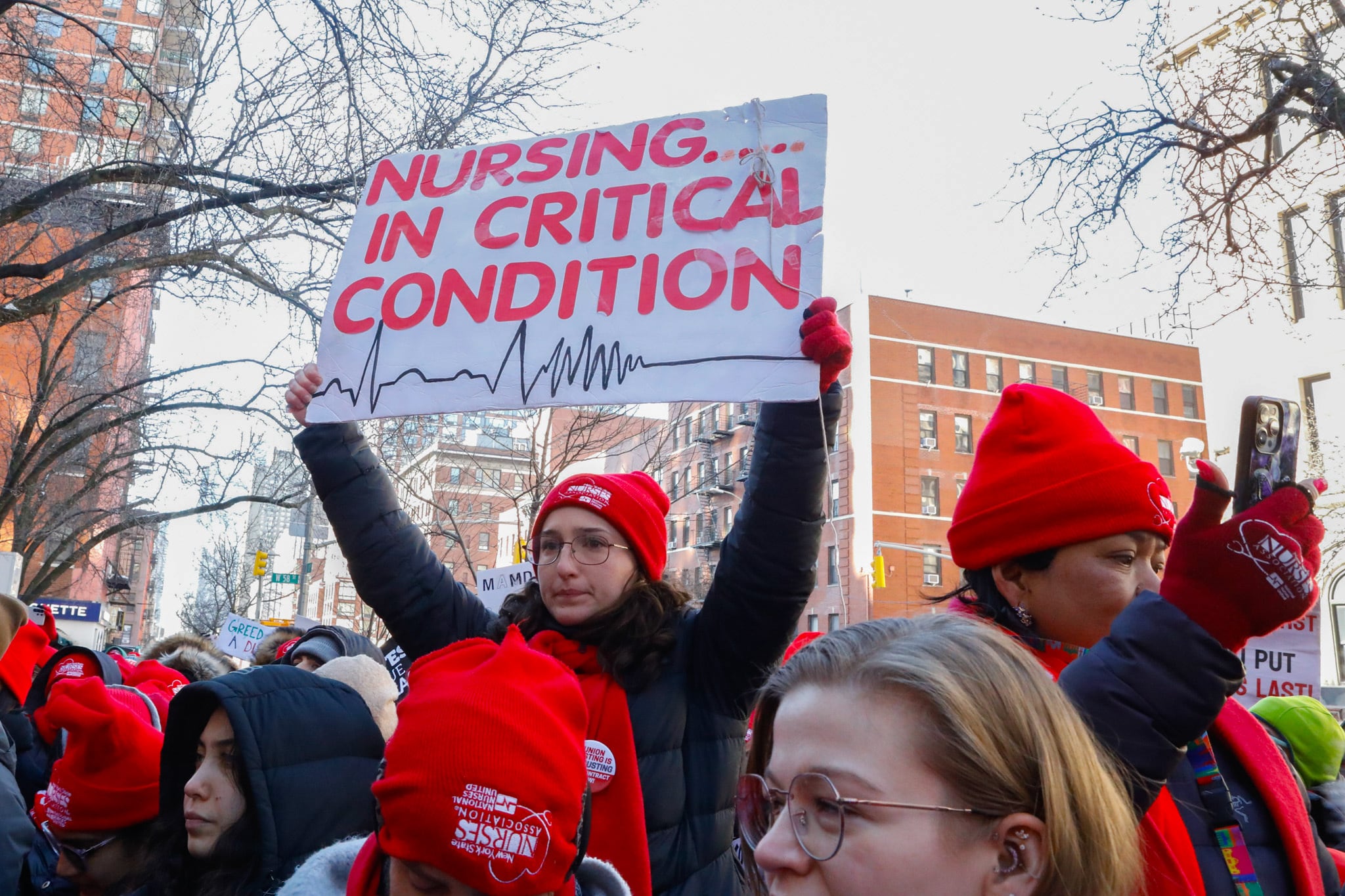
The New York State Nurses Association and NewYork-Presbyterian reached a tentative agreement on raises, staffing and on-the-job safety to end its strike, the union announced late Tuesday. The tentative deal at NYP, the last of the three hospital systems where nurses have been on strike since Jan. 12, will likely put an end to the work stoppage that involved 15,000 people.
The three-year agreement is pending ratification by the union’s rank-and-file members, who have until 5 p.m. Wednesday to approve or reject the deal. The tentative agreement includes the same 12% salary increases that the union secured in earlier deals with Mount Sinai and Montefiore, as well as agreements on nurse-to-patient ratios and addressing workplace violence.
The earliest date that the about 5,000 striking nurses at NYP-Columbia, Allen Hospital, and the Morgan Stanley Children’s Hospital campuses will return to work is Saturday.
NYSNA is allowing its members to vote on the tentative pact even though the union’s own executive committee at NYP rejected the deal, infuriating rank-and-file members. NYSNA has executive committees at each of its hospitals; those committees are made up of union members who participate in contract negotiations.
The union began circulating ballots to its members on Tuesday via email and text message, urging them to approve the deal, bypassing a decision by the executive committee to reject the proposal, which was originally presented by a mediator on Sunday.
On Tuesday, NYSNA executive director Pat Kane addressed her members in a video that was included in an email with the ballot, first obtained by Gothamist: “The simple fact is that we’ve reached the end of negotiations.”
“NYSNA sold us out,” read a post from an Instagram account of rank-and-file NewYork-Presbyterian nurses to its more than 6,000 followers recommending that union members reject the deal. “The [executive committee] does not endorse this proposal. NYSNA went over our heads to force a ratification vote.”
Together with earlier tentative agreements at Mount Sinai and Montefiore, the pact at NewYork-Presbyterian, if ratified, will mark the end of the longest and largest strike of its kind in New York City history.
The union touted the tentative agreement at NewYork-Presbyterian as a victory for nurses, securing commitments to preserve the union’s health care and benefits and to hire more staff in order to improve nurse-to-patient ratios.
In a statement announcing the tentative agreement at NewYork-Presbyterian late Tuesday, NYSNA president Nancy Hagans encouraged members to look at the full details.
“We believe all striking nurses deserve to see the details of their tentative agreements and get the opportunity to vote on whether to ratify a new contract,” she said. “As a democratic, member-led union that responds to its members, we are moving forward with a vote on tentative contracts at all four hospitals with the goal of returning all nurses to work as soon as possible.”
The first signs that a deal was imminent arrived on Monday, about an hour after NYSNA announced the earlier pacts at Mount Sinai and Montefiore. A NewYork-Presbyterian spokesperson said the hospital was willing to accept the same wage increases agreed on by the other hospitals on the recommendation of a mediator. That was the same proposal that NYSNA’s executive committee at NewYork-Presbyterian rejected.
“We look forward to bringing our nurses back to care for our patients,” Angela Karafazli, the NewYork-Presbyterian spokesperson, said.
The protracted strike was fraught throughout. Negotiations between the hospitals and the union picked up and broke down repeatedly over the last month, a feature of a strike that was more bitter than any in recent memory.
The nurses’ union has lodged more than a dozen complaints against the three hospital systems accusing them of violating U.S. labor law, including by allegedly retaliating against nurses for organizing.
The strike came at a steep cost. Hospitals cancelled elective surgeries and rerouted patients to hospitals unaffected by the strike. Nurses scrambled to make ends meet, turning to unemployment insurance and GoFundMe to pay their bills.
Hospital administrators hired scores of temporary travel nurses to cover nurses’ shifts throughout the strike, some of whom were getting paid $9,000 per week. The three hospitals paid $100 million to staff their facilities during the strike, according to a leading trade group.
NewYork-Presbyterian is one of the most prominent hospital systems in the country and, according to the union, one of the wealthiest. Its CEO earned more than $26 million in total compensation in 2024. Last year, the U.S. Department of Justice launched an antitrust probe into NewYork-Presbyterian over allegations it colluded with insurance companies to keep prices high for New York City patients.
Claudia Irizarry Aponte is a senior reporter covering labor and work for THE CITY.