Public health, explained: Sign up to receive Dr. Jay K. Varma’s reports in your inbox a day early.
Hello and welcome to Healthbeat’s weekly report on stories shaping public health in the United States.
I am Dr. Jay K. Varma, a physician, epidemiologist, and public health expert currently serving as chief medical officer at Fedcap, a national nonprofit focused on economic mobility and well-being for vulnerable communities. Views expressed here are my own.
This week, I have been watching signs that the federal government’s rollback of vaccines may be slowing, although the detrimental impact on public health may be long-lasting.
Is the rollback of U.S. vaccines ending?
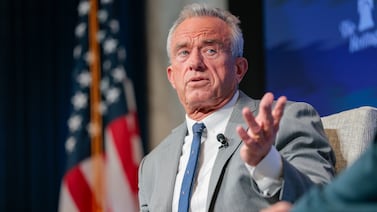
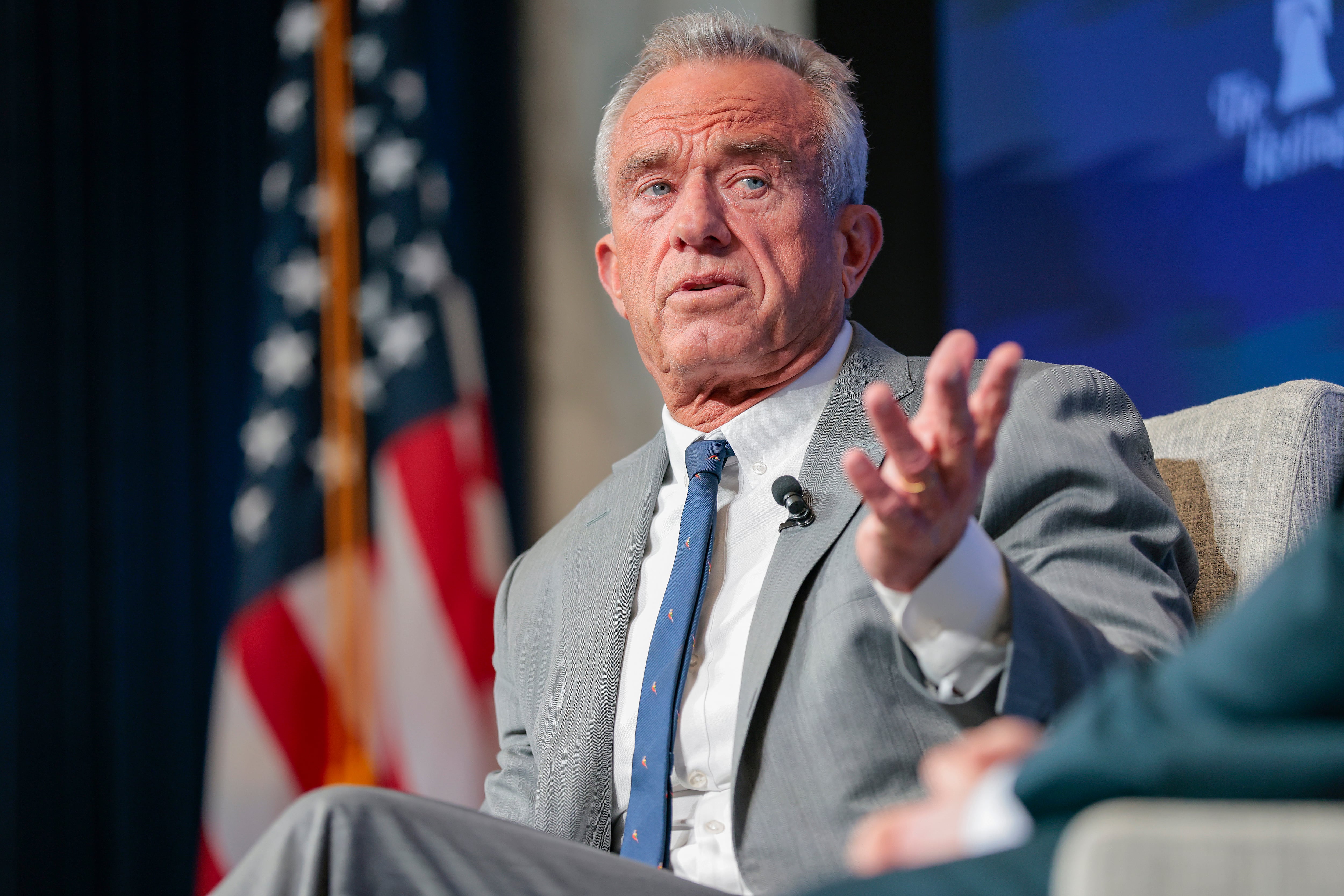
In the 12 months after Robert F. Kennedy Jr. was confirmed as secretary of the U.S. Department of Health and Human Services, the federal government took dramatic steps to stop the development and delivery of vaccines that protect children and adults against infectious diseases. Is it possible these efforts are slowing or even stopping?
Media outlets have recently reported that RFK’s anti-vaccine actions represent a big political risk for the GOP heading into the midterm elections and that he has been instructed to delay or stop anti-vaccine activities — at least for now. According to Politico, President Donald Trump’s own pollster, Tony Fabrizio, found that Kennedy’s moves to downsize the childhood vaccine schedule are broadly unpopular. A White House official summarized the administration’s new posture with striking bluntness: “I think we’re largely done with vaccines.”
Indeed, despite the increasing prominence of the anti-vaccine movement on social media and in politics, polls conducted in the past few months show that the American public still thinks highly of vaccines, favors mandatory vaccination for school attendance, fears the return of vaccine-preventable infections, and believes recent vaccine policy changes will harm children’s health.
How experts and institutions have pushed back
Prominent experts and professional organizations in public health and clinical medicine — including pediatrics, general adult medicine, obstetrics and gynecology, and infectious diseases — have taken strong public stances opposing the administration. Notably, the American Academy of Pediatrics, a longstanding partner and adviser to the Centers for Disease Control and Prevention on childhood vaccines, just published its own independent pediatric vaccine schedule for 2026. At the bottom of the webpage is a pointed note that the CDC has a different vaccine schedule that “is not currently endorsed by the AAP.”
While the pharmaceutical and biotechnology industry has been largely muted in its public statements, one notable exception is Pfizer CEO Albert Bourla. Speaking at the World Economic Forum in Davos in January, Bourla called Kennedy’s rhetoric and policies on vaccines “anti-science” and described his opposition to vaccines as being “almost like a religion.”
The strongest institutional pushback is coming from states. Fifteen states just filed suit against HHS to reverse the administration’s decision to reduce the number of diseases children are routinely immunized against from 17 to 11. The lawsuit also challenges the “unlawful replacement” of members of the Advisory Committee on Immunization Practices and asks the courts to nullify Kennedy’s January revision to the childhood vaccine schedule.
As researchers at Georgetown University’s Commonwealth Fund document, states are working to delink their vaccine and preventive care standards from federal entities that they no longer trust. States are joining together in regional scientific bodies to independently review vaccine evidence and publish their own recommendations. An umbrella organization, the Governors Public Health Alliance, has been created to coordinate across the different regional state coalitions.
Are there positive signs in vaccine policy?
I have some hope that the pushback from experts, professional societies, industry, and states is working. Here are a few important signs from the past month.
On Feb. 11, the Food and Drug Administration surprised the pharmaceutical and biotechnology world with an unprecedented “refusal to file” response to Moderna’s application for an mRNA flu vaccine. Then, a few days later, the FDA suddenly reversed that decision. The FDA’s reversal on Moderna’s vaccine has been widely attributed to White House pressure on the FDA, suggesting that even within an administration that is skeptical of vaccines, they are still reluctant to block vaccine companies from even having their products reviewed by FDA.
The CDC’s ACIP meeting originally scheduled for February has been postponed to March 18, and the agenda is, to say the least, unusual. Rather than proposing revisions to the vaccine schedule, reviewing the efficacy of existing vaccines, or reviewing new vaccines, the ACIP meeting will focus instead on the methodology of how ACIP makes recommendations, on Long Covid, and on vaccine injuries. That is a meaningful retreat from where this panel was six months ago.
The administration also suffered a loss in its effort to find data to support its opposition to the hepatitis B vaccine. A few months ago, the administration directed the CDC to fund a randomized controlled trial of birth-dose hepatitis B vaccine in Guinea-Bissau conducted by the University of Southern Denmark. The protocol proposes to withhold the vaccine from half of 14,000 newborns in Guinea-Bissau, where nearly 20% of people already carry chronic hepatitis B infection and where up to 90% of babies exposed to the virus at birth will go on to develop chronic infection.
The World Health Organization called withholding the vaccine from newborns in Guinea-Bissau “serious and potentially irreversible harm” and raised significant concerns about the study’s scientific justification and ethical safeguards. The government of Guinea-Bissau announced last week that it would not permit the trial to go forward. “It’s not going to happen, period,” the country’s foreign minister told Reuters.
And, perhaps most remarkably, the CDC’s recently appointed principal deputy director, Dr. Ralph Abraham, abruptly resigned after less than two months on the job. Abraham is a prominent skeptic of vaccines and his appointment seemed to signal that the agency was going to completely realign itself in opposition to vaccines. After assuming his position, Abraham shocked the public health community by saying that the ongoing measles outbreaks, including child deaths, and the loss of the United States’ measles elimination status was, in his words, the “cost of doing business.”
Abraham’s departure leaves the CDC without a permanent director or deputy director. (The administration has taken the unusual position of appointing NIH Director Jay Bhattacharya also to be the acting director of the CDC, a move that Yale public health professor and activist Greg Gonsalves says means he can now “do two jobs terribly.”)
U.S. immunization programs face death by a thousand cuts
While I am optimistic that the vaccine rollback is slowing, I am fearful of the damage that’s already been done. Even if HHS slows down or halts future anti-vaccine efforts, the administration has already pursued a “death by a thousand cuts” strategy: defunding basic vaccine science and clinical trials, raising the regulatory bar for FDA approval, stocking advisory committees with self-described anti-vaxxers, and cutting resources for public education and outbreak response.
The damage from 2025 will not be undone by a midterm-driven political pivot. While many states are doing heroic work to preserve vaccine access, some states are moving in the opposite direction, adopting their own anti-vaccine statutes that could outlast any particular administration.
In 2026 and beyond, we are likely to be left with fewer vaccines in development, uneven standards from state to state, confused providers and patients, and the slow erosion of the unified national infrastructure that once made the U.S. childhood immunization program the envy of the world.
Wishing you a healthy week,
Jay
Dr. Jay K. Varma, who is recognized globally for his leadership in the prevention and control of infectious disease, writes about public health for Healthbeat. He has guided epidemic responses, developed policies, and implemented programs that have saved lives across Asia, Africa, and the United States. He is based in New York. Contact Jay at jvarma@healthbeat.org.